





-

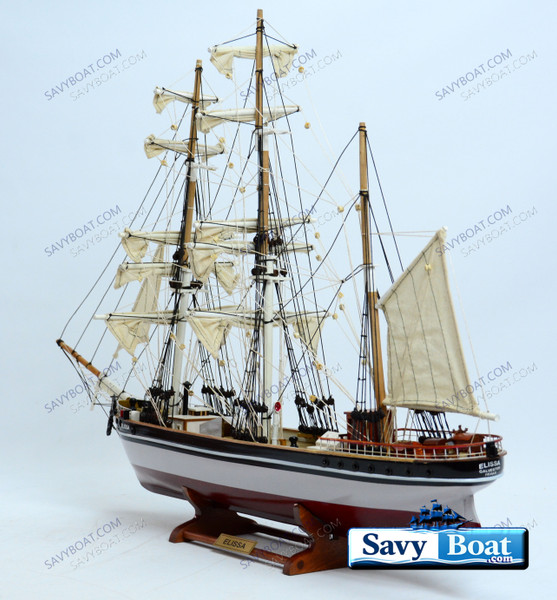
ELISSA TALL SHIP
SAVY DIRECT PRICE $739.96MSRP: $789.99ELISSA TALL SHIP FULLY BUILT AND READY TO DISPLAY QUALITY SHIP MODEL Dimension approx.: 31″ (long) x 9″ (wide) x 19″ (high) The model is already built. THIS IS NOT A MODEL SHIP... -
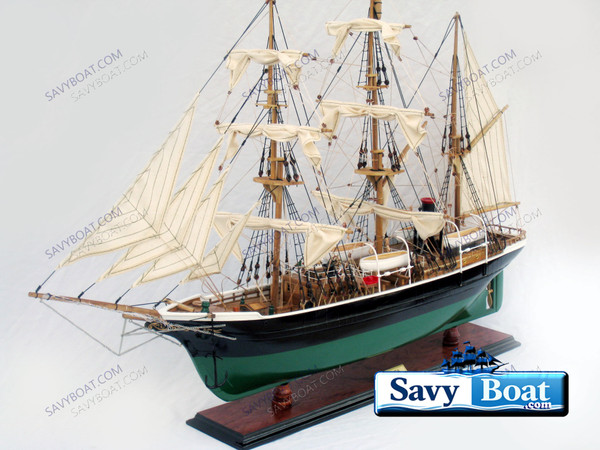
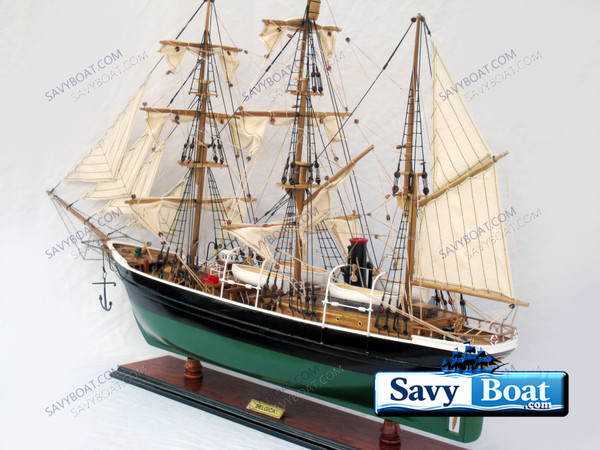
BELGICA TALL SHIP
SAVY DIRECT PRICE $799.96MSRP: $849.99BELGICA TALL SHIP FULLY BUILT AND READY TO DISPLAY, QUALITY SHIP MODEL Dimension approx.: 28.74L x 5.51W x 25.59H (inches) The model is already built. THIS IS NOT A MODEL SHIP KIT When... -


HMS AGAMEMNON TALL SHIP
SAVY DIRECT PRICE $989.96MSRP: $1,049.99HMS AGAMEMNON TALL SHIP FULLY BUILT AND READY TO DISPLAY MUSEUM QUALITY SHIP MODEL Dimension approx.: 35L x 11W x 31H (inch) The model is already built. THIS IS NOT A MODEL...
Description

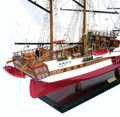
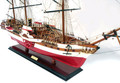
L'ORENOQUE TALL PADDLE SHIP
FULLY BUILT AND READY TO DISPLAY MUSEUM QUALITY SHIP MODEL
- Dimension approx.: 32L x 10W x 28 (inch)
- The model is already built. THIS IS NOT A MODEL SHIP KIT
The first L’Orenoque, launched in 1843 after her keel was laid in 1841, emerged at a moment when navies were grappling with the transition from sail to steam. She was one of France’s earliest attempts to merge the two technologies: a three‑masted barque‑rigged frigate fitted with a reciprocating steam engine that drove side paddle wheels. As your document notes, she was “the first French frigate with mixed sail and steam propulsion.”
At 204 feet on deck and displacing over 2,500 tons, she was built as a troop transport, capable of carrying around 300 sailors and soldiers along with 18 guns. Her hybrid design made her ideal for expeditionary operations — she could steam into harbors or against contrary winds, yet rely on her sails when coal was scarce. In an age when global empires depended on mobility, L’Orenoque represented a new kind of flexibility.
For three decades she served the French armed forces, bridging the gap between the age of Nelson and the dawn of ironclads. By 1878, her naval career ended, and she was sold into whaling service, a common fate for aging wooden steamers whose hulls remained sound even as their engines grew obsolete.
The Second L’Orenoque (1874–1925) — A Workhorse of Empire
A generation later, in 1874, a new L’Orenoque entered service — this time for Messageries Maritimes, the great French passenger and mail line. Built at La Ciotat, she was designed for long‑distance routes, initially serving South America before shifting to the Mediterranean and Eastern trades.
She was a versatile vessel, carrying:
-
124 first‑class passengers
-
66 second‑class
-
54 third‑class
-
and up to 500 emigrants in the hold
Her career was eventful. In 1889, she suffered a total hull loss near Bahia, yet remained afloat thanks to a cargo of wood — a rare stroke of luck that saved ship and crew. During World War I, she became a troop transport, running between Dakar and Bordeaux, and even carrying pilgrims from Marseille to Jeddah in 1916.
In 1917, she survived encounters with both a German U‑boat and a collision with the French steamer Bouvet, further cementing her reputation as a survivor in dangerous waters.
After the war, she was reassigned to the Saigon–Haiphong route in French Indochina, serving the colonial network until 1925, when she was finally dismantled — ending a remarkable 50‑year career.
Together, the two ships named L’Orenoque trace a sweeping arc of maritime history:
-
The 1848 L’Orenoque embodied the experimental spirit of the steam age, when navies sought to combine sail, steam, and global reach.
-
The 1874 L’Orenoque reflected the rise of passenger liners, colonial transport, and the logistical demands of a world increasingly connected by steamship routes.
Both vessels were products of their time — and both served far longer than many of their contemporaries. Their shared name links two eras of French seafaring, from paddle‑wheel frigates to ocean‑going liners, each carrying the tricolor across oceans in service of empire, commerce, and war.