




-


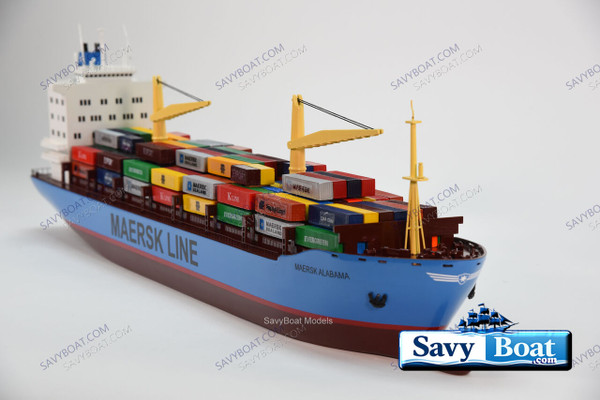
MAERSK ALABAMA Z-SCALE WATERLINE
SAVY DIRECT PRICE $549.96MSRP: $599.99MAERSK ALABAMA Z-SCALE WATERLINE MODEL FULLY BUILT AND READY TO DISPLAY, QUALITY SHIP MODEL Dimension approx.: 28″ L x 3.5″ W x 6.5″ H Approx Z Scale 1:220 The model is already built... -
 img:low-bottom-with-special-offer.pngimg:low-bottom-with-special-offer.png
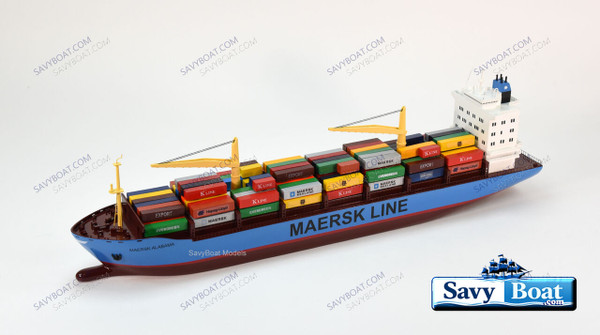
MAERSK ALABAMA N-SCALE CONTAINER SHIP
SAVY DIRECT PRICE $100.00 - $769.96MAERSK ALABAMA N-SCALE WATERLINE MODEL FULLY BUILT AND READY TO DISPLAY, QUALITY SHIP MODEL Dimension approx.: 36″ L x 6″W x 15″H Approx scale Scale 1:160 The model is already built... -

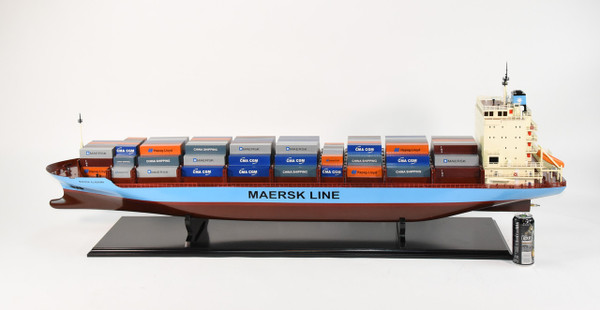
MAERSK ALABAMA HO-SCALE CONTAINER SHIP
SAVY DIRECT PRICE $4,999.96MSRP: $5,999.99MAERSK ALABAMA HO-SCALE WATERLINE CONTAINER SHIP FULLY BUILT AND READY TO DISPLAY MUSEUM QUALITY SHIP MODEL Dimension approx.: 70″ L x 15” W x 16” H – approx scale : HO Scale 1:87.<
Description

MAERSK ALABAMA LIFE BOAT
FULLY BUILT AND READY TO DISPLAY, QUALITY SHIP MODEL
- Dimension approx.: 20″ L x 5″ W x 11″ H
- The model is already built. THIS IS NOT A MODEL SHIP KIT
The Maersk Alabama Lifeboat — A Small Craft at the Center of a Global Drama
In the spring of 2009, an 18‑foot, enclosed orange lifeboat — the kind carried quietly and unnoticed on countless merchant ships — became the most famous small craft in the world. It was never designed for combat, diplomacy, or international headlines. Yet for four days in April, the Maersk Alabama lifeboat became the cramped, sweltering stage for a hostage crisis that riveted the globe and reshaped modern maritime security.
On April 8, 2009, the U.S.-flagged cargo ship Maersk Alabama was steaming from Oman toward Kenya with 17,000 metric tons of cargo, much of it humanitarian aid bound for East Africa. The waters off Somalia were notorious for piracy, but the Alabama’s crew was trained, alert, and prepared.
Four Somali pirates — young, desperate, and heavily armed — managed to board the ship 240 nautical miles southeast of Eyl. The crew fought back, disabling the ship and capturing one pirate. But the attackers seized Captain Richard Phillips, who offered himself as a hostage to protect his crew.
The pirates forced Phillips into the ship’s covered lifeboat, a fiberglass survival capsule meant for emergencies, not captivity. With its diesel engine, limited ventilation, and cramped interior, it became a floating prison.
The lifeboat drifted westward toward the Somali coast. Inside, temperatures soared above 100°F, and the air grew foul. Phillips was bound, threatened, and repeatedly beaten. The pirates, increasingly agitated and exhausted, argued among themselves as they tried to negotiate a ransom and safe passage home.
On April 9, the U.S. Navy destroyer USS Bainbridge arrived, establishing a perimeter and preventing pirate reinforcements. Over the next two days, Navy negotiators worked to de‑escalate the situation while SEAL snipers parachuted in and quietly took up positions on the Bainbridge’s fantail.
The standoff tightened. The pirates demanded fuel and freedom. The Navy insisted on Phillips’s release. The lifeboat, battered by wind and waves, was eventually taken under tow by the Bainbridge — a move that brought the crisis to its breaking point.
On April 12, 2009 — Easter Sunday — the situation inside the lifeboat deteriorated. One pirate had already surrendered aboard the Bainbridge. The remaining three grew increasingly unstable, pointing rifles at Phillips and threatening to kill him.
Commander Frank Castellano, assessing the danger, gave the order.
Three Navy SEAL snipers, each tracking a different pirate through a rifle scope, fired simultaneously. In a single instant, all three pirates were killed. Phillips was pulled from the lifeboat alive, dehydrated, and exhausted — but safe.
The rescue became an instant symbol of U.S. naval precision and resolve.
After the operation, the lifeboat — still scarred with bullet holes from the SEAL shots — was recovered and transported to the United States. Today it is preserved at the National Navy UDT‑SEAL Museum, where visitors can stand inches from the cramped capsule that held a captain, four pirates, and the world’s attention.
The lifeboat also appeared in the 2013 film Captain Phillips, starring Tom Hanks, cementing its place in modern maritime lore.
The Maersk Alabama hijacking was the first successful pirate seizure of a U.S.-flagged vessel since the early 1800s, and it triggered sweeping changes in merchant‑ship security, including armed guards and new defensive protocols.
But the lifeboat remains the most tangible relic of the event — a reminder of the dangers faced by mariners in high‑risk waters, the volatility of modern piracy, the precision and discipline of the U.S. Navy, and and the extraordinary ordeal endured by Captain Phillips.
A vessel built for survival became, for four unforgettable days, the center of a global drama — and today stands as one of the most recognizable small craft in contemporary maritime history.