







-

MS MARINER OF THE SEAS CRUISE SHIP
SAVY DIRECT PRICE $1,799.96MSRP: $1,899.99MS MARINER OF THE SEAS CRUISE SHIP FULLY BUILT AND READY TO DISPLAY MUSEUM QUALITY SHIP MODEL Open die cut side hull windows, NOT painted like those built by most other companies. Dimension... -


MS HARMONY OF THE SEAS CRUISE SHIP
SAVY DIRECT PRICE $1,799.95MSRP: $1,899.99MS HARMONY OF THE SEAS CRUISE SHIP FULLY BUILT AND READY TO DISPLAY, QUALITY SHIP MODEL Dimension approx.: 31″ (long) x 7″ (wide) x 6″ (high) The model is already built. THIS IS NOT A... -


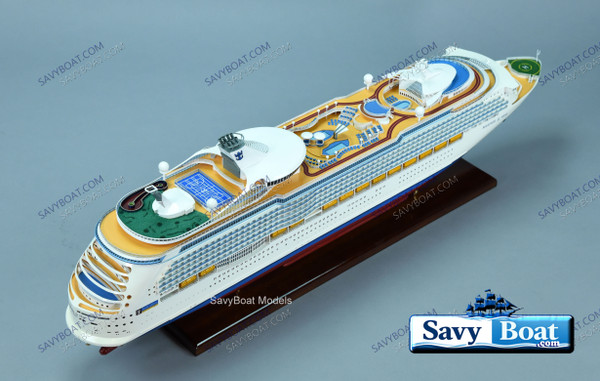
MS NAVIGATOR OF THE SEAS CRUISE SHIP
SAVY DIRECT PRICE $1,699.96MSRP: $1,799.99MS NAVIGATOR OF THE SEAS FULLY BUILT AND READY TO DISPLAY MUSEUM QUALITY SHIP MODEL Dimension Approx.: 35″ L x 5″ W x 11″ H SCALE 1:350 The model is already built, NOT a model ship...
Description

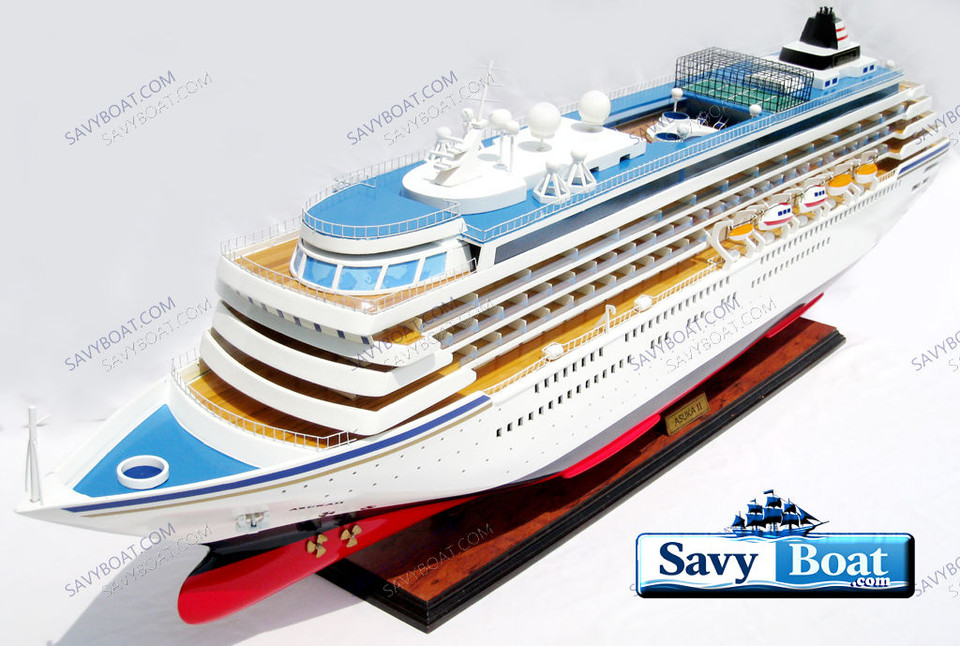
MS ASUKA II (飛鳥II) CRUISE SHIP
FULLY BUILT AND READY TO DISPLAY QUALITY SHIP MODEL
- Dimension approx.: 31.L x 4.W x 11H
- The model is already built. THIS IS NOT A MODEL SHIP KIT
When the cruise industry of the late 20th century began shifting toward larger, more luxurious ships, few vessels embodied that transition as gracefully as the ship that would one day become Asuka II. She began life not in Japan, but in the steel caverns of Mitsubishi Heavy Industries in Nagasaki, where she was launched in 1989 as Crystal Harmony—the flagship of the newly formed Crystal Cruises. With her sweeping lines, generous public spaces, and a standard of service that set new expectations for luxury at sea, she quickly became one of the most admired cruise ships of the 1990s.
Her maiden season in 1990 was dramatic. After debuting in Alaska and Canada, she shifted to the Caribbean—only to suffer a fire in an auxiliary engine room that left her powerless for sixteen hours. The incident made headlines, but it did little to tarnish her reputation. Over the next decade and a half, Crystal Harmony roamed the world, from the Mediterranean to Northern Europe, building a loyal following and helping define Crystal Cruises’ identity as a premier luxury brand.
By 2005, however, the industry had moved on. Crystal Harmony was retired from Crystal’s fleet and transferred to her parent company, Nippon Yusen Kaisha (NYK). In 2006 she was reborn as Asuka II, replacing the original Asuka and becoming the largest cruise ship operating in Japan. Her new life was quieter but no less distinguished. Sailing primarily from Yokohama and Kobe, she became a familiar sight along the coasts of Japan, offering refined, Japanese‑style cruising that blended Western luxury with local hospitality.
Asuka II’s career was not without incident. In 2020, while docked in Yokohama, she suffered a fire—thankfully contained without major damage. But she endured, and in 2023–2024 underwent a major drydock that refreshed her interiors, modernized her systems, and prepared her for a new era. By 2025, she had completed 35 years of service, including a 103‑night world cruise that reaffirmed her status as one of Japan’s most beloved passenger ships.
Yet even the most enduring vessels must one day share their legacy. In the mid‑2020s, NYK commissioned a new ship—first known simply as NYK Yokohama, later renamed Asuka III. Built at Meyer Werft in Germany, she represented a generational leap: 51,950 gross tons, LNG‑capable dual‑fuel engines, shore‑power compatibility, and accommodations for roughly 750 passengers. Where Asuka II carried the elegance of a classic 1990s luxury liner, Asuka III embodied the future—cleaner, quieter, and designed for a new era of Japanese cruising.
Launched in 2025, Asuka III entered service that July, sailing from Yokohama on domestic itineraries that echoed the early routes of her predecessor. Together, the two ships formed a bridge between eras: Asuka II, the refined grande dame of Japanese cruising, and Asuka III, the modern successor built to carry the brand forward.
Today, the Asuka name stands as one of the most enduring in Japanese passenger shipping. It links the golden age of Crystal Harmony to the contemporary innovations of LNG propulsion and sustainable cruising. More than a pair of ships, Asuka II and Asuka III represent a lineage—one defined by elegance, resilience, and a distinctly Japanese interpretation of life at sea.