






-


MS CAP SAN DIEGO LLIGHTED CARGO SHIP 41
SAVY DIRECT PRICE $799.96MSRP: $899.99MS CAP SAN DIEGO LIGHTED CARGO SHIP FULLY BUILT AND READY TO DISPLAY SHIP MODEL Dimension approx.: 41″ L x 5″ W x 15″ H LIGHTED - LED lights installed (power supply not included) The model is... -
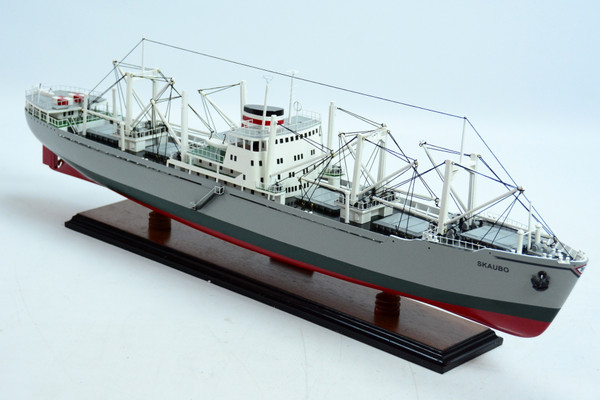

MS SKAUBO CARGO SHIP
SAVY DIRECT PRICE $949.96MSRP: $999.99MS SKAUBO CARGO SHIP FULLY BUILT AND READY TO DISPLAY MUSEUM QUALITY SHIP MODEL Dimension approx.: 30.5″ L x 4.5″ W x 9.5″ H The model is already built. THIS IS NOT A MODEL SHIP KIT The... -


MS STOCKHOLM PASSENGER SHIP
SAVY DIRECT PRICE $999.96MSRP: $1,199.99MS STOCKHOLM PASSENGER SHIP FULLY BUILT AND READY TO DISPLAY MUSEUM QUALITY SHIP MODEL Open die cut side hull windows, NOT painted like those built by most other companies. Dimension...
Description

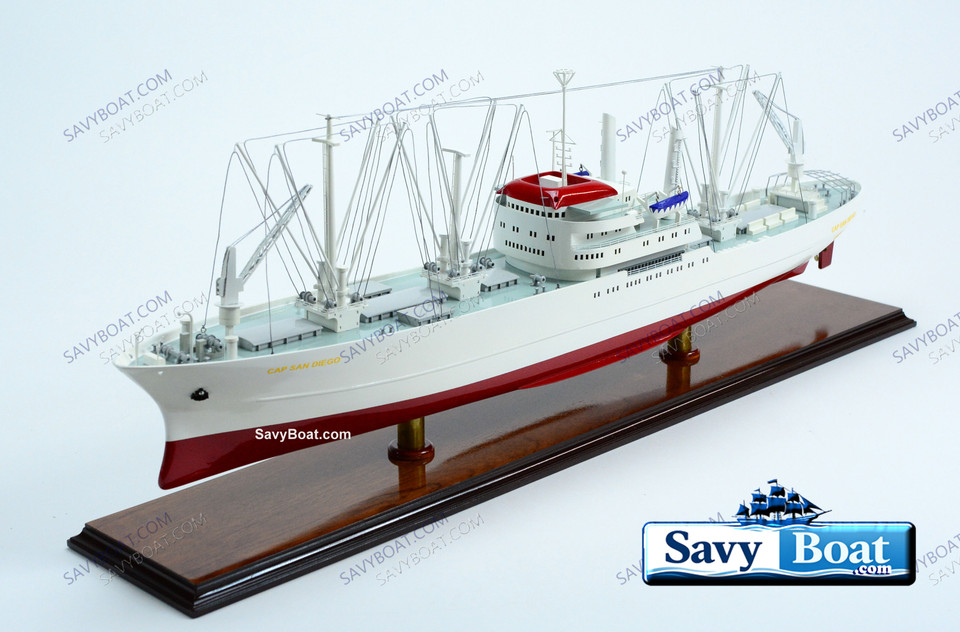
MS CAP SAN DIEGO CARGO SHIP
FULLY BUILT AND READY TO DISPLAY SHIP MODEL
- Dimension approx.: 35″ L x 5″ W x 12″ H
- The model is already built. THIS IS NOT A MODEL SHIP KIT
When the Cap San Diego slid down the ways at Deutsche Werft on 15 December 1961, she represented the final flowering of a maritime era. She was the last and most refined of six elegant cargo liners built for Hamburg Süd, known collectively as the “White Swans of the South Atlantic.” Long, sleek, and painted in the company’s iconic white livery, these ships were designed to carry both cargo and a small number of passengers between Germany and South America—a trade route that had shaped Hamburg’s identity for generations.
At 159 meters in length and with a deadweight of 10,000 tons, Cap San Diego embodied the pinnacle of pre‑containerization cargo‑ship design. Her lines were graceful, her superstructure streamlined, and her machinery powerful enough to maintain competitive schedules across the Atlantic. She was built for speed, reliability, and a touch of luxury—an ocean‑going ambassador of German engineering at a moment when traditional cargo liners still ruled the seas.
Her maiden voyage in 1962 marked the beginning of a career that would span nearly two decades. Cap San Diego made 120 round trips between Hamburg and ports in Brazil, Argentina, and Uruguay, carrying everything from coffee, cotton, cocoa, and beef to manufactured goods and clothing. Occasionally she called at North American ports, but her heart belonged to the South Atlantic, where she became a familiar sight in Rio de Janeiro, Buenos Aires, and Montevideo.
But the world was changing. By the late 1960s and early 1970s, containerization was transforming global shipping. The elegant break‑bulk liners of Hamburg Süd—designed for careful loading by crane and stevedore—were suddenly obsolete. Cap San Diego and her sisters were pushed into tramp service, sailing under flags of convenience, changing names, and working wherever cargo could be found. By 1981, her commercial career had run its course. By 1986, she was headed for the scrapyard.
And then Hamburg stepped in.
Recognizing her historical and aesthetic value, the City of Hamburg purchased the ship and entrusted her restoration to a passionate group of volunteers—many of them laid‑off dockworkers who knew her systems intimately. Their work was meticulous. They restored her engines, rewired her systems, repainted her hull, and brought her back to life not as a static museum but as a fully operational ship.
Today, the Cap San Diego is moored at the Überseebrücke, one of Hamburg’s most iconic waterfront locations. Visitors can explore nearly every part of the ship—from the bridge and chart room to the cavernous engine room where her diesel engines still thrum to life. One of her cargo holds hosts rotating exhibitions, and several of her passenger cabins have been converted into overnight accommodations, allowing guests to sleep aboard a living piece of maritime history.
A few times each year, Cap San Diego sails under her own power along the Elbe River or to Cuxhaven, her white hull gleaming as she moves like the ocean liner she once was. She has been honored with the Maritime Heritage Award (2001) and designated a protected cultural monument under Hamburg law (2003).
More than a museum, Cap San Diego is a symbol—of Hamburg’s maritime heritage, of the elegance of the last great cargo liners, and of the community effort that saved her from the breakers. Her silhouette remains one of the most beloved sights in the harbor, a reminder of the era when ships were not just machines, but ambassadors of the cities that built them.