







-
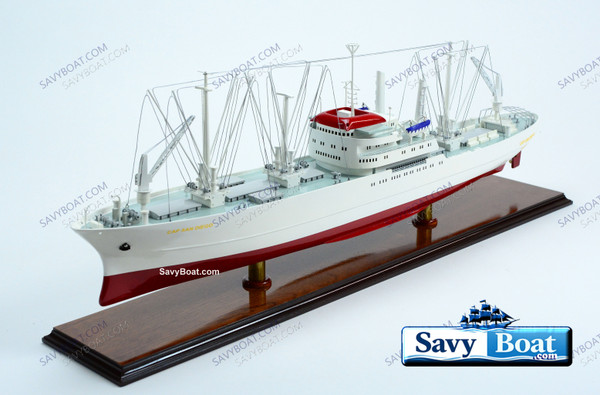

MS CAP SAN DIEGO CARGO SHIP 35
SAVY DIRECT PRICE $549.96MSRP: $589.99MS CAP SAN DIEGO CARGO SHIP FULLY BUILT AND READY TO DISPLAY SHIP MODEL Dimension approx.: 35″ L x 5″ W x 12″ H The model is already built. THIS IS NOT A MODEL SHIP KIT When the Cap San... -


MS CAP SAN DIEGO LLIGHTED CARGO SHIP 41
SAVY DIRECT PRICE $799.96MSRP: $899.99MS CAP SAN DIEGO LIGHTED CARGO SHIP FULLY BUILT AND READY TO DISPLAY SHIP MODEL Dimension approx.: 41″ L x 5″ W x 15″ H LIGHTED - LED lights installed (power supply not included) The model is... -


MS STOCKHOLM PASSENGER SHIP
SAVY DIRECT PRICE $999.96MSRP: $1,199.99MS STOCKHOLM PASSENGER SHIP FULLY BUILT AND READY TO DISPLAY MUSEUM QUALITY SHIP MODEL Open die cut side hull windows, NOT painted like those built by most other companies. Dimension...
Description

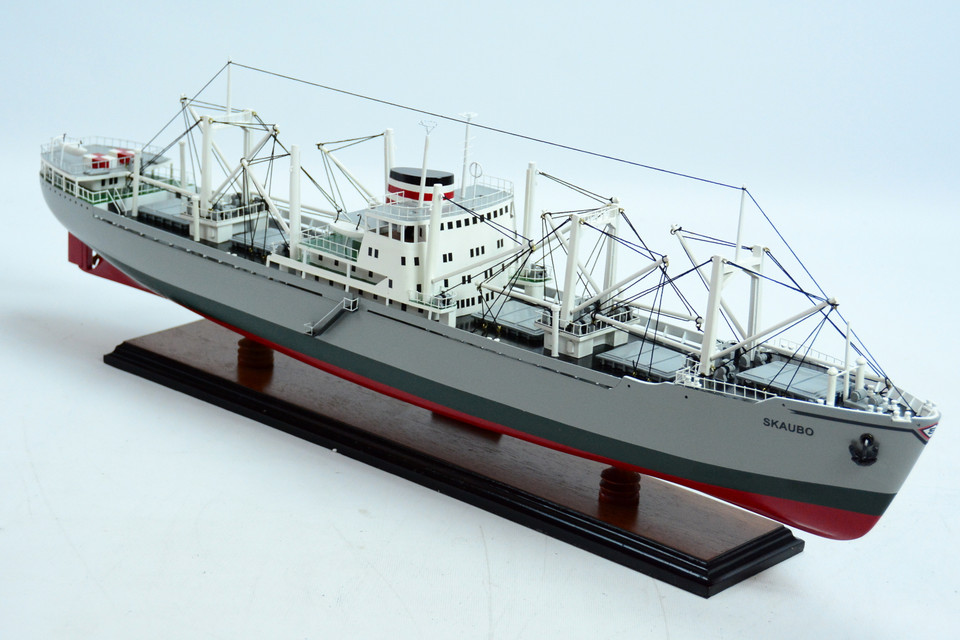
MS SKAUBO CARGO SHIP
FULLY BUILT AND READY TO DISPLAY MUSEUM QUALITY SHIP MODEL
- Dimension approx.: 30.5″ L x 4.5″ W x 9.5″ H
- The model is already built. THIS IS NOT A MODEL SHIP KIT
The MS Skaubo was born in 1956, during a pivotal era in postwar shipping when global trade was accelerating and fleets were modernizing to meet new commercial demands. She was built as a classic mid‑century cargo vessel — sturdy, versatile, and designed to carry a wide range of freight across coastal and deep‑sea routes. Like many Scandinavian freighters of her generation, she embodied the practical, no‑nonsense engineering that defined Northern European shipbuilding in the 1950s.
Her early years placed her under the Norwegian flag, operating for owners who valued reliability above all else. Norway’s merchant fleet was expanding rapidly during this period, and ships like the Skaubo formed the backbone of its bulk and general‑cargo operations. She served in the fleets of Norwegian Bulk Carriers and other regional operators, moving everything from timber and grain to manufactured goods along the busy North Atlantic and European trade lanes.
As the decades progressed, the Skaubo’s story became one of adaptation. She changed hands multiple times — a common fate for hardworking cargo ships whose value lay in their durability. She passed through the ownership of K/S Thorsbo, later Windstar Maritime Corp, and eventually Ocean Maritime Shipping Ltd. Each transition reflected the shifting economics of global shipping, where older but dependable vessels often found new life with smaller operators or in niche trades.
Through these changes, the Skaubo proved remarkably resilient. Her design allowed her to be repurposed for different cargo types and operational needs, and she continued to serve long after many of her contemporaries had been scrapped. Ships like the Skaubo rarely made headlines, but they were essential — the quiet workhorses that kept regional commerce moving through the second half of the 20th century.
By the time she reached the later stages of her career, the Skaubo had become a symbol of a bygone era: the age before containerization, when cargo ships were smaller, crews were larger, and maritime trade still carried the rhythm of traditional seamanship. Her long service life, marked by multiple owners and varied routes, reflected both her sturdy construction and the enduring demand for reliable tonnage in global shipping.
Today, the MS Skaubo is remembered not for a single dramatic event, but for her longevity and adaptability — a vessel that quietly served generation after generation of operators, evolving with the industry and proving that even modest cargo ships can leave a meaningful legacy.