








-

PARMA WINDJAMMER TALL SHIP W/SAILS
SAVY DIRECT PRICE $749.96MSRP: $799.99(1902-1938) PARMA TALL SHIP W/ SAILS FULLY BUILT AND READY TO DISPLAY QUALITY SHIP MODEL Dimension Approx.: 31.5″ (long) x 7″ (wide) x 27.5″ (high) The model is -

BATAVIA MERCHANT TALL SHIP W/ SAILS
SAVY DIRECT PRICE $1,099.96MSRP: $1,199.99BATAVIA MERCHANT TALL SHIP (WITH SAILS) FULLY BUILT AND READY TO DISPLAY MUSEUM QUALITY SHIP MODEL Dimension approx.: 32.6L x 7.4W x 29.5H The model is already built. THIS IS... -


USS OHIO TALL SHIP W/ SAILS
SAVY DIRECT PRICE $799.96MSRP: $799.99USS OHIO TALL SHIP WITH SAILS FULLY BUILT AND READY TO DISPLAY QUALITY SHIP MODEL Dimension Approx.: 32″ (high) x 7″ (wide) x 28″ (high) The model is already built, NOT a model shi
Description

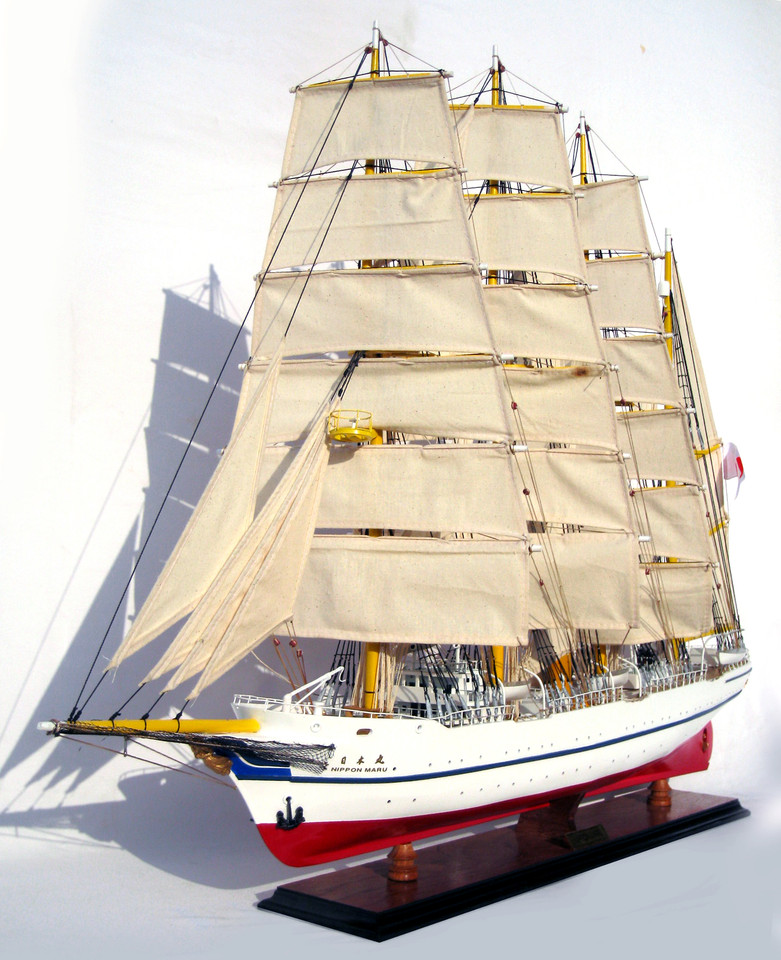
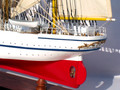
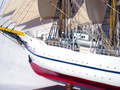
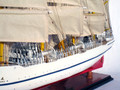
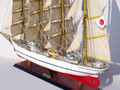
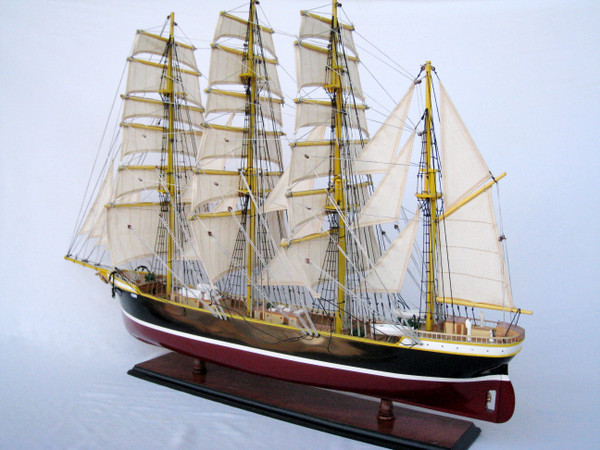
NIPPON MARU, 4 MASTED BARQUE TALL SHIP W/ SAILS
FULLY BUILT AND READY TO DISPLAY QUALITY SHIP MODEL
- Dimension Approx.: 31.5″ (long) x 8.5″ (wide) x 27.5″ (high)
- The model is already built, NOT a model ship kit
Launched in 1930 at the Kawasaki Shipbuilding Corporation in Kobe, the Nippon Maru was built at a moment when Japan sought to strengthen its merchant marine and train a new generation of officers in the traditions of seamanship. Alongside her sister ship Kaiwo Maru, she emerged as a four‑masted steel barque — elegant, powerful, and purpose‑built for the Tokyo Institute for Maritime Training. Her tall rig and sweeping lines reflected the great sailing ships of the late 19th century, yet she was thoroughly modern, equipped to prepare cadets for service across the Pacific.
From her maiden voyage on 27 January 1930, Nippon Maru sailed regularly through the waters of Japan and beyond, teaching navigation, sail handling, and discipline to thousands of trainees. Her presence became a familiar sight in Pacific ports, a symbol of Japan’s commitment to maritime education. But with the outbreak of World War II, her role changed dramatically. Her rig was removed, and she was converted into a motorship, serving in training and transport duties during and after the conflict. In the chaotic years following the war, she helped repatriate Japanese troops and civilians — a quiet but vital humanitarian mission.
In 1952, the great barque regained her identity. Her masts and sails were reinstalled, and she returned to the sea as a full sail‑training vessel. Over the next five decades, she became one of the most traveled tall ships in the world, completing the equivalent of 45.4 circumnavigations — more than 1.83 million kilometers under sail. Her crew typically included 27 officers, 48 seamen, and up to 120 trainees, all living and working together aboard a ship that demanded skill, teamwork, and respect for the sea.
Nippon Maru also became an ambassador of Japan’s maritime heritage. She visited New York in 1960 for the centennial of Japan’s first diplomatic mission to the United States, sailed in the American Bicentennial celebrations in 1976, and participated in major tall‑ship gatherings such as the Osaka International Tall Ship event in 1983. Wherever she traveled, she carried Japan’s flag and traditions with grace.
By 1984, after more than half a century of service, she was retired and replaced by the modern Nippon Maru II. Rather than being scrapped, she was entrusted to the City of Yokohama and transformed into a museum ship. Opened to the public in 1985, she became the centerpiece of Nippon Maru Memorial Park, offering full‑sail displays, educational programs, and a chance for visitors to step aboard a living piece of maritime history.
In 2017, the Nippon Maru was designated a National Important Cultural Property of Japan, recognizing her extraordinary contribution to the nation’s maritime identity. Today she rests permanently in Yokohama, her masts rising above the waterfront, inspiring new generations with the beauty of traditional sail and the legacy of Japan’s seafaring past.