





-


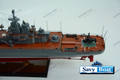
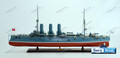
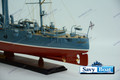
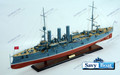
KORIETZ (KOPEEц) RUSSIAN WAR SHIP
SAVY DIRECT PRICE $999.96MSRP: $1,099.99KORIETZ (KOPEEц) RUSSIAN WAR SHIP FULLY BUILT AND READY TO DISPLAY HIGH QUALITY SHIP MODEL Dimension approx.: 34″ (long) x 9″ (wide) x 23″ (high) The model is already built. THIS IS NOT...
Description

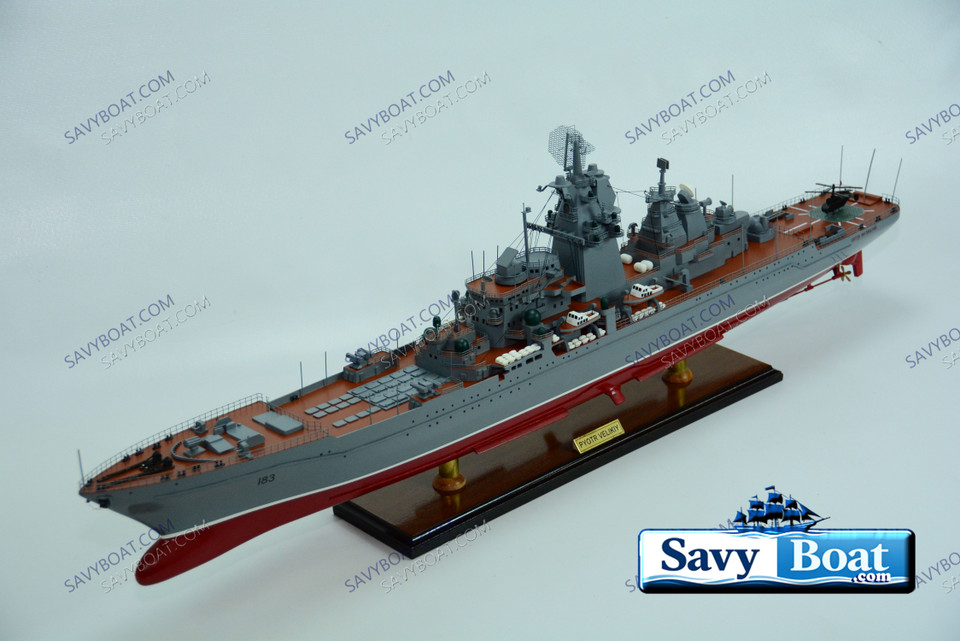
PYOTR VILIKIY RUSSIAN BATTLECRUISER
FULLY BUILT AND READY TO DISPLAY, QUALITY SHIP MODEL
- Dimension approx.: 39L x 5.5W x 13H
- The model is already built. THIS IS NOT A MODEL SHIP KIT
When the keel of the warship that would become Pyotr Velikiy was laid down in April 1986 at the Baltic Shipyard, the Soviet Union was already beginning to fracture. Yet the vessel taking shape on the slipway represented the apex of Soviet naval ambition: a nuclear‑powered, missile‑laden titan designed to confront NATO carrier groups head‑on. She was the fourth and final ship of the Kirov‑class battlecruisers, the largest surface combatants built since World War II, and the last expression of a naval doctrine that believed size, firepower, and intimidation could shape the balance of power at sea.
Originally named Yuri Andropov, after the former General Secretary, the ship was launched in 1989—just as the Soviet system that created her was collapsing. Funding evaporated, workers went unpaid, and the half‑finished giant sat idle through the early 1990s. When Russia emerged from the Soviet dissolution, the ship was renamed Pyotr Velikiy, invoking Peter the Great, the tsar who had founded the Russian Navy. It was a symbolic attempt to link a struggling modern fleet to its imperial past.
After years of delays, Pyotr Velikiy finally entered service in 1998, immediately becoming the flagship of the Northern Fleet. She was a warship built to dominate the open ocean: 251 meters long, displacing nearly 28,000 tons, and powered by a hybrid system of two nuclear reactors and two oil‑fired boilers. This gave her both endurance and speed—over 30 knots when fully engaged. Her armament was staggering: 20 P‑700 Granit anti‑ship missiles, long‑range S‑300F Fort surface‑to‑air systems, Kinzhal point‑defense missiles, torpedoes, anti‑submarine rockets, and the massive AK‑130 dual‑purpose gun. Three Ka‑27 helicopters completed her suite of offensive and defensive capabilities.
For years, Pyotr Velikiy served as the visible symbol of Russian naval power. She led exercises in the Arctic, escorted strategic submarines, and made high‑profile port visits meant to project confidence abroad. Yet behind the imposing silhouette lay a more fragile reality. The Russian Navy struggled with funding, maintenance, and modernization. Her sister ship Admiral Nakhimov was taken into a long, expensive refit, while Pyotr Velikiy continued operating with aging systems and limited upgrades.
By the 2020s, the strain was showing. Sanctions, budget pressures, and shifting naval priorities made it increasingly unlikely that Russia would invest in modernizing such a massive, complex vessel. In 2022, Pyotr Velikiy was placed in reserve at Severodvinsk. A year later, Russian officials confirmed what had long been suspected: she would not undergo a major refit. Instead, she would be retired once Admiral Nakhimov returned to service.
By 2025, the once‑formidable battlecruiser was officially laid up, marking the end of an era. With her departure, Russia retained only a single operational Kirov‑class ship—an unmistakable sign that the age of giant, nuclear‑powered surface combatants had passed.
Yet Pyotr Velikiy’s legacy endures. She was the last and most advanced of the Kirovs, a Cold War leviathan whose very existence reflected a strategic worldview built on spectacle and deterrence. Her retirement symbolizes the shift toward smaller, more flexible warships, but she remains—at least for now—the largest non‑carrier surface combatant afloat, a reminder of a time when naval power was measured in steel, reactors, and the shadow a ship cast across the sea.