










-
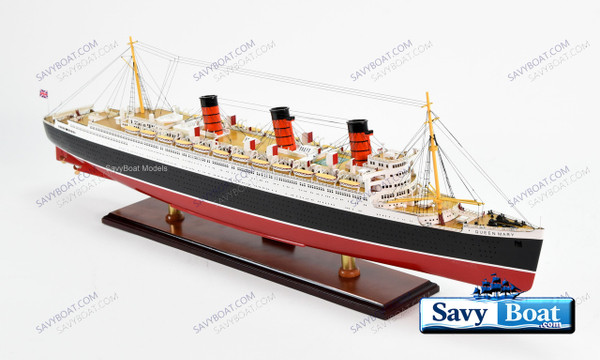
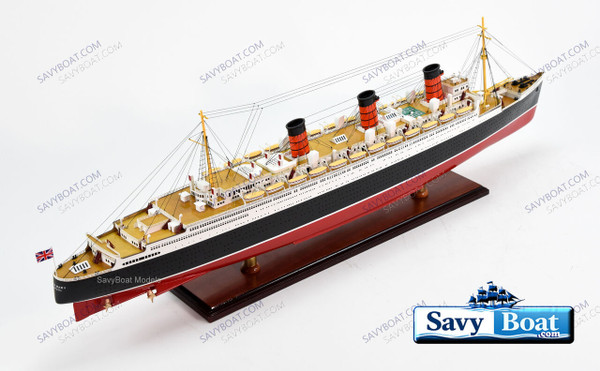
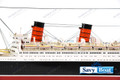
RMS QUEEN MARY OCEAN LINER
SAVY DIRECT PRICE $1,049.96MSRP: $1,149.99RMS QUEEN MARY OCEAN LINER FULLY BUILT AND READY TO DISPLAY MUSEUM QUALITY SHIP MODEL Dimension approx.: 40″ L x 5″ W x 12.5″ H LIGHTED WITH LED LIGHTS INSTALLED (power supply not... -


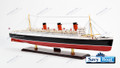
RMS QUEEN MARY II QE2 48 LIGHTED OCEAN LINER
SAVY DIRECT PRICE $1,899.96MSRP: $1,999.99QE2 QUEEN MARY II, LARGE, LIGHTED OCEAN LINER FULLY BUILT AND READY TO DISPLAY MUSEUM QUALITY SHIP MODEL Dimension Approx.: 48″L x 6"W x 12″H Approximate 1/400th SCA -
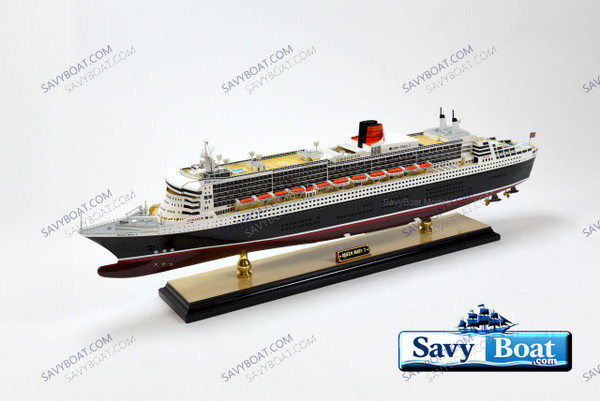

RMS QUEEN MARY II QE2 OCEAN LINER
SAVY DIRECT PRICE $1,099.96MSRP: $1,199.99QE2 QUEEN MARY II OCEAN LINER FULLY BUILT AND READY TO DISPLAY MUSEUM QUALITY SHIP MODEL Dimension Approx.: 34″L x 4.5"W x 10″H Approximate 1/400th SCALE model Ship<
Description

FULLY BUILT AND READY TO DISPLAY MUSEUM QUALITY SHIP MODEL
- Dimension approx.: 40″ L x 5″ W x 12.5″ H
- LIGHTED WITH LED LIGHTS INSTALLED (power supply not included)
- The model is already built, NOT a model ship kit
-
She began as Hull 534—a silent giant rising from the Clyde during the darkest years of the Great Depression. Work had stalled, money had dried up, and the future of Britain’s great liner tradition seemed uncertain. But when the British government agreed to fund her completion—on the condition that Cunard merge with White Star—the project roared back to life. “Construction on the ship… began in December 1930,” your document notes, and by 1934 she was ready for launch.
On 26 September 1934, in a moment of royal surprise, she received her name. Cunard had intended Queen Victoria, but when they asked King George V’s permission to name the ship after Britain’s “greatest queen,” he replied that his wife Mary “would be delighted.” And so the ship became Queen Mary, sliding down the ways into the River Clyde under the drag of eighteen massive chains.
By 1936 she was complete—80,774 tons, over 1,000 feet long, capable of more than 32 knots. Her maiden voyage that May was triumphant, and by August she had captured the coveted Blue Riband. “Queen Mary sailed on her maiden voyage on 27 May 1936,” the document recounts, and she quickly became the most popular liner on the Atlantic, even if critics found her design conservative compared to the sleek French Normandie.
Her interiors were a world unto themselves: Art Deco salons, two swimming pools, nurseries, libraries, a music studio, and the soaring three‑deck dining room with its illuminated map of the Atlantic. Woods from across the British Empire lined her walls. She was elegance, power, and national pride made steel.
Then came war.
In 1939 she was ordered to remain in New York. Soon she was painted battleship grey, stripped of her finery, and transformed into the “Grey Ghost.” Her speed made her invaluable. She carried troops alone, without escort, zigzagging faster than U‑boats could track. In 1943 she carried 16,683 people—a record that still stands. “Queen Mary and Queen Elizabeth were the largest and fastest troopships involved in the war,” the document says, and Hitler even offered a bounty to any submarine captain who could sink her.
She survived rogue waves, near‑capsize, and tragedy—most notably the accidental slicing of HMS Curacoa in 1942. But she also carried Winston Churchill across the Atlantic, where he planned the Normandy invasion aboard her.
When peace returned, so did her glamour. Refitted in 1946, she resumed transatlantic service with her running mate Queen Elizabeth. For a decade they dominated the route, symbols of postwar optimism. But the jet age arrived, and by the early 1960s the great liners were losing passengers to the skies. By 1967, Queen Mary was operating at a loss.
Her final voyage began on 31 October 1967. She rounded Cape Horn and arrived in Long Beach on 9 December, where she would begin a second life.
Her transformation was dramatic. “Queen Mary… was converted from a seafaring vessel to a floating hotel,” the document explains. Boiler rooms were removed, machinery gutted, and entire decks reimagined as restaurants, banquet halls, and hotel rooms. Some spaces were preserved; others were lost forever. Over the decades she passed through many operators—Hyatt, Disney, private groups—each leaving their mark.
She became a museum, a hotel, a filming location, a wedding venue, a tourist attraction, and, inevitably, the subject of ghost stories. Time magazine even listed her among the “Top 10 Haunted Places,” though the document notes that “there is no historical record to support these claims.”
Her condition has fluctuated—sometimes lovingly restored, sometimes neglected. Reports in the 2010s warned of corrosion and urgent repairs. But she endured. In 2023 she reopened after major restoration efforts, and in 2024 she was inducted into the Historic Hotels of America registry.
And then, in 2026, something extraordinary happened.
For the first time in twenty years, the modern Queen Mary 2 returned to Long Beach. “On February 2, 2026, Queen Mary 2 reunited with Queen Mary,” your document says, marking the 90th anniversary of the older ship’s maiden voyage. The two Queens exchanged whistle salutes across the harbor—one voice from the past, one from the present—echoing across the water.
Today, the RMS Queen Mary remains a monument to an era when ocean liners were national icons, technological marvels, and floating palaces. She is a survivor of war, a relic of glamour, and a living museum of maritime history—still standing, still visited, still loved.