










-
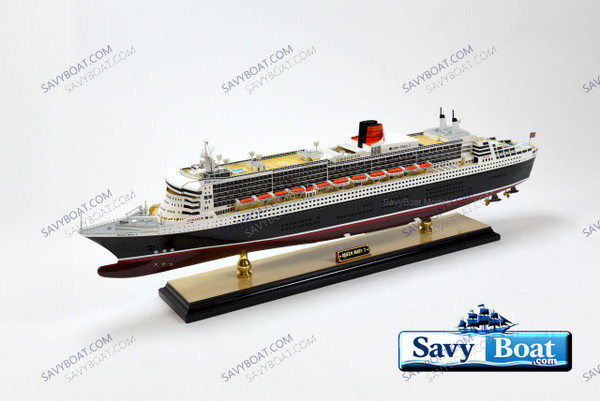

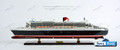
RMS QUEEN MARY II QE2 OCEAN LINER
SAVY DIRECT PRICE $1,099.96MSRP: $1,199.99QE2 QUEEN MARY II OCEAN LINER FULLY BUILT AND READY TO DISPLAY MUSEUM QUALITY SHIP MODEL Dimension Approx.: 34″L x 4.5"W x 10″H Approximate 1/400th SCALE model Ship< -


MS QUEEN ELIZABETH II (QE2 LIGHTED OCEAN LINER
SAVY DIRECT PRICE $1,199.96MSRP: $1,349.99MS QUEEN ELIZABETH II (QE2) - LIGHTED FULLY BUILT AND READY TO DISPLAY MUSEUM QUALITY SHIP MODEL Dimension Approx.: 39.5″L x 4.5″W x 12″H SCALE 1:300 LIGHTED - LED LIGHTS pre-installed... -
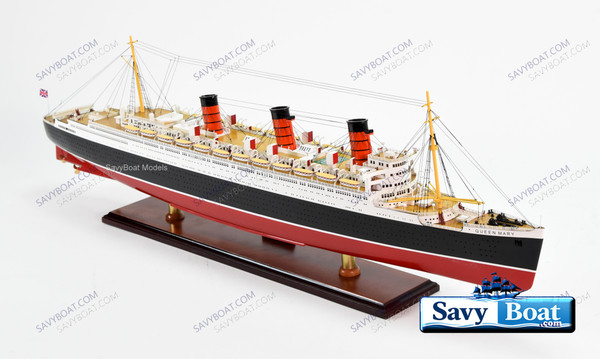

RMS QUEEN MARY LIGHTED OCEAN LINER
SAVY DIRECT PRICE $1,199.96MSRP: $1,299.99FULLY BUILT AND READY TO DISPLAY MUSEUM QUALITY SHIP MODEL Dimension approx.: 40″ L x 5″ W x 12.5″ H LIGHTED WITH LED LIGHTS INSTALLED (power supply not included) The model is already...
Description

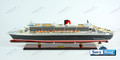
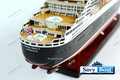
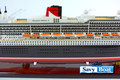
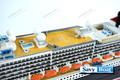
QE2 QUEEN MARY II, LARGE, LIGHTED OCEAN LINER
FULLY BUILT AND READY TO DISPLAY MUSEUM QUALITY SHIP MODEL
- Dimension Approx.: 48″L x 6"W x 12″H
- Approximate 1/400th SCALE model Ship
- LIGHTED - LED lights preinstalled (powersupply not included)
- The model is already built, NOT a model ship kit
She was born from ambition—an echo of a bygone era when ocean liners ruled the Atlantic, yet unmistakably engineered for the modern world. When the RMS Queen Mary 2 slid from the construction docks of Saint‑Nazaire in 2003, she carried with her not only the legacy of Cunard’s great liners but also the weight of expectation: to become the last true ocean liner in active service, a ship built not merely to cruise, but to cross.
Her creation was monumental. “Approximately 3,000 craftsmen spent around eight million working hours on the ship,” the document notes, a testament to the scale of the undertaking. Designed by Stephen Payne and constructed by Chantiers de l’Atlantique, she required 40% more steel than a typical cruise ship, her hull fine‑lined for speed, her frame braced for the North Atlantic’s winter moods. At 1,132 feet long, she briefly held the title of the world’s largest passenger ship—though she would forever remain the largest ocean liner ever built.
From the moment she entered service in 2004, named by Queen Elizabeth II herself, Queen Mary 2 became a moving symbol of continuity. She replaced the aging Queen Elizabeth 2 as Cunard’s flagship, inheriting the RMS prefix and the responsibility of maintaining the transatlantic tradition. Her engines—four massive Wärtsilä diesels and two GE gas turbines—fed an integrated electric propulsion system that could push her past 30 knots, a speed modern cruise ships could only envy.
Inside, she was a floating city of refinement: fifteen restaurants and bars, the largest ballroom at sea, a planetarium, a theatre, a vast library, and promenades that wrapped the ship in a continuous circuit. “More than 5,000 commissioned works of art are visible in Queen Mary 2’s public rooms,” the document says, making her as much a gallery as a vessel.
Her early years were dramatic. On her maiden voyage, bow thruster doors jammed in Portugal. In 2006, a damaged propulsion pod forced her to skip ports and limp across South America. Yet she pressed on, meeting her namesake in Long Beach in 2006, exchanging a whistle salute heard across the harbor—an emotional reunion between past and present.
She became a stage for history: a floating hotel during the 2004 Athens Olympics, a vessel carrying the first U.S. copy of Harry Potter and the Half‑Blood Prince, a host to presidents, musicians, and celebrities. She circled the globe, met her sister ships in spectacular “Royal Rendezvous” events, and even diverted course mid‑Atlantic to resupply a solo rower with a satellite phone and groceries—an extraordinary gesture of seamanship and humanity.
Refits came as the years passed. In 2016, a sweeping $132 million renovation reshaped her upper decks, added single staterooms, expanded kennels, and installed emissions scrubbers. The pandemic of 2020 forced her into an unprecedented lay‑up, her world cruise cut short as she carried passengers to safety and then returned home to Southampton.
But she endured. She returned to service in 2021, received further updates in 2023, and continued her world voyages. In 2026, she finally achieved what had once been impossible: her first transit of the Panama Canal, made possible only after the canal’s expansion. Days later, she reunited with the original Queen Mary once more, celebrating the 90th anniversary of the elder ship’s maiden voyage.
Through triumphs, challenges, and decades of change, Queen Mary 2 has remained what she was always meant to be: the last great ocean liner, a bridge between centuries, and a ship whose story is still being written—one crossing at a time.