






-
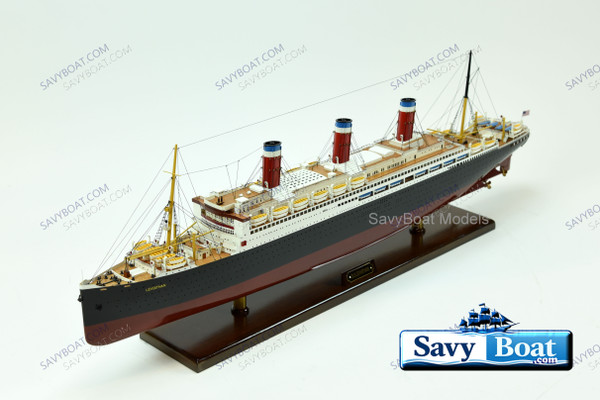
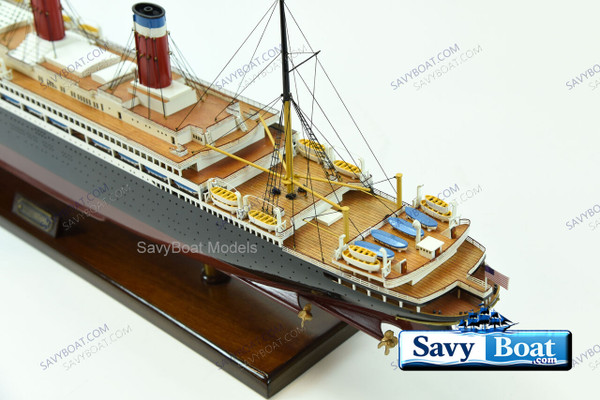
SS LEVIATHAN OCEAN LINER
SAVY DIRECT PRICE $999.96MSRP: $1,049.99SS LEVIATHAN OCEAN LINER FULLY BUILT AND READY TO DISPLAY BOAT MODEL Dimension approx.: 38″ L x 4.5″ W x 12″ H Approx Scale 1/300 The model is already built. THIS IS NOT A MODEL -
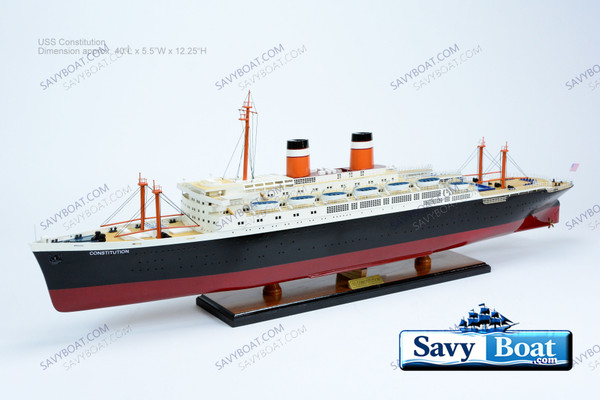

SS CONSTITUTION OCEAN LINER
SAVY DIRECT PRICE $799.96MSRP: $849.99SS CONSTITUTION OCEAN LINER FULLY BUILT AND READY TO DISPLAY BOAT MODEL Dimension approx.: 40"L x 6.5"W x 13.5"H The model is already built. THIS IS NOT A MODEL SHIP KIT The SS... -
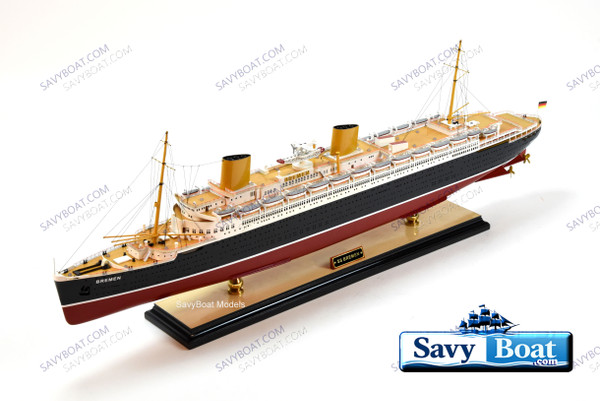

SS BREMEN OCEAN LINER
SAVY DIRECT PRICE $999.96MSRP: $1,099.99SS BREMEN OCEAN LINER FULLY BUILT AND READY TO DISPLAY, QUALITY SHIP MODEL Dimension Approx.: 37.5″ L x 4.5″ W x 15″ H approx Scale 1:300 The model is already built, NOT a model ship kit
Description

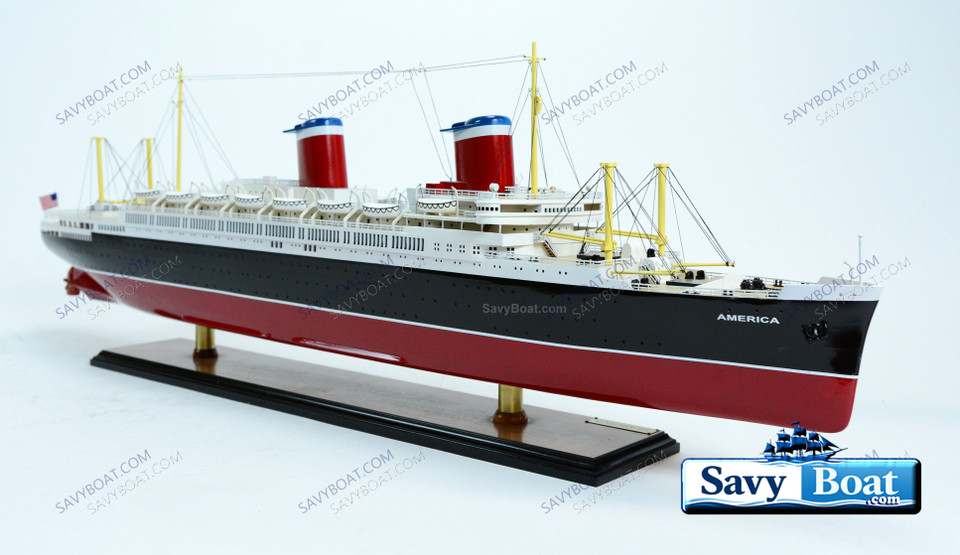
SS AMERICA OCEAN LINER
FULLY BUILT AND READY TO DISPLAY BOAT MODEL
- Dimension approx.: 40″ L x 6″ W x 12.5″ H
- The model is already built. THIS IS NOT A MODEL SHIP KIT
When the SS America slid down the ways at Newport News on 31 August 1939, she embodied a new vision of American ocean travel. Designed by William Francis Gibbs, the nation’s most exacting naval architect, and christened by First Lady Eleanor Roosevelt, she was built to showcase modern American engineering and style. Completed in April 1940, she entered service as a sleek, 723‑foot liner with clean lines, a 22.5‑knot cruising speed, and interiors unlike anything seen on the Atlantic before.
Her public rooms were designed by Dorothy Marckwald and Anne Urquhart, the first all‑women design team ever to shape an ocean liner’s interiors. Their “Hollywood Modern” aesthetic — simple, comfortable, and distinctly American — set her apart from the ornate European liners of the era. For a brief moment, SS America sailed as a glamorous peacetime vessel, a symbol of U.S. optimism on the eve of global conflict.
That moment ended quickly. In June 1941, she was requisitioned by the U.S. Navy and transformed into the USS West Point (AP‑23), a fast troop transport built for danger. Throughout World War II, she carried more than 500,000 military and civilian passengers across submarine‑infested waters with a perfect record: not a single life lost. She survived U‑boat threats, Japanese bomber raids, and brutal North Atlantic storms, earning a reputation as one of the safest and most reliable transports of the war.
Decommissioned in March 1946, she returned to United States Lines and resumed her civilian identity as SS America, sailing the New York–Le Havre–Southampton route. For nearly two decades she carried postwar travelers, immigrants, and tourists across the Atlantic, her modern interiors aging gracefully as jet travel slowly eroded the dominance of ocean liners.
From the mid‑1960s onward, her life became a long odyssey of new names, new owners, and new roles:
-
SS America (1946–1964)
-
SS Australis (1964–1978) — a popular emigrant ship for Chandris Lines
-
SS Italis (1978)
-
SS Noga (1980–1984 / 1993)
-
SS Alferdoss (1984–1993)
-
SS American Star (1993–1994)
She sailed under flags from New York, Piraeus, and Panama City, serving cruise lines, charter operators, and lay‑up periods as the decades wore on. Despite the changes, her Gibbs‑designed hull remained unmistakable — long, balanced, and built for speed.
Her final chapter was dramatic and tragic. In January 1994, while under tow to become a hotel ship, the SS American Star broke free during a storm and grounded at Playa de Garcey, Fuerteventura, in the Canary Islands. Pounded by surf, she split in two and was declared a total loss by July 1994. Over the following years, her wreck slowly collapsed into the sea, leaving only scattered remnants of a once‑proud liner.
Today, the SS America is remembered as one of the most iconic U.S. liners of the 20th century — a ship that bridged eras: prewar glamour, wartime service, postwar transatlantic travel, and the long twilight of the classic passenger liner. Her story reflects the evolution of ocean travel itself, from national prestige to mass migration to the end of the great liner age.