











-

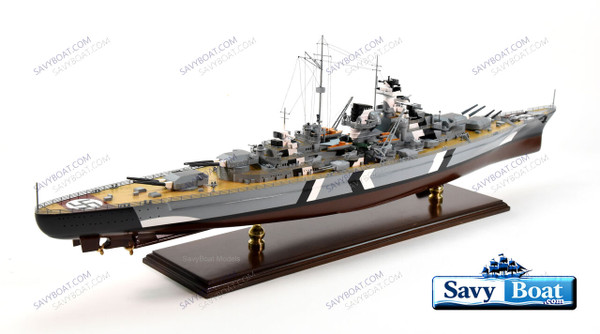
BISMARCK GERMAN BATTLESHIP
SAVY DIRECT PRICE $999.96MSRP: $1,099.99BISMARCK GERMAN BATTLESHIP FULLY BUILT AND READY TO DISPLAY MUSEUM QUALITY SHIP MODEL BEAUTIFUL MUSEUM QUALITY MODEL Dimension approx.: 40 (long) x 6″ (wide) x 12″ (high) APROX SCALE... -
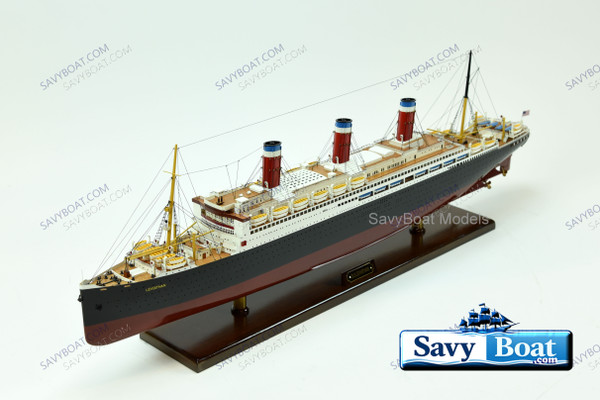
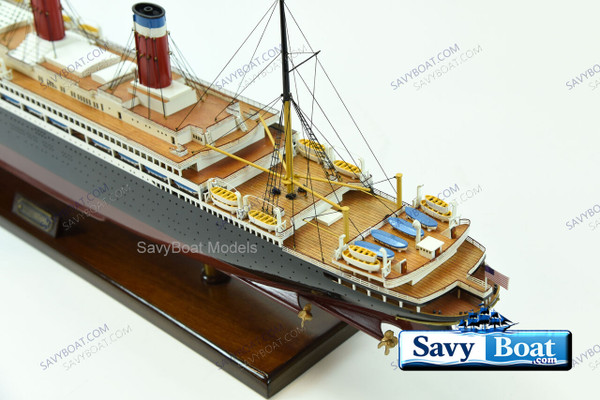
SS LEVIATHAN OCEAN LINER
SAVY DIRECT PRICE $999.96MSRP: $1,049.99SS LEVIATHAN OCEAN LINER FULLY BUILT AND READY TO DISPLAY BOAT MODEL Dimension approx.: 38″ L x 4.5″ W x 12″ H Approx Scale 1/300 The model is already built. THIS IS NOT A MODEL -
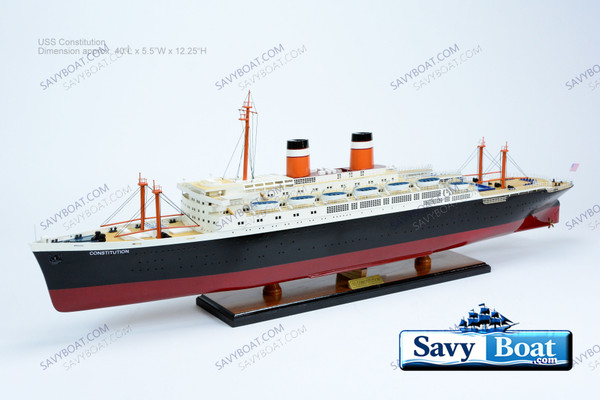

SS CONSTITUTION OCEAN LINER
SAVY DIRECT PRICE $799.96MSRP: $849.99SS CONSTITUTION OCEAN LINER FULLY BUILT AND READY TO DISPLAY BOAT MODEL Dimension approx.: 40"L x 6.5"W x 13.5"H The model is already built. THIS IS NOT A MODEL SHIP KIT The SS...
Description

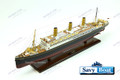
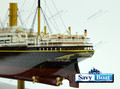
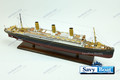
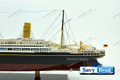
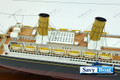
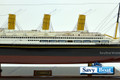
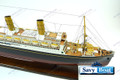
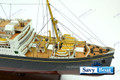
SS BISMARCK GERMAN OCEAN LINER
FULLY BUILT AND READY TO DISPLAY MUSEUM QUALITY SHIP MODEL
- Dimensions approx: 38″ L x 4.5″ W x 12″ H
- APPROX SCALE 1/300.
- This beautiful model is already built, NOT a kit.
The Bismarck, an Imperator class ship, was born into an age of imperial confidence. Conceived as the third and greatest of Hamburg America Line’s Imperator‑class giants, she was meant to be the crowning expression of German maritime ambition—a ship so vast and so lavish that she would eclipse every rival on the Atlantic. Laid down at Blohm & Voss in 1913, she took shape in a world still convinced of its own stability. When Countess Hanna von Bismarck christened her in June 1914, the great hull slid into the Elbe as Europe stood on the edge of catastrophe.
War froze her future before it began. While Imperator and Vaterland entered service, the unfinished Bismarck remained trapped in the shipyard, her interiors incomplete, her machinery silent. Material shortages, naval priorities, and the collapse of transatlantic travel left her suspended in time—too large to abandon, too unfinished to use. When the Armistice came, she was still waiting, a steel monument to an empire that no longer existed.
Under the Treaty of Versailles, she was surrendered to Britain as reparations. The White Star Line, still reeling from wartime losses, took possession of the immense hull in 1920. Under British supervision she was completed, transformed, and renamed Majestic. Her German lines softened, her interiors Anglicized, she emerged in 1922 as a ship reborn—painted in White Star’s colors, crowned with new fittings, and ready to claim the title of the world’s largest liner at 56,551 tons.
When she arrived at Southampton in April 1922, crowds gathered to see the new flagship. A month later she sailed on her maiden voyage to New York, beginning a decade of service that made her one of the most beloved liners of the interwar years. Passengers nicknamed her the “Magic Stick,” a playful twist on her name, and she carried monarchs, celebrities, and thousands of emigrants across the Atlantic. She was vast, steady, and—despite her German origins—became a symbol of White Star’s lingering grandeur.
But the 1930s were unkind to the old order of ocean travel. The Depression thinned passenger lists, and White Star’s finances collapsed. In 1936 the company merged with Cunard, and the aging Majestic was laid up, her glory fading. The Royal Navy found a final use for her: in 1937 she was recommissioned as HMS Caledonia, a stationary training ship for naval recruits. Her funnels no longer smoked; her decks became classrooms.
Her end came abruptly. On 29 September 1939, only weeks into the Second World War, a fire swept through the ship while she lay in port. The blaze gutted her, and she capsized at her moorings, a giant brought down not by torpedoes or storms but by accident. Raised in 1940 and stripped of value, she was finally scrapped in 1943—her steel melted down to feed the war effort of the nation that had once taken her as a prize.
From imperial dream to British flagship, from world’s largest liner to naval hulk, the Bismarck/Majestic lived a life shaped entirely by the upheavals of the 20th century. She never sailed for the nation that built her, yet she became one of the defining ships of her era—an ocean liner whose fate mirrored the rise and fall of the world around her.