










-
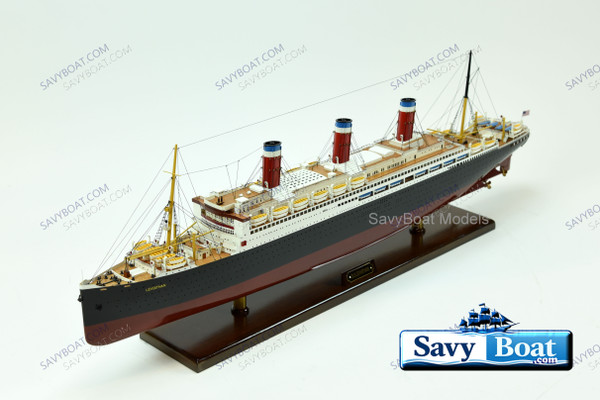
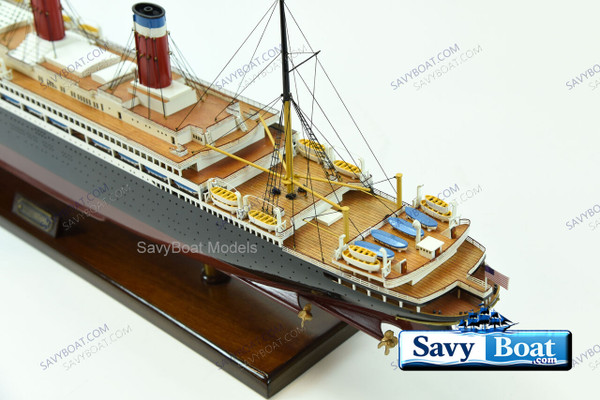
SS LEVIATHAN OCEAN LINER
SAVY DIRECT PRICE $999.96MSRP: $1,049.99SS LEVIATHAN OCEAN LINER FULLY BUILT AND READY TO DISPLAY BOAT MODEL Dimension approx.: 38″ L x 4.5″ W x 12″ H Approx Scale 1/300 The model is already built. THIS IS NOT A MODEL -
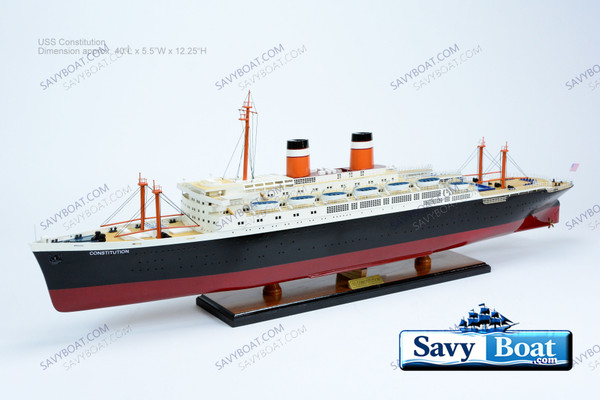

SS CONSTITUTION OCEAN LINER
SAVY DIRECT PRICE $799.96MSRP: $849.99SS CONSTITUTION OCEAN LINER FULLY BUILT AND READY TO DISPLAY BOAT MODEL Dimension approx.: 40"L x 6.5"W x 13.5"H The model is already built. THIS IS NOT A MODEL SHIP KIT The SS... -
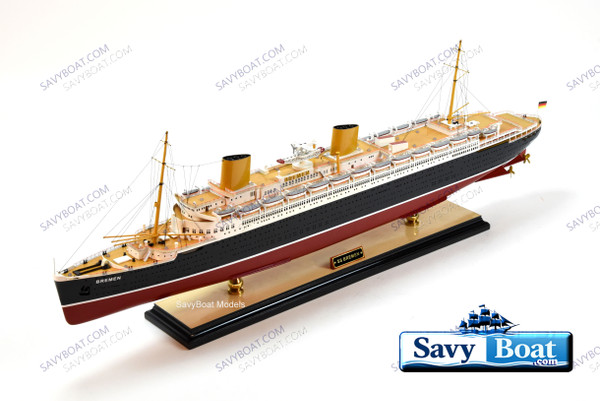

SS BREMEN OCEAN LINER
SAVY DIRECT PRICE $999.96MSRP: $1,099.99SS BREMEN OCEAN LINER FULLY BUILT AND READY TO DISPLAY, QUALITY SHIP MODEL Dimension Approx.: 37.5″ L x 4.5″ W x 15″ H approx Scale 1:300 The model is already built, NOT a model ship kit
Description

SS GALILEO GALILEI OCEAN LINER
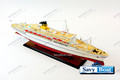
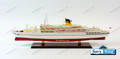
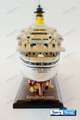
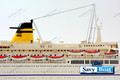
FULLY BUILT AND READY TO DISPLAY BOAT MODEL
- Dimension approx.: 34″ L x 5″ W x 12″ H
- Approx Scale: 1:250
- The model is already built. THIS IS NOT A MODEL SHIP KIT
When the SS Galileo Galilei was launched on 2 July 1961 from the Cantieri Riuniti dell’Adriatico shipyard in Monfalcone, she represented the pride and ambition of postwar Italian shipbuilding. Built for Lloyd Triestino, she was the lead ship of the new Galileo‑class, designed to modernize Italy’s migrant fleet and replace the aging “Australia class” liners. Completed in 1963, she departed on her maiden voyage on 22 April 1963, sailing from Genoa to Sydney and arriving on 15 May — the beginning of a long and varied career that would span continents, owners, and roles.
As built, Galileo Galilei was a strikingly modern liner. At 213.65 meters long with a 28.71‑meter beam, she displaced 27,888 GRT and could carry 1,750 passengers across First and Tourist classes. Her four De Laval–San Andrea steam turbines, driving twin propellers at 32,824 kW, gave her a service speed of 24 knots, making her one of the fastest migrant liners of her era. Her bulbous bow, graceful funnel, and telescopic exhaust gave her a sleek, futuristic profile that stood out among 1960s passenger ships.
Through the 1960s and early 1970s, Galileo Galilei served the Italy–Australia migrant route, sailing eastbound through the Suez Canal and returning via the Panama Canal or the Cape of Good Hope depending on geopolitical conditions. She carried thousands of migrants seeking new lives in Australia, as well as tourists drawn to her modern amenities and Italian hospitality. She also operated round‑the‑world voyages, including a notable departure from Genoa in June 1971, showcasing her speed and long‑range capability.
In 1975, Galileo Galilei struck a reef off West Africa, suffering significant damage. She was repaired in Genoa, but the incident foreshadowed the end of her migrant service. By April 1977, changing travel patterns and the rise of air transport made her original role obsolete, and she was withdrawn and laid up.
A major transformation followed. Between 1977 and 1979, she underwent extensive reconstruction into a full‑time cruise ship for Italia Crociere, emerging with new interiors and a new identity. From 1979 to 1983, she sailed Mediterranean itineraries before being sold to Chandris Cruises and renamed Galileo. Chandris modernized her accommodations and reduced her capacity to 1,262 passengers, preparing her for the evolving cruise market.
Her next chapter came in 1990, when she joined Celebrity Cruises as Meridian, operating popular Eastern U.S.–Bermuda routes. In 1997, she was sold to Sun Cruises and renamed Sun Vista, continuing service in the Far East.
Her long career ended suddenly. On 20 May 1999, an engine‑room fire broke out while she was sailing through the Strait of Malacca. The ship was evacuated the next day, 21 May, and despite the successful rescue of all 1,090 passengers and crew, the vessel sank into the strait — a dramatic and tragic conclusion to more than three decades at sea.
Today, the SS Galileo Galilei is remembered as one of the most innovative Italian liners of the postwar period. From her role in the migrant boom to her transformation into a modern cruise ship, she embodied the adaptability and elegance of mid‑century passenger vessels. Her story — spanning continents, owners, and identities — remains a testament to the golden age of ocean travel and the enduring legacy of Italian shipbuilding.