










-
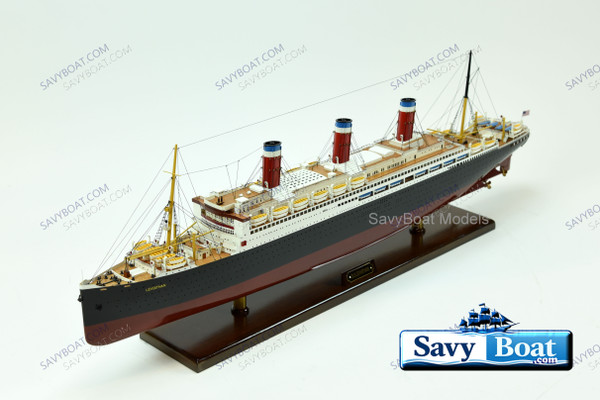
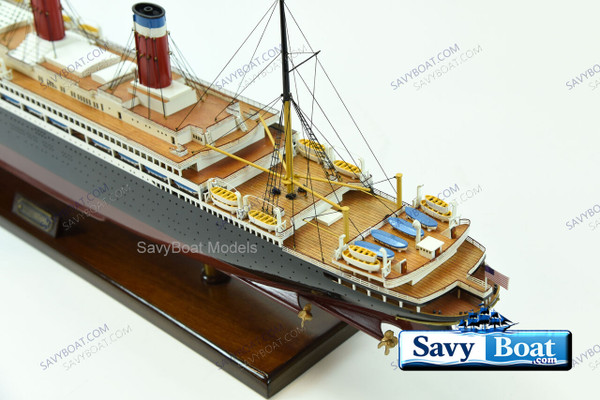
SS LEVIATHAN OCEAN LINER
SAVY DIRECT PRICE $999.96MSRP: $1,049.99SS LEVIATHAN OCEAN LINER FULLY BUILT AND READY TO DISPLAY BOAT MODEL Dimension approx.: 38″ L x 4.5″ W x 12″ H Approx Scale 1/300 The model is already built. THIS IS NOT A MODEL -
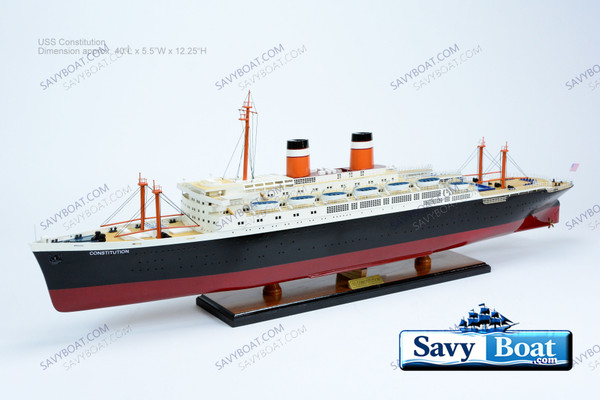

SS CONSTITUTION OCEAN LINER
SAVY DIRECT PRICE $799.96MSRP: $849.99SS CONSTITUTION OCEAN LINER FULLY BUILT AND READY TO DISPLAY BOAT MODEL Dimension approx.: 40"L x 6.5"W x 13.5"H The model is already built. THIS IS NOT A MODEL SHIP KIT The SS... -
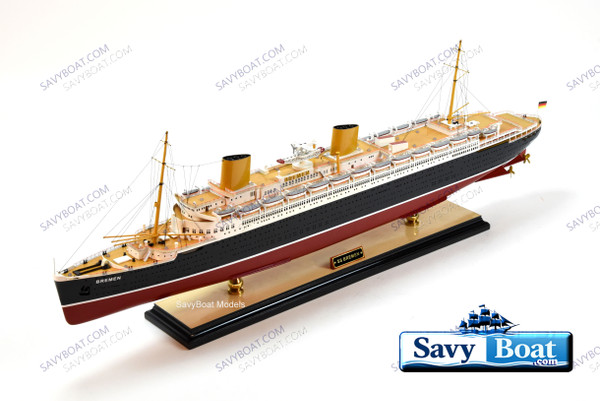

SS BREMEN OCEAN LINER
SAVY DIRECT PRICE $999.96MSRP: $1,099.99SS BREMEN OCEAN LINER FULLY BUILT AND READY TO DISPLAY, QUALITY SHIP MODEL Dimension Approx.: 37.5″ L x 4.5″ W x 15″ H approx Scale 1:300 The model is already built, NOT a model ship kit
Description

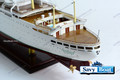
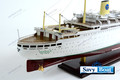
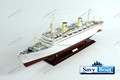
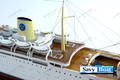
SS GRIPSHOLM 1957 STEAM SHIP/OCEAN LINER
FULLY BUILT AND READY TO DISPLAY, QUALITY SHIP MODEL
- Dimension approx.: 40″ (long) x 4.75″ (wide) x 12″ (high)
- This beautiful model is already built, NOT a kit.
When the SS Gripsholm emerged from the Ansaldo shipyard in Genoa on 8 April 1956, she represented the final flowering of the Swedish American Line’s golden era. Sleek, modern, and unmistakably Scandinavian in her understated elegance, she was built to serve two worlds at once: the traditional Gothenburg–New York transatlantic run and the increasingly popular realm of long‑distance cruising. Completed in April 1957 and commanded by the seasoned Captain Gunnar Nordenson — already known for his role in the Stockholm–Andrea Doria collision — she set out on her maiden voyage on 14 May 1957, arriving in New York nine days later.
At 23,150 gross tons and 192 meters in length, Gripsholm was a substantial ship — larger than her intended sister, the Kungsholm, and powered by two robust Gotaverken 9‑cylinder diesels producing over 16,000 horsepower. She could carry roughly 760 passengers and a crew of 365, spread across eight decks designed with the clean lines and warm woods that defined mid‑century Swedish design. She was fast enough for the Atlantic at 18 knots, but comfortable enough for world cruising, a duality that made her one of the most versatile liners of her generation.
For the Swedish American Line, Gripsholm became a symbol of postwar optimism. She crossed the Atlantic season after season, then slipped into cruising mode during the winter months, carrying passengers to warmer waters with the same quiet efficiency. Her interiors — bright, airy, and distinctly Nordic — made her a favorite among travelers who preferred refinement over ostentation.
But by the early 1970s, the age of the great liners was ending. Jets had conquered the Atlantic, and the economics of mixed service no longer made sense. In 1971, Gripsholm was laid up in Gothenburg for three months and transformed into a pure cruise ship, ending her transatlantic career. Her white hull and graceful profile remained, but her purpose shifted fully toward leisure rather than transportation.
In 1975, the Swedish American Line sold her to Karageorgis Lines, where she was renamed MS Navarino. She traded the North Atlantic for the sun‑drenched Mediterranean, carrying holidaymakers between Greek islands and coastal ports. But her new life was not without danger. In 1981, she struck rocks near Patmos, forcing passengers to remain on deck through the night while divers assessed the damage — a harrowing reminder that even seasoned ships could be humbled by the sea.
Sold again in 1984 to Regency Cruises, she became MS Regent Sea, a familiar sight in the Caribbean and European waters. She sailed through the 1980s and 1990s as cruising expanded into a global industry, her classic lines standing out amid the growing fleet of boxier, purpose‑built cruise ships.
In 1997, she changed hands once more, renamed MS Sea under United States American Cruise Line. By then she was an aging veteran — still graceful, still serviceable, but increasingly overshadowed by newer, larger vessels.
By 2001, her time had come. Sold for scrap after 44 years of service, she began her final journey toward the breakers. But fate intervened one last time. On 12 July 2001, before reaching the scrapyard, the former Gripsholm sank en route, ending her life not on a beach under cutting torches, but in the deep — a quiet, unplanned grave for a ship that had crossed oceans, survived collisions, grounded on rocks, and carried hundreds of thousands of passengers across four decades.