














-
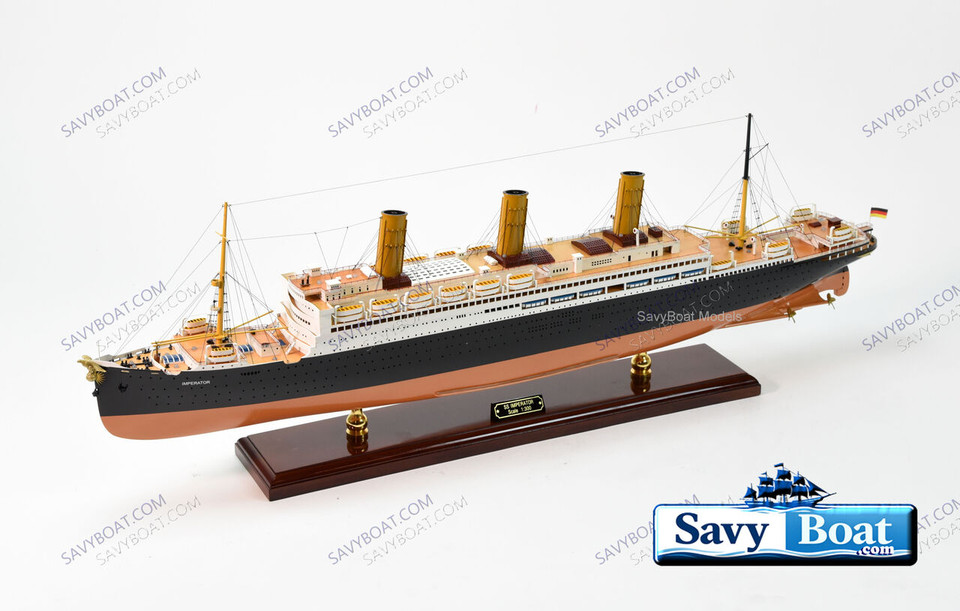
SS IMPERATOR OCEAN LINER
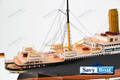
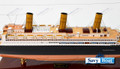
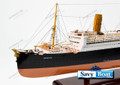
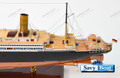
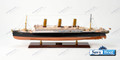
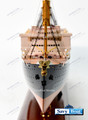
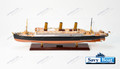
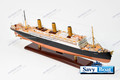
SAVY DIRECT PRICE $999.96MSRP: $1,099.99SS IMPERATOR OCEAN LINER FULLY BUILT AND READY TO DISPLAY MUSEUM QUALITY SHIP MODEL This beautiful model is already built, NOT a kit. Dimensions approx: 38″ L x 4.5″ W x 12″ H – Scale 1/285... -


SS POSEIDON LIGHTED OCEAN LINER
SAVY DIRECT PRICE $1,099.96MSRP: $1,199.99SS POSEIDON LIGHTED OCEAN LINER FULLY BUILT AND READY TO DISPLAY, HIGH QUALITY SHIP MODEL Dimension Approx.: 36.5″ L x 4.5″ W x 11.5″ H LIGHTED - LED LIGHTS pre-install -

SS BREMEN LIGHTED OCEAN LINER
SAVY DIRECT PRICE $1,199.96MSRP: $1,299.99SS BREMEN LIGHTED OCEAN LINER FULLY BUILT AND READY TO DISPLAY, QUALITY SHIP MODEL Dimension Approx.: 37.5″ L x 4.5″ W x 15″ H Approx Scale 1:300 LIGHTED - LED LIGHTS pre-insta
Description

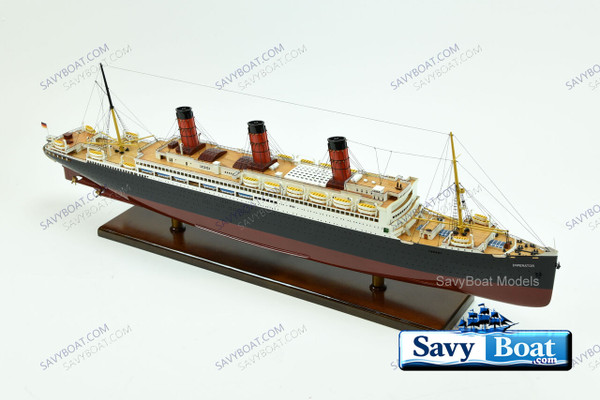
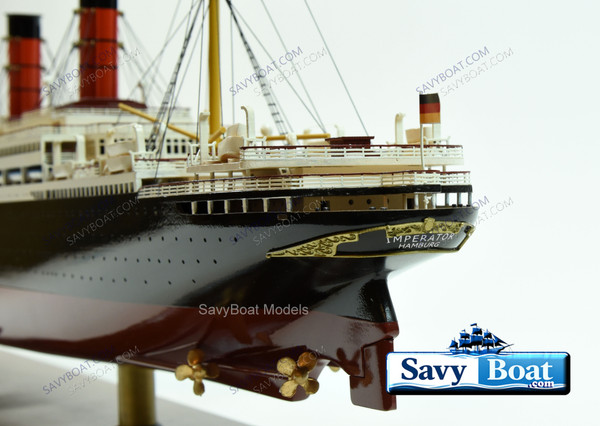
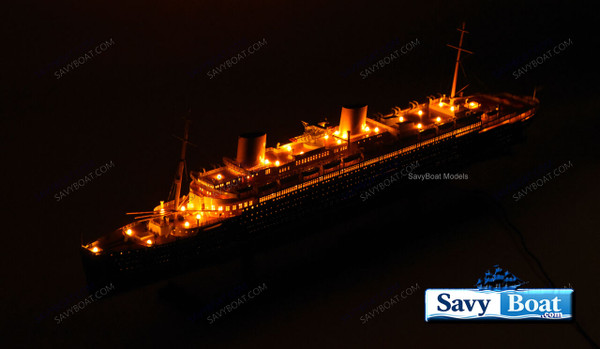
SS IMPERATOR LIGHTED OCEAN LINER
FULLY BUILT AND READY TO DISPLAY MUSEUM QUALITY SHIP MODEL
- This beautiful model is already built, NOT a kit.
- Dimensions approx: 38″ L x 4.5″ W x 12″ H – Scale 1/285.
- LIGHTED - LED lights preinstalled (pwer supply not included)
When the Imperator slid down the ways at Hamburg in 1912, she was more than a ship—she was a proclamation. Germany, long overshadowed by Britain’s dominance of the Atlantic, had built a leviathan to rival the world’s greatest liners. At nearly 900 feet and over 50,000 tons, she was the largest moving object on earth, crowned by a colossal bronze eagle gripping a globe, its wings spread in imperial confidence. Mein Feld ist die Welt—My field is the world—was not subtle, but subtlety was never the point.
Her early months revealed the tension between ambition and reality. The ship rolled heavily, her turbines ran hot, and a flash fire during trials forced hurried corrections. Yet once in service, the Imperator dazzled. Her Winter Garden, her grand dining rooms, her Ritz‑Carlton restaurant—these were floating palaces, crafted to impress both the wealthy elite and the emigrants who filled her lower decks. For fourteen months she carried thousands between Hamburg and New York, a symbol of German engineering and national pride.
Then the guns of 1914 silenced her. As war engulfed Europe, the great liner lay idle in Hamburg, her lights extinguished, her eagle staring out over a harbor suddenly emptied of commerce. She remained there for the duration, a giant without a purpose.
When peace came, it came with a price. Under the Treaty of Versailles, Imperator was surrendered to the United States, briefly commissioned as USS Imperator and used to bring American soldiers home from France. The ship that had once embodied German ambition now served a very different flag.
Her final transformation came when she was handed to Cunard to help replace the lost Lusitania. Renamed Berengaria, she became—ironically—a British flagship. Cunard softened her German edges, corrected her lingering stability issues, and gave her a new identity. For two decades she crossed the North Atlantic, carrying celebrities, emigrants, diplomats, and dreamers. She was never the fastest, nor the most modern, but she possessed a stately grandeur that made her beloved by many who sailed aboard her.
By the late 1930s, age and electrical troubles caught up with her. Fires, breakdowns, and mounting maintenance costs sealed her fate. Sold for scrap in 1939, she lingered through the war years before finally disappearing in 1946—dismantled piece by piece, her eagle long gone, her glory preserved only in memory and photographs.
Yet the Imperator’s legacy endures. She was the first of Germany’s great trio—followed by Vaterland and Bismarck—all of which would be claimed by the victors of war and reborn under new names. Her story is one of ambition, reinvention, and the strange afterlives of ships caught in the tides of history. A giant at birth, a survivor through upheaval, and ultimately a symbol of an era when ocean liners were the world’s most powerful expressions of national pride.