









-

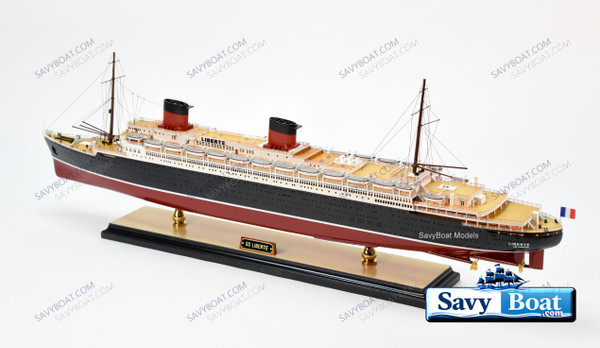
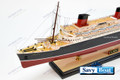
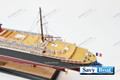
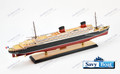
SS LIBERTE ' OCEAN LINER
SAVY DIRECT PRICE $999.96MSRP: $1,099.99SS LIBERTE' OCEAN LINER FULLY BUILT AND READY TO DISPLAY, QUALITY SHIP MODEL Dimension Approx.: 37.5″ L x 4.5″ W x 15″ H″ H Open die cut side hull windows, NOT painted like those built... -


SS POSEIDON LIGHTED OCEAN LINER
SAVY DIRECT PRICE $1,099.96MSRP: $1,199.99SS POSEIDON LIGHTED OCEAN LINER FULLY BUILT AND READY TO DISPLAY, HIGH QUALITY SHIP MODEL Dimension Approx.: 36.5″ L x 4.5″ W x 11.5″ H LIGHTED - LED LIGHTS pre-install -

SS BREMEN LIGHTED OCEAN LINER
SAVY DIRECT PRICE $1,199.96MSRP: $1,299.99SS BREMEN LIGHTED OCEAN LINER FULLY BUILT AND READY TO DISPLAY, QUALITY SHIP MODEL Dimension Approx.: 37.5″ L x 4.5″ W x 15″ H Approx Scale 1:300 LIGHTED - LED LIGHTS pre-insta
Description

SS LIBERTE' LIGHTED OCEAN LINER
FULLY BUILT AND READY TO DISPLAY, QUALITY SHIP MODEL
- Dimension Approx.: 37.5″ L x 4.5″ W x 15″ H″ H
- Open die cut side hull windows, NOT painted like those built by most other companies.
- SCALE 1:300
- The model is already built, NOT a model ship kit
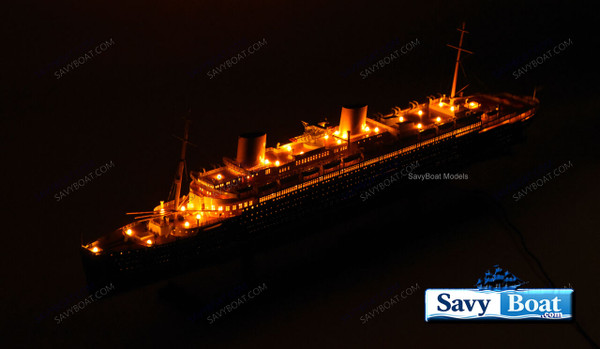
- LIGHTED - LED LIGHTS pre-installed (power supply not included)
Long before she sailed under the French tricolor, the ship that would become SS Liberté was born in Germany as one of the most advanced ocean liners of the interwar era. Launched on 15 August 1928 at Blohm & Voss in Hamburg, the ship — then named SS Europa — was built alongside her celebrated sister SS Bremen for Norddeutscher Lloyd. Sleek, modern, and powered by high‑output steam turbines, Europa embodied Germany’s ambition to dominate the North Atlantic. In 1931, she captured the Blue Riband, averaging 27.91 knots and proving she could cross the ocean in just five days.
During World War II, Europa remained laid up in Bremen, immobilized and unused. When the war ended, she was seized by Allied forces and briefly operated by the U.S. Navy as a troop transport between Brest and New York. In 1946, the United States transferred her to France as partial compensation for the loss of the French Line’s great flagship SS Normandie, destroyed by fire in 1942.
France intended to rebuild Europa into a new national flagship — but fate intervened. While undergoing refit at Le Havre in December 1946, a violent gale tore her from her moorings and drove her into the wreck of the former French liner SS Paris. The collision caused severe hull damage, flooding, and delays. She was eventually refloated and sent for a massive reconstruction costing nearly $19.5 million, transforming her from a German speed champion into a symbol of France’s postwar renewal.
Reborn as SS Liberté, she entered service on 17 August 1950 on the Le Havre–Southampton–New York route. With accommodations for more than 2,100 passengers, four steam turbines driving quadruple screws, and a top speed of 27.5 knots, she became the pride of Compagnie Générale Transatlantique (CGT). For more than a decade, Liberté served as the French Line’s flagship, representing elegance, resilience, and the revival of French maritime prestige in the early Cold War era.
Her career came to a close with the arrival of the new superliner SS France in 1961–62. Liberté was laid up, sold for scrap in late 1961, and dismantled at La Spezia, Italy, in 1963 — ending the life of a ship that had served two nations and two very different eras.
As Europa, she was a technological marvel of the 1930s. As Liberté, she became a French national icon of the 1950s.
Her story — spanning innovation, war, rebirth, and reinvention — remains one of the most compelling transformations in ocean‑liner history.