









-
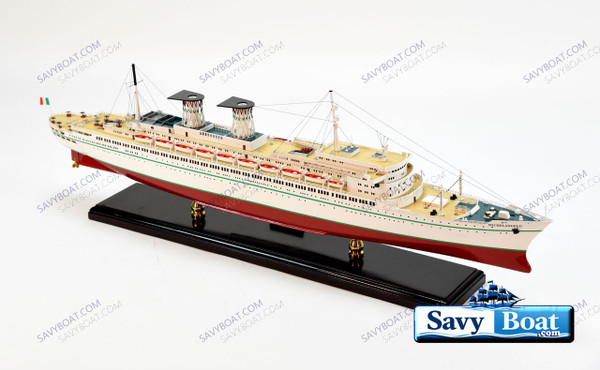
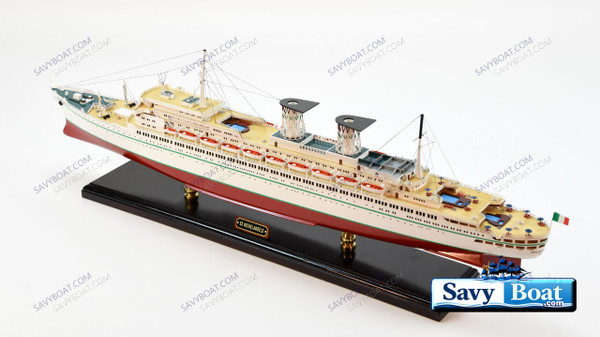
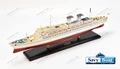
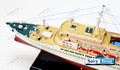
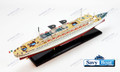
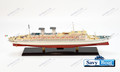
SS MICHELANGELO OCEAN LINER
SAVY DIRECT PRICE $999.96MSRP: $1,099.99SS MICHELANGELO OCEAN LINER FULLY BUILT AND READY TO DISPLAY MUSEUM QUALITY SHIP MODEL Open die cut side hull windows, NOT painted like those built by most other c -


SS POSEIDON LIGHTED OCEAN LINER
SAVY DIRECT PRICE $1,099.96MSRP: $1,199.99SS POSEIDON LIGHTED OCEAN LINER FULLY BUILT AND READY TO DISPLAY, HIGH QUALITY SHIP MODEL Dimension Approx.: 36.5″ L x 4.5″ W x 11.5″ H LIGHTED - LED LIGHTS pre-install -

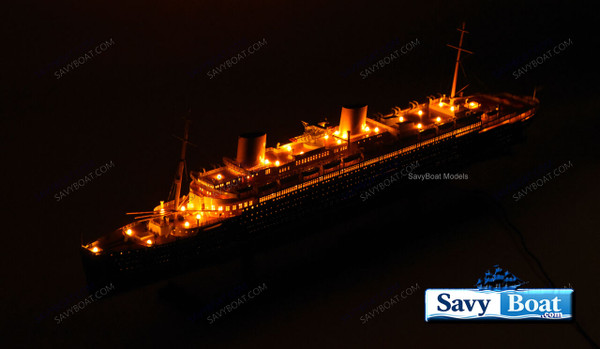
SS BREMEN LIGHTED OCEAN LINER
SAVY DIRECT PRICE $1,199.96MSRP: $1,299.99SS BREMEN LIGHTED OCEAN LINER FULLY BUILT AND READY TO DISPLAY, QUALITY SHIP MODEL Dimension Approx.: 37.5″ L x 4.5″ W x 15″ H Approx Scale 1:300 LIGHTED - LED LIGHTS pre-insta
Description

SS MICHELANGELO OCEAN LINER
FULLY BUILT AND READY TO DISPLAY MUSEUM QUALITY SHIP MODEL
- Open die cut side hull windows, NOT painted like those built by most other companies.
- Dimension Approx.: 36.5″ L x 4.5″ W x 11.5″ H
- Approx. SCALE 1:300
- The model is already built, NOT a model ship kit
When the SS Michelangelo was launched at Genoa’s Ansaldo Shipyards on 16 September 1962, she represented the last great flourish of Italy’s transatlantic ambition. Built for Italia Società di Navigazione, she and her sister ship SS Raffaello were conceived as the final generation of true North Atlantic superliners — vessels designed not for cruising, but for the demanding, prestigious, and increasingly endangered business of scheduled crossings between Europe and New York.
Completed in April 1965, the Michelangelo was a striking ship: 906 feet long, nearly 46,000 gross tons, and capable of 26.5 knots on her twin‑screw steam turbines. Her most distinctive feature was her pair of futuristic funnels — trellis‑like structures designed by the Turin Polytechnic to deflect smoke away from the decks. No liner had ever worn anything like them, and they became her signature silhouette.
Inside, she was a showcase of Italian artistry. Designers Nino Zoncada, Vincenzo Monaco, and Amedeo Luccichenti created interiors that blended Art Deco influences with modernist luxury. Fireproof materials, sculptural lighting, and elegant lounges made her one of the most stylish ships afloat. She could carry 1,775 passengers across three classes, all served with the famously attentive Italian Line hospitality — including, as passengers fondly recalled, more than 50 varieties of pasta and even dedicated care for pets.
Her maiden voyage on 12 May 1965 carried nearly 1,500 passengers from Genoa to New York. She quickly became a symbol of modern Italy — glamorous, confident, and technologically advanced. Admirers nicknamed her “Mic,” and she developed a loyal following among transatlantic travelers.
But the North Atlantic was a harsh proving ground. On 12 April 1966, during a violent storm, a massive rogue wave struck her forward superstructure, causing severe damage and tragic loss of life. The incident shocked the maritime world but also demonstrated the ship’s resilience; she limped to safety and was repaired. Later that year, a refit improved her propellers and transmission, reducing vibration and boosting her speed to 31.59 knots, briefly making her the fifth‑fastest liner in the world.
Despite her beauty and engineering, the Michelangelo entered service at the wrong moment. The jet age was rapidly eroding the passenger liner market, and by the early 1970s, transatlantic travel by ship was no longer commercially viable. Her final crossing came in July 1975, after barely a decade of service. She was laid up at La Spezia beside her sister, both victims of a changing world.
In 1976, the Italian government sold her to Iran, where she was renamed Michel‑Ange and used as a floating barracks and accommodation ship at Bandar Abbas. It was an anticlimactic second life for a vessel once hailed as a national masterpiece. After years of decline, she was sold for scrap and dismantled at Gadani, Pakistan, in 1991.
The SS Michelangelo and her sister Raffaello were the final expression of the great European superliner tradition — ships built for speed, elegance, and national pride just as the era of ocean travel was ending. They were the last identical sister liners built since the Bremen and Europa of 1929, and they represented the pinnacle of Italian maritime design.
Though her career was short, the Michelangelo remains a beloved icon: a ship of bold lines, artistic interiors, and unmistakable Italian flair — a final, brilliant chapter in the history of the transatlantic liner.