








-
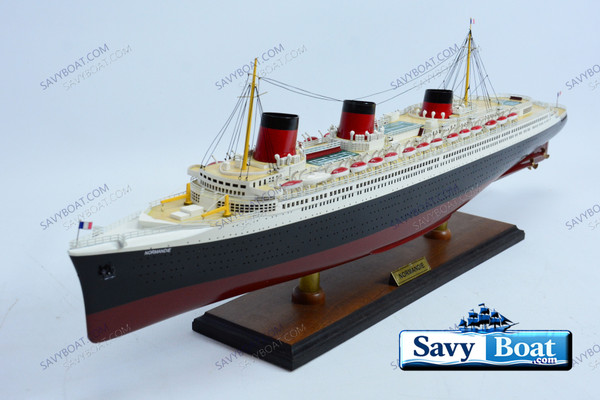

SS NORMANDIE STEAM SHIP
SAVY DIRECT PRICE $1,099.96SS NORMANDIE STEAM SHIP FULLY BUILT AND READY TO DISPLAY BOAT MODEL Dimension approx.: 34″ L x 5″ W x 11.5″ H Approx Scale 1:350 The model is already built. THIS IS NOT A MODEL... -


SS NORMANDIE LIGHTED STEAM SHIP
SAVY DIRECT PRICE $1,199.96MSRP: $1,299.99FRENCH LINE, SS NORMANDIE LIGHTED STEAM SHIP FULLY BUILT AND READY TO DISPLAY QUALITY SHIP MODEL Dimension approx.: 34″ L x 5″ W x 11.5″ H Approx. Scale 1:350. LIGHTED - LED... -
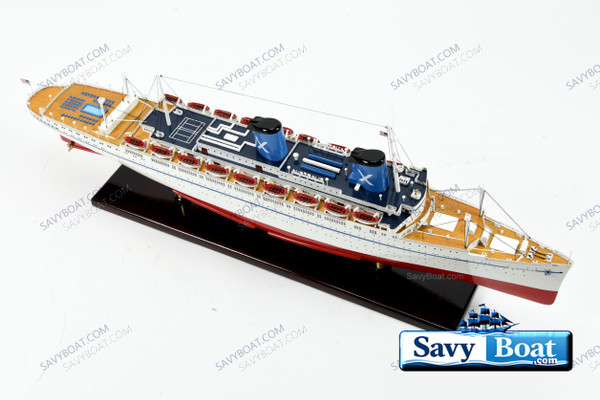
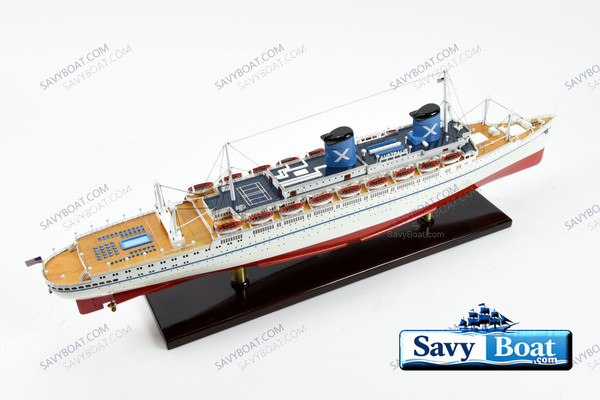
SS AUSTRALIS STEAM SHIP
SAVY DIRECT PRICE $899.96MSRP: $999.99SS AUSTRALIS LUXURY LINER FULLY BUILT AND READY TO DISPLAY, QUALITY SHIP MODEL Dimension approx.: 34″ (long) x 5″ (wide) x 11″ (high) This beautiful model is already built, NOT a kit. Long...
Description

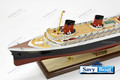
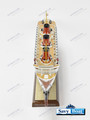
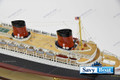
FRENCH LINE, SS NORMANDIE STEAM SHIP
FULLY BUILT AND READY TO DISPLAY QUALITY SHIP MODEL
- Dimension approx.: 34″ L x 5″ W x 11.5″ H
- Approx. Scale 1:350.
- This beautiful model is already built, NOT a kit.
When SS Normandie entered service in 1935, she was unlike anything the Atlantic had ever seen. Built at Saint‑Nazaire for the French Line, she was conceived not merely as a passenger ship but as a national monument — a floating expression of French artistry, engineering, and pride. At her debut, she was the largest and fastest passenger ship afloat, crossing the Atlantic in a record 4.14 days and claiming the Blue Riband with ease . Her sleek, clipper‑bowed hull — the radical vision of Russian émigré naval architect Vladimir Yourkevitch — sliced through the sea with unprecedented efficiency, producing almost no bow wave and allowing her to reach speeds over 32 knots during trials .
Inside, Normandie was a world unto herself. Her interiors, designed by Pierre Patout and Roger‑Henri Expert, were a triumph of Art Deco and Streamline Moderne, filled with vast salons, sweeping staircases, and luminous Lalique glass pillars that earned her the nickname “The Ship of Light.” Her first‑class dining room — longer than the Hall of Mirrors at Versailles — glowed with etched crystal, bronze medallions, and towering illuminated columns, creating one of the most spectacular public rooms ever put to sea . Even her children’s dining room was decorated with original Babar illustrations by Jean de Brunhoff, a whimsical touch aboard a ship otherwise defined by grandeur.
Her maiden voyage in May 1935 drew enormous crowds. More than 100,000 spectators lined New York Harbor to witness her arrival, and she quickly became a favorite of celebrities, artists, and statesmen. Ernest Hemingway, Marlene Dietrich, Walt Disney, Arturo Toscanini, and the von Trapp family all sailed aboard her during her brief but brilliant career . Her rivalry with Cunard’s Queen Mary became the stuff of legend — a contest of speed, size, and national prestige that captivated the world.
But Normandie’s glory was short‑lived. When war broke out in 1939, she sought refuge in New York, where she remained laid up. After the United States entered the war, she was seized, renamed USS Lafayette, and slated for conversion into a troopship. It was during this hurried, chaotic refit that disaster struck. On 9 February 1942, sparks from a welding torch ignited flammable life vests stored in her first‑class lounge, and with her fire‑suppression systems disabled, the blaze spread rapidly through her varnished woodwork . Fireboats poured thousands of tons of water onto her decks, and by early morning she capsized at her pier, settling onto her port side in the mud of the Hudson River.
Though she was later righted in a massive salvage effort, the damage was too great. Her machinery had deteriorated, her hull was compromised, and wartime priorities lay elsewhere. In 1946, the once‑magnificent Normandie was sold for scrap, ending her life without ever sailing again.
Yet her legacy endures. Her silhouette influenced generations of liners, and her Art Deco interiors remain legendary — a pinnacle of ocean‑liner design. Even today, she is remembered not for her tragic end, but for the brilliance of her brief reign: a ship that embodied the glamour, innovation, and ambition of an era now long past.