








-
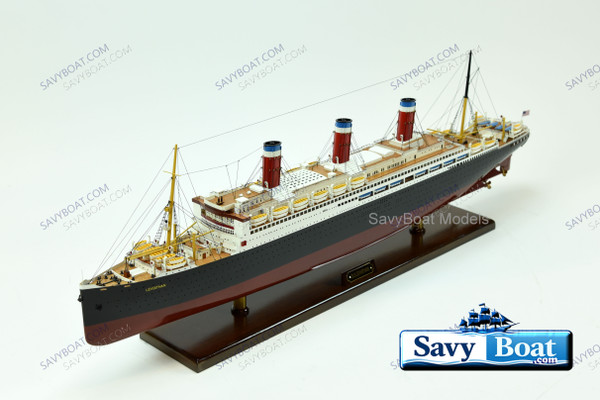
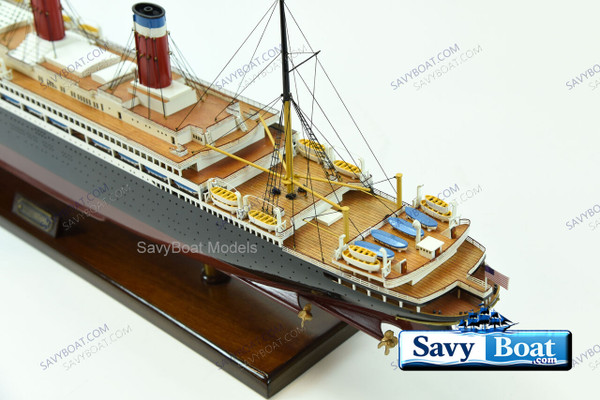
SS LEVIATHAN OCEAN LINER
SAVY DIRECT PRICE $999.96MSRP: $1,049.99SS LEVIATHAN OCEAN LINER FULLY BUILT AND READY TO DISPLAY BOAT MODEL Dimension approx.: 38″ L x 4.5″ W x 12″ H Approx Scale 1/300 The model is already built. THIS IS NOT A MODEL -
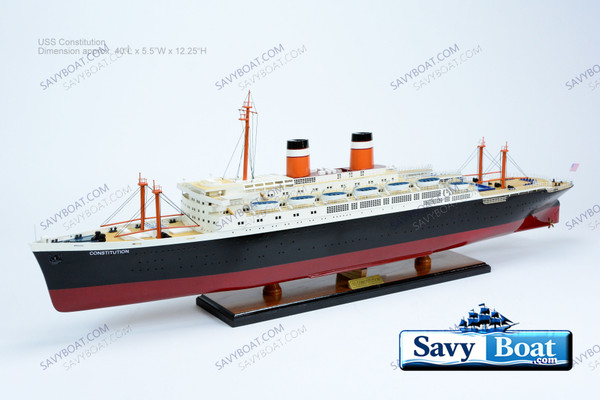

SS CONSTITUTION OCEAN LINER
SAVY DIRECT PRICE $799.96MSRP: $849.99SS CONSTITUTION OCEAN LINER FULLY BUILT AND READY TO DISPLAY BOAT MODEL Dimension approx.: 40"L x 6.5"W x 13.5"H The model is already built. THIS IS NOT A MODEL SHIP KIT The SS... -
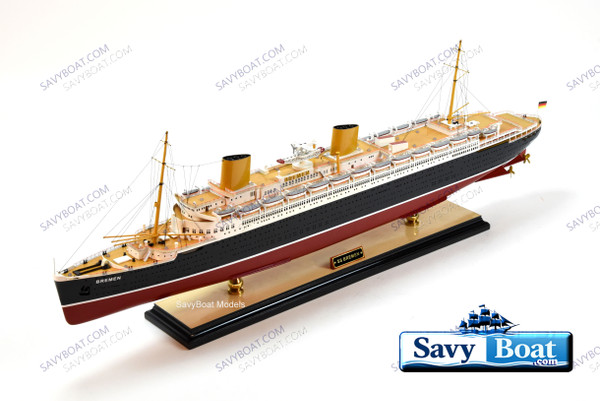

SS BREMEN OCEAN LINER
SAVY DIRECT PRICE $999.96MSRP: $1,099.99SS BREMEN OCEAN LINER FULLY BUILT AND READY TO DISPLAY, QUALITY SHIP MODEL Dimension Approx.: 37.5″ L x 4.5″ W x 15″ H approx Scale 1:300 The model is already built, NOT a model ship kit
Description

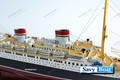
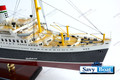
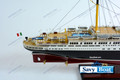
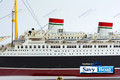
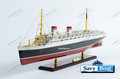
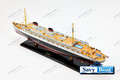
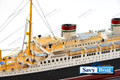
SS REX ITALIAN OCEAN LINER
FULLY BUILT AND READY TO DISPLAY SHIP MODEL
- Dimension Approx.: 34″ L x 4″ W x 13″ H
- The model is already built, NOT a model ship kit
When Italy set its sights on transatlantic prestige in the early 1930s, the nation poured its ambitions into a pair of great liners: Rex and Conte di Savoia. Of the two, Rex became the more famous—an embodiment of Italian engineering pride, Mediterranean glamour, and ultimately, wartime tragedy.
Launched on 1 August 1931 in the presence of King Victor Emmanuel III and Queen Elena, Rex was originally intended to bear the name Guglielmo Marconi. By the time she entered service, Italy’s major shipping lines had merged into the Italian Line, and the ship emerged simply as Rex—sleek, powerful, and unmistakably Italian.
Her designers embraced a theme they called “The Riviera afloat.” Sun decks were sprinkled with sand to mimic beaches, umbrellas bloomed in bright Mediterranean colors, and her interiors leaned toward classical elegance rather than the modern Art Deco sweeping other liners of the era. Externally, she followed the contemporary German trend: a long, clean hull, a raked bow, and two funnels painted in the tricolor of Italy.
Rex’s maiden voyage in 1932 was meant to be a triumphant challenge to Germany’s Bremen and Europa, but mechanical failures near Gibraltar forced a three‑day delay. Many passengers abandoned the voyage, transferring to Europa—only to find Rex already docked in New York when they arrived. After extensive repairs, she returned to service and quickly proved her worth.
In August 1933, Rex captured the westbound Blue Riband, crossing from Gibraltar to New York in four days, thirteen hours, averaging 28.92 knots. For two years she held the title, becoming a symbol of Italy’s technological rise during the interwar period.
Her fame even reached the United States military: in May 1938, three B‑17 bombers intercepted Rex 620 miles offshore in a widely publicized demonstration of American long‑range air power.
When World War II erupted, Rex and her running mate Conte di Savoia continued Mediterranean cruising longer than almost any other major liners. But by spring 1940, Italy recalled its ships for safekeeping. Rex was laid up in Genoa, then moved to Trieste, and finally near Pula to prevent her from being used as a blockship.
By 1944, she was a silent, vulnerable hulk—still intact, still magnificent, but trapped in a collapsing war.
On 8 September 1944, RAF reconnaissance spotted Rex under tow south of Trieste. What followed was one of the most dramatic sinkings of any major liner in the war.
A first wave of twelve Bristol Beaufighters from 272 Squadron RAF, escorted by American P‑51 Mustangs, struck her with 59 rockets and heavy cannon fire. A second wave from 39 Squadron RAF and 16 Squadron SAAF finished the job. Rex burned from bow to stern, rolled onto her port side, and sank in shallow water—still aflame.
She smoldered for four days.
Postwar Italy hoped to salvage Rex, but the wreck lay in waters assigned to Yugoslavia, which refused access. In the 1950s, the remains were heavily scrapped in place—locals joked that Rex had become Slovenia’s largest iron mine.
Only fragments survive today, including an anchor displayed in Ljubljana since 1954, though its authenticity is disputed.
Yet Rex’s legacy endures. Her Blue Riband victory became a lasting point of Italian pride, even inspiring the name of Peroni Nastro Azzurro beer in 1963. Federico Fellini immortalized her in Amarcord, where the liner appears as a shimmering symbol of the regime’s grandiose dreams.
For a brief moment, Rex was the fastest ship on the Atlantic—and one of the most glamorous ever to sail it. Her story, from triumph to destruction, mirrors the arc of the nation that built her.