





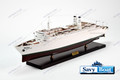
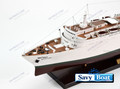






-


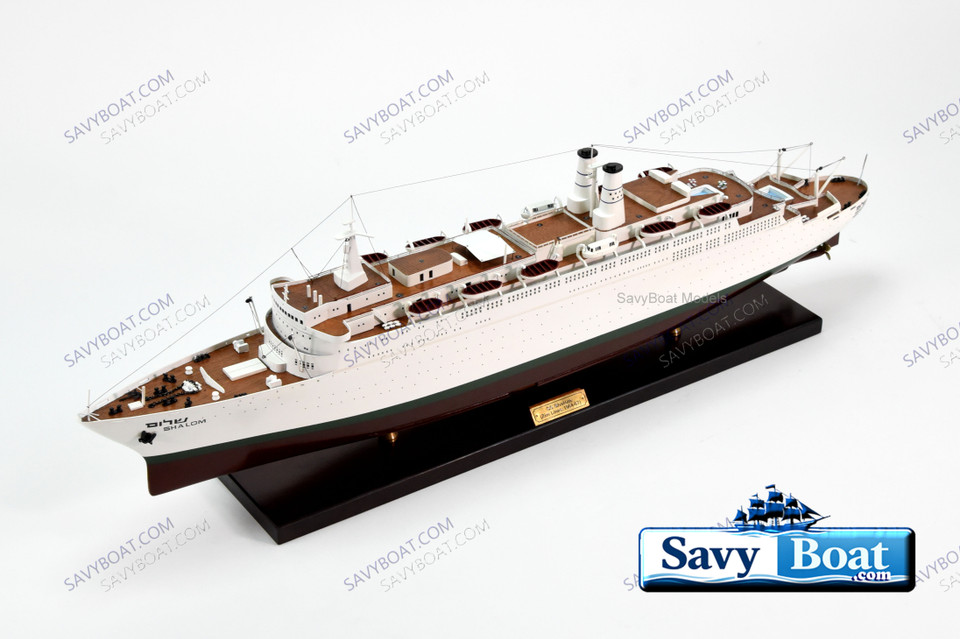
SS SHALOM STEAMSHIP
SAVY DIRECT PRICE $799.96MSRP: $899.99SS SHALOM LUXURY STEAM SHIP LINER FULLY BUILT AND READY TO DISPLAY, QUALITY SHIP MODEL Dimension approx.: 34″ L x 4.5″ W x 11″ H. This beautiful model is already built, NOT a kit. When... -
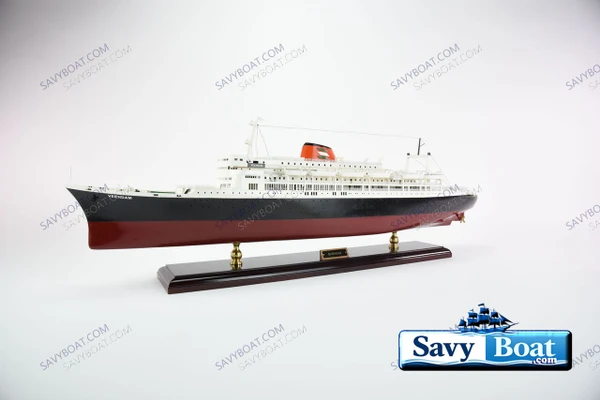

SS VEENDAM STEAMSHIP LIGHTED
SAVY DIRECT PRICE $1,149.96MSRP: $1,249.99STEAMSHIP SS VEENDAM FULLY BUILT AND READY TO DISPLAY MUSEUM QUALITY SHIP MODEL Dimension approx.: 35L X 5W X 10H LIGHTED WITH LED LIGHTS INSTALLED (power supply not included) The model is... -


SS ARGENTINA LIGHTED STEAMSHIP
SAVY DIRECT PRICE $1,099.96MSRP: $1,199.99LIGHTED SS ARGENTINA 1958 LIGHTED STEAM SHIP LIGHTED - LED LIGHTS pre-installed (power supply not included) Dimension approx.: 37.5″L x 5″W x 11.5″H APPROX SCALE 1:200 The model is already...
Description

SS SHALOM LUXURY STEAM SHIP LINER
FULLY BUILT AND READY TO DISPLAY, QUALITY SHIP MODEL
- Dimension approx.: 34″ L x 4.5″ W x 11″ H.
- This beautiful model is already built, NOT a kit.
When SS Shalom entered service in 1964, she was meant to be more than a ship. She was a national symbol — Israel’s proud, modern flagship, built in France and launched into a world where ocean liners still carried the glamour of international travel. Her name, meaning peace, reflected the optimism of a young nation stepping onto the global maritime stage. But Shalom’s life would be turbulent, marked by controversy, tragedy, reinvention, and ultimately a lonely end far from home.
In the late 1950s, ZIM Lines sought a vessel that could stand alongside the great transatlantic liners. They ordered a new ship from Chantiers de l’Atlantique, and after much debate — including a fierce national argument over whether she should carry both kosher and non‑kosher kitchens — the name Shalom was chosen. As the document notes, “Proposed names for the new ship included King David and King Solomon, but ZIM finally opted for Shalom (peace)” .
Floated out in 1962 and delivered in early 1964, she arrived in Haifa to great celebration. Her interiors, designed by Dora Gad, were bright, modern, and award‑winning, with public spaces spread across two elegant decks. She was built for the Atlantic, with enclosed promenades and twin slim funnels that echoed the style of Rotterdam and Canberra.
Shalom’s career began with promise — full crossings, enthusiastic passengers, and a sense of national pride. But only months after entering service, disaster struck.
On 26 November 1964, in thick fog off New Jersey, Shalom collided with the Norwegian tanker Stolt Dagali. The document recounts the moment starkly: “Shalom’s bow cut Stolt Dagali in half, killing nineteen of the tanker's forty‑four crew” .
The tanker’s stern sank within seconds. Shalom rescued survivors and limped back to New York with a 40‑foot gash in her bow. The inquiry later found both vessels at fault, though Shalom bore the greater share of blame due to a malfunctioning radar and an absent lookout.
It was a dark beginning for a ship meant to symbolize peace.
By the time Shalom entered service, the world had changed. Jet travel had overtaken the Atlantic crossing, and ZIM Lines struggled to justify the cost of a large, subsidized liner aimed at a niche clientele. As the document states, “ZIM no longer saw an economic case for her” .
In 1967, barely three years after her debut, Shalom was sold to the German Atlantic Line and renamed Hanseatic — the second ship to bear the name. She shifted from liner service to cruising, a role she would inhabit for the rest of her life.
A Ship of Many Names
Over the next three decades, Shalom reinvented herself repeatedly:
-
Hanseatic (German Atlantic Line, 1967–1973)
-
Doric (Home Lines, 1973–1981)
-
Royal Odyssey (Royal Cruise Line, 1981–1988)
-
Regent Sun (Regency Cruises, 1988–1995)
Each transformation brought new colors, new interiors, and new structural changes. Her 1982 refit was the most dramatic: “the original slim funnels were replaced with a single large Queen Elizabeth 2‑esque funnel” , altering her silhouette forever.
She cruised the Caribbean, the Mediterranean, the Pacific — a hardworking, adaptable ship that outlived many of her contemporaries.
When Regency Cruises collapsed in 1995, Regent Sun was arrested in Jamaica and laid up. For six years she drifted between owners, plans, and false starts. Several companies expressed interest, but her condition worsened. A hotel‑ship conversion began and failed. She was renamed Sun, then Sun 11, but never sailed again.
Finally, in 2001, she was sold for scrap and taken under tow toward India. But even her last journey went awry. As the document records, “Sun 11 started taking in water on 25 July 2001… and on 26 July she sank off Cape St. Francis” .
Denied entry into South African waters, the once‑proud liner slipped beneath the sea — uncrewed, unwanted, and far from the ports that had once celebrated her.
SS Shalom’s life was a study in contrasts: a ship built with national pride, yet launched into a declining market; a vessel named for peace, yet remembered for a deadly collision; a liner designed for the Atlantic, yet destined to spend most of her life as a cruise ship.
But she was also a survivor — adaptable, elegant, and beloved by those who sailed her in her many incarnations. Her story reflects the turbulent final decades of the ocean‑liner era, when great ships struggled to find new identities in a world that no longer needed them.
Shalom may have ended her days quietly beneath the waves, but her long, wandering career remains a testament to the resilience of a ship built with heart, ambition, and unmistakable style.