









-

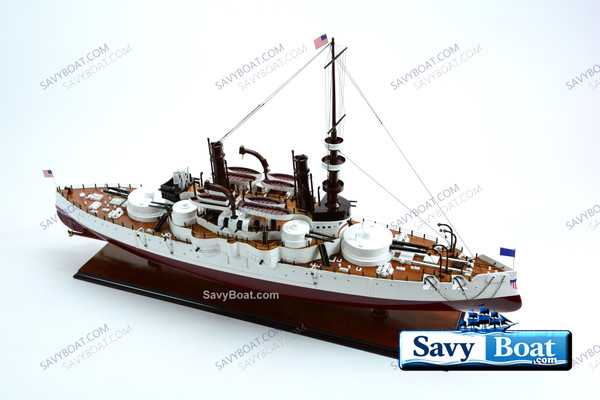
USS OREGON BATTLESHIP 39 BB-3
SAVY DIRECT PRICE $1,149.96MSRP: $1,299.99USS OREGON BATTLE SHIP BB-3 (WHITE) FULLY BUILT AND READY TO DISPLAY, QUALITY SHIP MODEL Dimension approx.: 39″ L x 9″ W x 22″ H The model is alr -
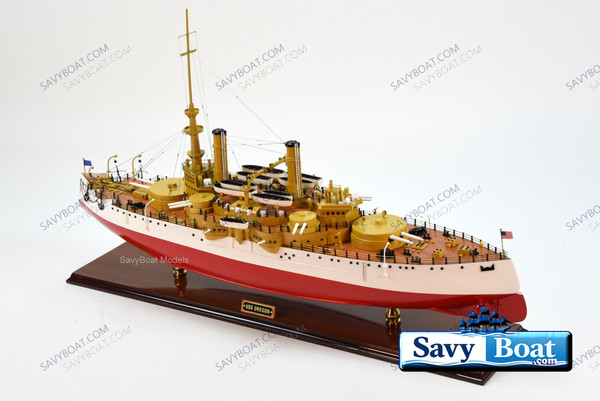
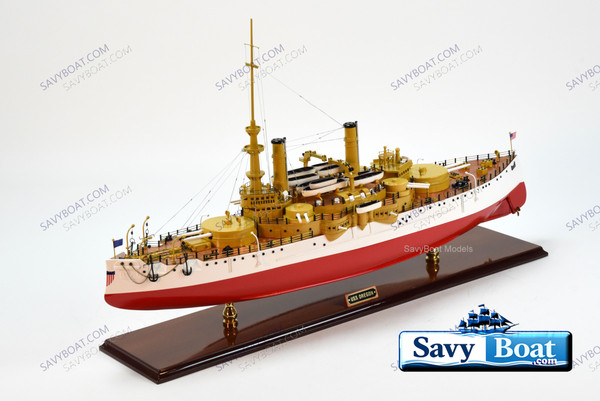
USS OREGON BATTLESHIP BB-3
SAVY DIRECT PRICE $924.96MSRP: $999.99USS OREGON BATTLE SHIP BB-3 (YELLOW) FULLY BUILT AND READY TO DISPLAY, QUALITY SHIP MODEL Dimension approx.: 34″ L x 8.5″ W x 20″ H -
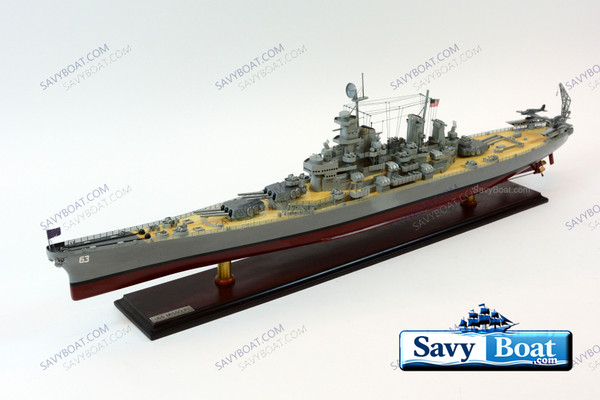

USS MISSOURI BATTLESHIP (BB-63)
SAVY DIRECT PRICE $899.96MSRP: $999.99USS MISSOURI BATTLESHIP (BB-63) FULLY BUILT AND READY TO DISPLAY, QUALITY SHIP MODEL Dimension approx.: 40″ L x 5″ W x 12.5″ H Approx. scale 1/350 This beautiful model is already built,...
Description

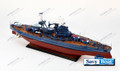
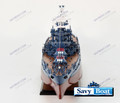
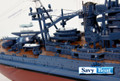
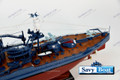
USS ARIZONA BATTLESHIP
FULLY BUILT AND READY TO DISPLAY, QUALITY SHIP MODEL
- Dimension approx.: 36.5″ L x 6″ W x 13.5″ H
- APROX SCALE 1/200
- This beautiful model is already built, NOT a kit.
USS Arizona: A Battleship’s Rise, Service, and Final Morning
She was born in an age of steel and ambition. When the keel of USS Arizona was laid in 1914, the United States was still finding its place among the world’s naval powers. She was a Pennsylvania‑class battleship, larger and more heavily armed than the ships that came before her, a symbol of the nation’s growing industrial might. Her launch in June 1915 drew a crowd of thousands — a celebration of the newest state in the Union and the powerful warship that would bear its name.
Commissioned in 1916, Arizona spent World War I close to home, training gunners and escorting President Woodrow Wilson to Europe for the Paris Peace Conference. In the years that followed, she sailed widely: to Turkey during the Greco‑Turkish War, through the Panama Canal, and along the Pacific coast. The 1920s and 1930s were filled with fleet exercises, long deployments, and the steady rhythm of naval life. She was modernized, strengthened, and refitted — her masts replaced, her guns improved, her engines upgraded. She even appeared in a Hollywood film, Here Comes the Navy, her massive silhouette filling the screen.
But history was moving toward a darker horizon.
In 1940, the Pacific Fleet was ordered to Pearl Harbor as a deterrent to Japanese expansion. Arizona followed, joining the battleships moored along Ford Island. She underwent another overhaul, received new anti‑aircraft guns, and prepared for the possibility of war. By late 1941, she was a veteran ship — powerful, but aging — commanded by Captain Franklin Van Valkenburgh and flying the flag of Rear Admiral Isaac Kidd.
On the morning of 7 December 1941, the quiet of a Sunday at Pearl Harbor shattered. Japanese aircraft swept in from the north, dropping bombs and torpedoes on the anchored fleet. Arizona’s crew rushed to battle stations as the first explosions echoed across the harbor.
Then came the blow that sealed her fate.
At 08:06, an armor‑piercing bomb struck near her forward turrets. It plunged deep into the ship and ignited the powder magazines. The resulting explosion was instantaneous and catastrophic — a blast so violent that it lifted the ship, tore open her bow, and sent a fireball into the sky. As your document notes, the forward structure “collapsed downward some 25–30 feet,” and the ship was effectively torn in two.
In seconds, 1,177 sailors and Marines were killed — nearly half of all American casualties that day. Admiral Kidd and Captain Van Valkenburgh died at their posts. Fires burned for two days. Unlike many of the other battleships damaged that morning, Arizona was beyond repair. She settled into the mud of Pearl Harbor, her shattered hull becoming both a tomb and a symbol.
In the years that followed, her superstructure was removed, her guns salvaged, and her name etched into the nation’s memory. A white memorial now spans her remains, dedicated in 1962, listing the names of the men who never left her. Oil still seeps slowly from her hull — the “black tears” of Arizona — a quiet reminder of the morning that changed the world.
Today, she rests where she fell, a national shrine and a place of reflection. She served for twenty‑five years, but it is her final moments — the sacrifice of her crew and the shock of her loss — that have made Arizona one of the most enduring symbols of American history.
She was a battleship built for power. She became a memorial built for remembrance.