








-
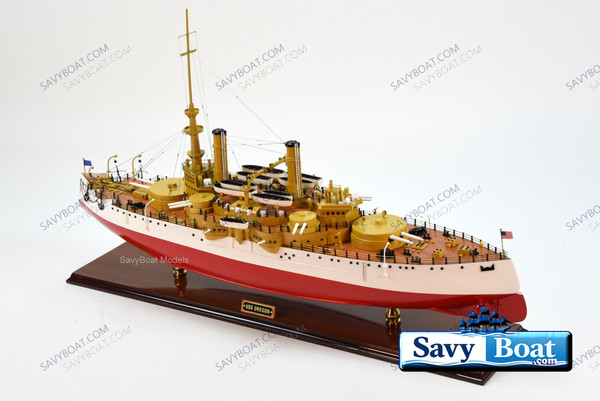
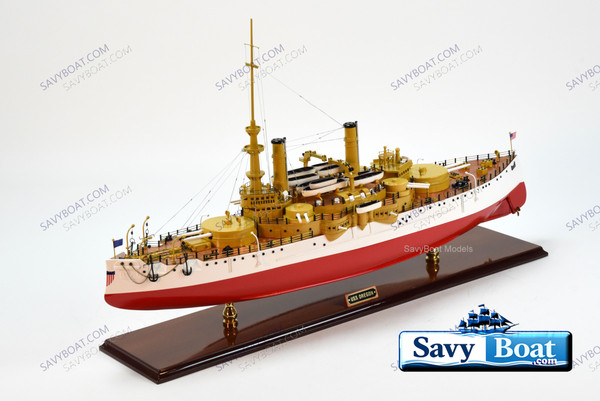
USS OREGON BATTLESHIP BB-3
SAVY DIRECT PRICE $924.96MSRP: $999.99USS OREGON BATTLE SHIP BB-3 (YELLOW) FULLY BUILT AND READY TO DISPLAY, QUALITY SHIP MODEL Dimension approx.: 34″ L x 8.5″ W x 20″ H -

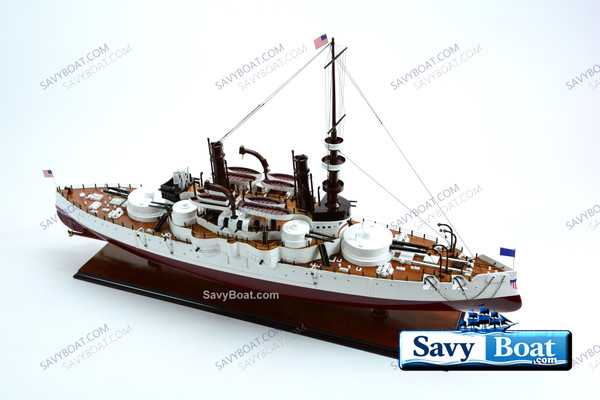
USS OREGON BATTLESHIP 39 BB-3
SAVY DIRECT PRICE $1,149.96MSRP: $1,299.99USS OREGON BATTLE SHIP BB-3 (WHITE) FULLY BUILT AND READY TO DISPLAY, QUALITY SHIP MODEL Dimension approx.: 39″ L x 9″ W x 22″ H The model is alr -

 img:low-2-bottom-with-special-offer.pngimg:low-2-bottom-with-special-offer.png
USS ARIZONA HISTORIC BATTLESHIP BB-39
SAVY DIRECT PRICE $100.00 - $849.96USS ARIZONA BATTLESHIP FULLY BUILT AND READY TO DISPLAY, QUALITY SHIP MODEL Dimension approx.: 36.5″ L x 6″ W x 13.5″ H APROX SCALE 1/200 This beautiful model is already built, NOT...
Description

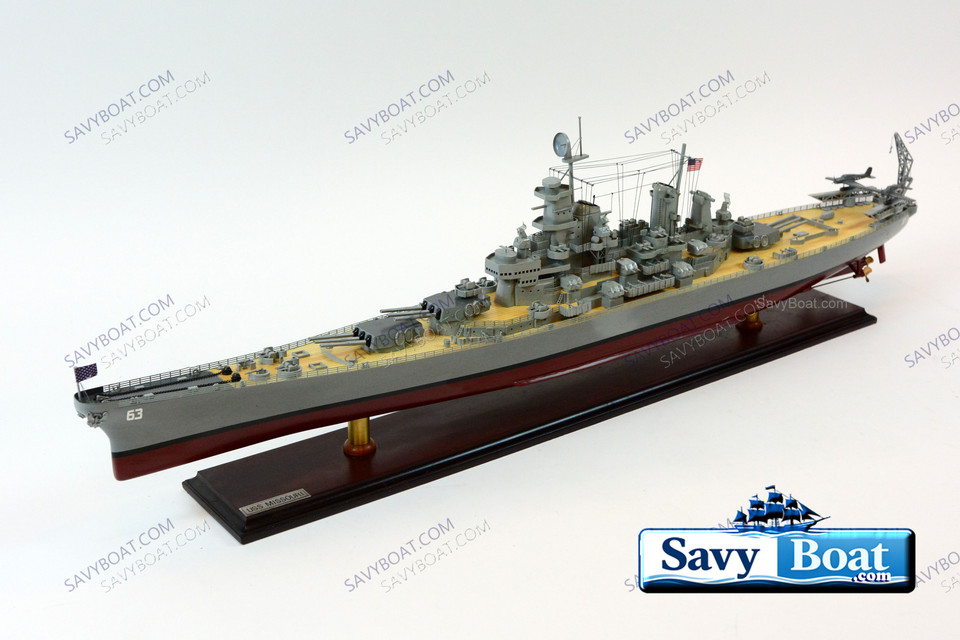
USS MISSOURI BATTLESHIP (BB-63)
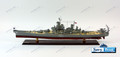
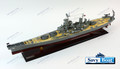
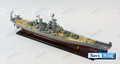
FULLY BUILT AND READY TO DISPLAY, QUALITY SHIP MODEL
- Dimension approx.: 40″ L x 5″ W x 12.5″ H
- Approx. scale 1/350
- This beautiful model is already built, NOT a kit.
USS Missouri: The Battleship That Carried a War to Its End and a Century Into Memory
She entered the world at a moment when the United States was racing to meet the demands of a global war. When USS Missouri slid down the ways of the Brooklyn Navy Yard in January 1944, she was the newest and most advanced of the Iowa‑class battleships — long, lean, and astonishingly fast for her size. At 887 feet, she was a floating fortress, built to keep pace with aircraft carriers and to strike with the heaviest naval guns America had ever put to sea. Margaret Truman christened her before a crowd of thousands, and within months she was steaming toward the Pacific, where the war was entering its final, most desperate phase.
Her first combat operations came in early 1945. She joined the fast carrier task forces that hammered Tokyo, shielded the carriers during the invasion of Iwo Jima, and then turned her guns toward Okinawa. Her 16‑inch rifles — nine of them, each capable of hurling a 2,700‑pound shell over twenty miles — shook the sea as she bombarded Japanese defenses. She shot down attacking aircraft, survived kamikaze strikes, and weathered typhoons that battered the fleet. By summer she was part of the naval force bombarding the Japanese home islands, firing on industrial targets in Hokkaidō and Honshū as the war drew to its close.
Then came the moment that would define her legacy.
On 2 September 1945, anchored in Tokyo Bay, Missouri became the stage on which World War II officially ended. Her quarterdeck was scrubbed, polished, and prepared for history. The flag that Commodore Matthew Perry had flown when he opened Japan to the West in 1853 was brought aboard. At 09:02, General Douglas MacArthur stepped before the microphones and opened the ceremony. Japanese representatives signed the Instrument of Surrender on a simple wooden table, surrounded by Allied officers and sailors. As your document notes, “the unconditional surrender of the Japanese… officially ended the Second World War.”
In that moment, Missouri became more than a warship — she became a symbol of peace restored.
But her service did not end with the war. In the late 1940s she carried out diplomatic missions that shaped the early Cold War. She brought the remains of Turkey’s ambassador home to Istanbul, a voyage that helped spark the Turkish Straits crisis. She trained midshipmen, hosted President Truman, and represented American power from the Arctic to South America. She even became the first battleship to operate a helicopter detachment, a sign of the Navy’s changing future.
In 1950, when war erupted in Korea, Missouri was the first American battleship to arrive. She shelled enemy positions, screened carriers, and supported the desperate evacuation at Hungnam. Her guns — the same that had fired on Japan — now thundered across the Korean Peninsula. She fired nearly 3,000 sixteen‑inch shells during her first tour alone.
After the armistice, she returned to training and ceremonial duties. By the mid‑1950s, the age of the battleship was fading. Carriers and missiles were the new arbiters of naval power. In 1955, Missouri was decommissioned and placed in the reserve fleet — silent, but not forgotten.
Nearly thirty years later, she returned.
As part of the Navy’s 600‑ship expansion in the 1980s, Missouri was modernized and reactivated. She received Tomahawk cruise missiles, Harpoon anti‑ship missiles, Phalanx CIWS mounts, and modern electronics. She deployed to the Persian Gulf, escorting tankers during the Iran–Iraq War, her fire‑control radars trained on hostile missile sites along the coast. In Operation Desert Storm, she fired Tomahawks at Iraqi targets and used her big guns in combat for the last time — the final battleship bombardment in history.
In 1992, her long career finally came to a close. She was decommissioned once more, struck from the Naval Vessel Register in 1995, and in 1998 she found her final home at Pearl Harbor, moored just a short distance from the sunken USS Arizona. One ship marks the beginning of America’s involvement in World War II; the other marks its end. Together, they frame the story of a conflict that reshaped the world.
Today, Missouri stands as a museum ship — a place where visitors walk the deck where peace was signed, stand beneath the barrels of her great guns, and feel the weight of the history she carried. She was built for war, but she became a monument to its conclusion, a bridge between generations, and one of the most storied vessels ever to sail under the American flag.
She ended a world war. She served through another. And she remains, even in silence, a symbol of American resolve and remembrance.