








-
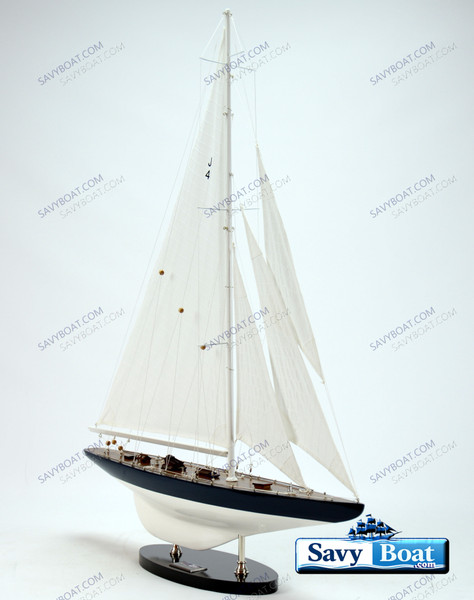

RAINBOW 1934 RACING SLOOP
SAVY DIRECT PRICE $449.96MSRP: $499.99RAINBOW RACING SAILBOAT FULLY BUILT AND READY TO DISPLAY MODEL Dimension approx.: 31.5L x 5.5W x 39.4H The model is already built. THIS IS NOT A MODEL SHIP KIT In the spring of 1934, as... -

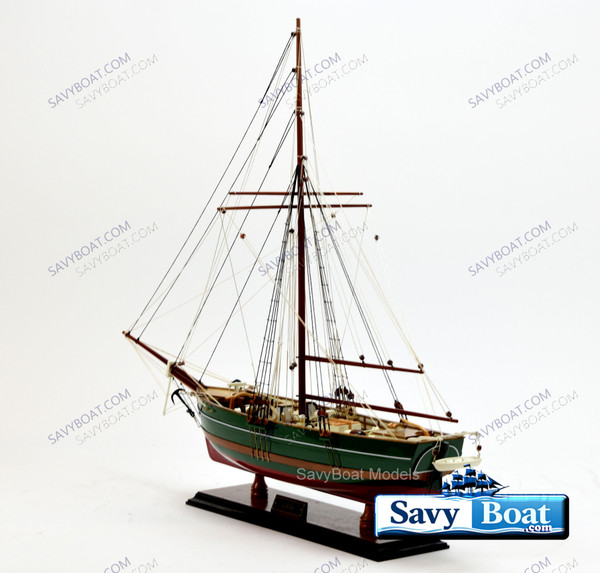
GJOA NORWEGIAN SLOOP
SAVY DIRECT PRICE $429.96MSRP: $449.99GJOA SAILING EXPLORATION SHIP FULLY BUILT AND READY TO DISPLAY MUSEUM QUALITY SHIP MODEL Dimension approx.: 29″ (long) x 9.5″ (wide) x 24.5″ (high) The model is already built. THIS... -
 img:preorder-offer-upper-corner-rev.pngimg:preorder-offer-upper-corner-rev.png
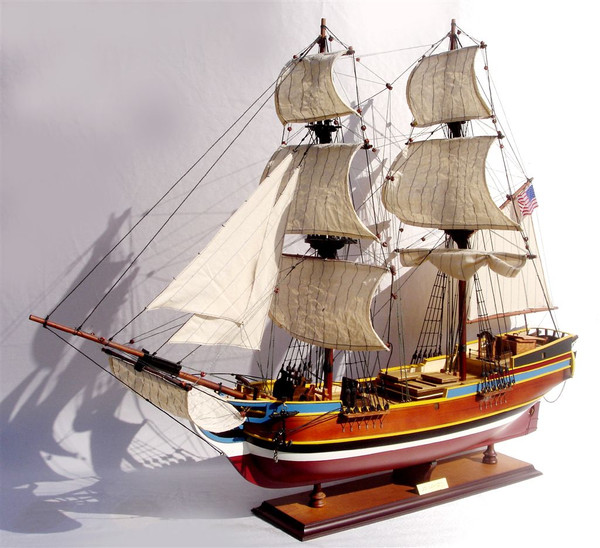
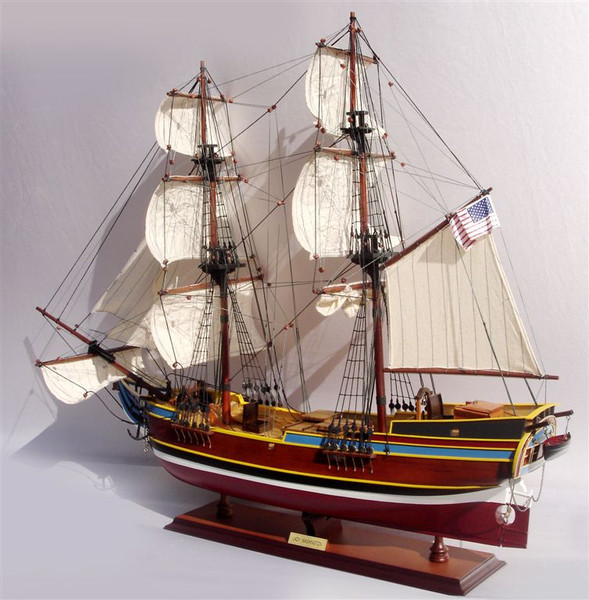
LADY WASHINGTON SMALL SLOOP
SAVY DIRECT PRICE $100.00 - $599.96LAADY WASHINGTON SMALL SLOOP FULLY BUILT AND READY TO DISPLAY MUSEUM QUALITY SHIP MODEL Dimension approx.: 30L x 7W x 29H The model is already built. THIS IS NOT A MODEL SHIP KIT Cloth...
Description

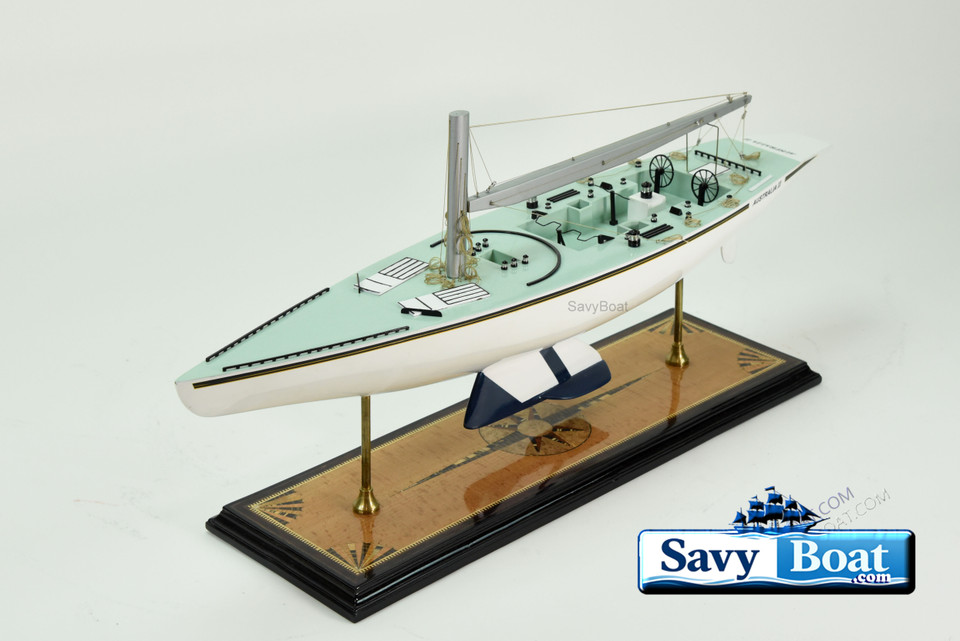
AUSTRALIA II RACING SLOOP
FULLY BUILT AND READY TO DISPLAY, QUALITY SHIP MODEL
- Dimension approx.: 31″ (long) x 7″ (wide) x 6″ (high)
- The model is already built. THIS IS NOT A MODEL SHIP KIT
In the early 1980s, when the America’s Cup still seemed like an immovable monument to American supremacy, a quiet revolution was taking shape on the far side of the world. In a modest Perth workshop, beneath the hum of machinery and the guarded whispers of a small, determined team, a new 12‑Metre yacht was being born—one that would challenge not only the reigning champions, but the very assumptions of yacht design itself. Her name was Australia II.
Backed by the relentless ambition of businessman Alan Bond, the project gathered a group of innovators who believed that the Cup could be won, even if no challenger ever had. At the center of this effort was designer Ben Lexcen, a man whose imagination often outpaced the conventions of his sport. Working with Dutch‑Australian collaborators and builder Steve Ward, Lexcen shaped a hull that looked familiar enough to pass casual inspection—but beneath the waterline, he concealed a secret that would change sailing forever.
The winged keel, short in chord and capped with horizontal fins, was unlike anything the Cup had seen. It lowered the yacht’s center of gravity, sharpened her balance, and let her slice upwind with a steadiness that bordered on uncanny. The keel was kept hidden under canvas whenever Australia II was hauled from the water, fueling rumors, protests, and a formal challenge from the New York Yacht Club. But after intense scrutiny, the keel was declared legal. The Australians had not broken the rules—they had simply out‑thought them.
When the 1983 America’s Cup began off Newport, Rhode Island, the defenders aboard Liberty, led by the formidable Dennis Conner, expected another routine victory. For 132 years, the Cup had never left American hands. But from the first moments Australia II stretched her sails in Newport’s shifting breezes, it was clear she was something different. Her fine forward sections danced through light air, her vertical sails held their shape with uncanny precision, and the winged keel gave her a poise that unsettled even seasoned observers.
The series quickly became a duel of wills. Australia II fell behind 1–3, and the defenders could almost taste another triumph. Yet skipper John Bertrand, calm and analytical, refused to concede. The crew rallied, drawing strength from the green‑and‑gold Boxing Kangaroo flag snapping above them. In three consecutive races, they clawed their way back—tacking more sharply, accelerating more cleanly, and sailing with a confidence that bordered on defiance.
On 26 September 1983, in the deciding seventh race, Australia II surged ahead on the final downwind leg. As she crossed the finish line, the impossible became real: the Cup had been won by a challenger for the first time in its history. Australia erupted in celebration. Prime Minister Bob Hawke, swept up in the national euphoria, famously declared that any boss who sacked a worker for skipping the day’s shift was “a bum.” The victory was more than a sporting triumph—it was a moment of national identity, a declaration that innovation and courage could topple even the longest‑standing dynasties.
In the years that followed, Australia II became a symbol of that spirit. Though controversies resurfaced—claims about the keel’s origins, debates over who contributed what—those who lived the campaign, including Bertrand and project manager John Longley, stood firmly by Lexcen’s authorship and the team’s integrity. The yacht was eventually acquired by the Australian Government and placed on public display, her once‑secret keel now shown openly as a testament to bold thinking.
Today, Australia II stands not just as a champion, but as a reminder of what happens when imagination meets determination. She is a relic of a moment when a small team dared to believe they could overturn more than a century of dominance—and proved that even the most entrenched traditions can be rewritten by those willing to challenge the deep water beneath them.