






-

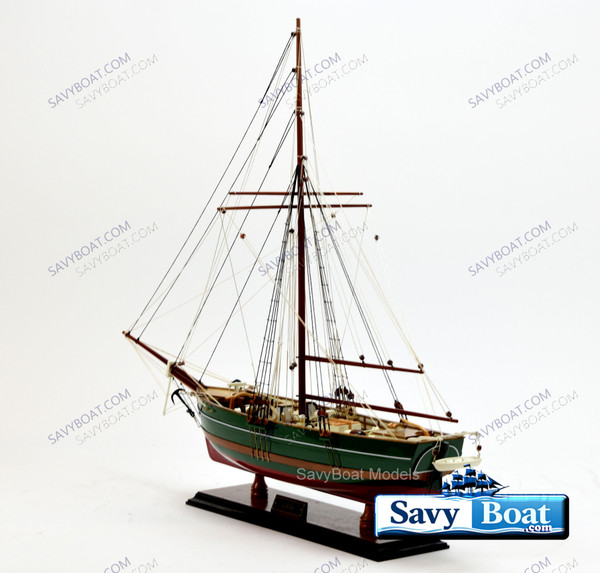
GJOA NORWEGIAN SLOOP
SAVY DIRECT PRICE $429.96MSRP: $449.99GJOA SAILING EXPLORATION SHIP FULLY BUILT AND READY TO DISPLAY MUSEUM QUALITY SHIP MODEL Dimension approx.: 29″ (long) x 9.5″ (wide) x 24.5″ (high) The model is already built. THIS... -
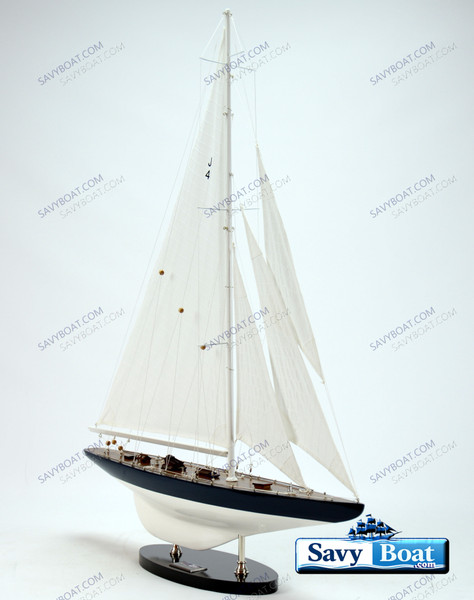

RAINBOW 1934 RACING SLOOP
SAVY DIRECT PRICE $449.96MSRP: $499.99RAINBOW RACING SAILBOAT FULLY BUILT AND READY TO DISPLAY MODEL Dimension approx.: 31.5L x 5.5W x 39.4H The model is already built. THIS IS NOT A MODEL SHIP KIT In the spring of 1934, as... -


AUSTRALIA II RACING SLOOP
SAVY DIRECT PRICE $699.96MSRP: $799.99AUSTRALIA II RACING SLOOP FULLY BUILT AND READY TO DISPLAY, QUALITY SHIP MODEL Dimension approx.: 31″ (long) x 7″ (wide) x 6″ (high) The model is already built. THIS IS NOT A MODEL...
Description

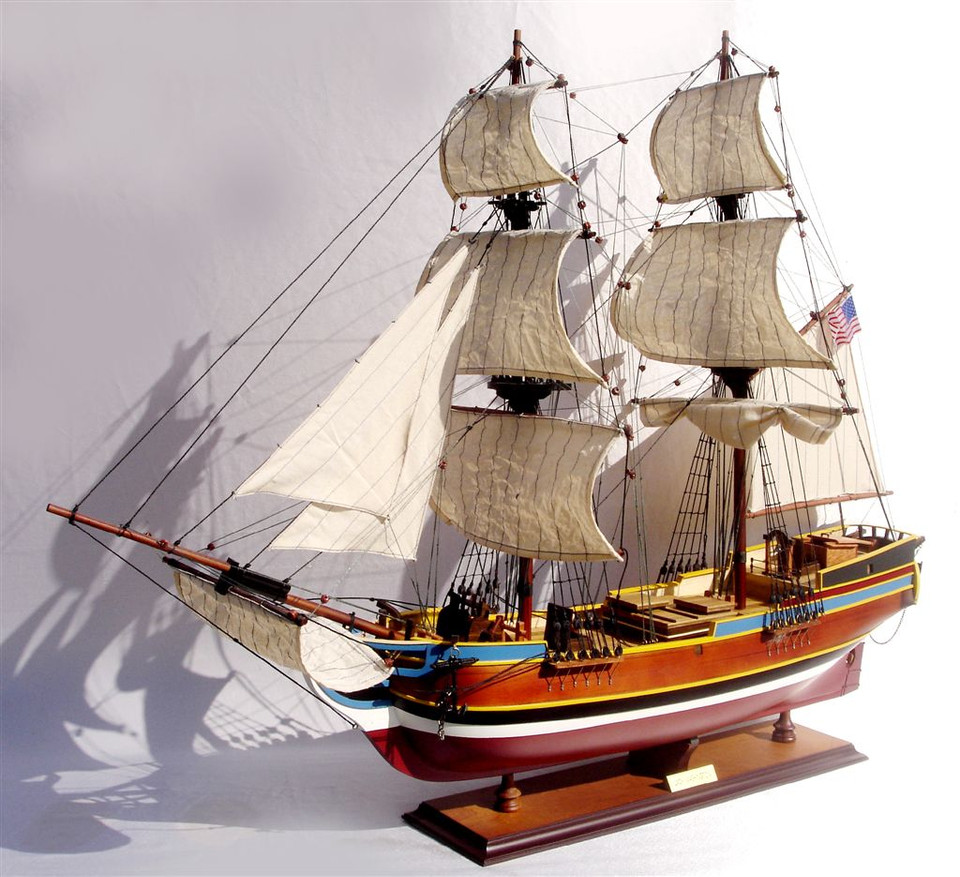
LAADY WASHINGTON SMALL SLOOP
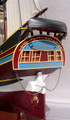
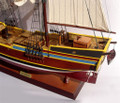
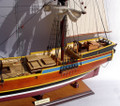
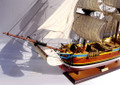
FULLY BUILT AND READY TO DISPLAY MUSEUM QUALITY SHIP MODEL
- Dimension approx.: 30L x 7W x 29H
- The model is already built. THIS IS NOT A MODEL SHIP KIT
- Cloth Sails
In the years following the American Revolution, when the young nation was still learning the shape of its own ambitions, a small sloop named Lady Washington slipped into the water in 1785. Named for Martha Washington, she was modest in size but bold in purpose, built at a time when the United States was eager to prove itself not only on land but across the world’s oceans. Originally commissioned to harass British shipping during the war, she soon found herself part of something far larger: the opening of American trade to the Pacific.
In 1787, Lady Washington joined the Columbia Rediviva on what would become the Columbia Expedition, a voyage that pushed American seamanship farther than it had ever gone. Under Captain Robert Gray, she rounded the storm‑wracked cliffs of Cape Horn — the first American vessel to do so — and emerged into the vast Pacific. In 1788 she made landfall near present‑day Tillamook, Oregon, marking the first American arrival on the Pacific Northwest coast. From there she became a familiar sight in the fur‑trading harbors of the region, her crew bartering for pelts that would fetch fortunes in China.
Her voyages grew increasingly ambitious. In 1791, Lady Washington became the first American ship to reach Japan, arriving decades before formal U.S. contact with the country. She sailed to Hawaii, Hong Kong, and ports scattered across the Pacific, her rigging carrying the wind of a nation eager to join the world’s maritime powers. Eventually refitted as a brigantine, she continued trading until 1797, when she foundered in the Philippines — ending her career far from the shores where she was born, but leaving behind a legacy of exploration and daring.
Nearly two centuries later, that legacy was reborn. In 1989, a full‑scale replica of Lady Washington was launched in Aberdeen, Washington, built by the Grays Harbor Historical Seaport. Crafted with historical fidelity but equipped for modern safety, the new Lady Washington quickly became more than a museum piece. She sailed. She taught. She lived.
The replica found fame beyond the docks of the Pacific Northwest. Hollywood embraced her — she appeared as the HMS Interceptor in Pirates of the Caribbean: The Curse of the Black Pearl, and as the Enterprise‑B’s sailing ship in Star Trek: Generations. Yet her greatest role has always been educational. As a certified passenger vessel, she serves as a floating classroom, teaching students and visitors about early American trade, navigation, and the maritime world that shaped the nation’s earliest global connections.
Today, the Lady Washington — both the long‑lost original and the replica that carries her name — stands as a symbol of American maritime beginnings. She represents exploration, commerce, and the restless curiosity that pushed a young country across the world’s oceans. Her story is not just one of voyages, but of continuity: a reminder that history can be rebuilt, re‑rigged, and sailed again.