







-
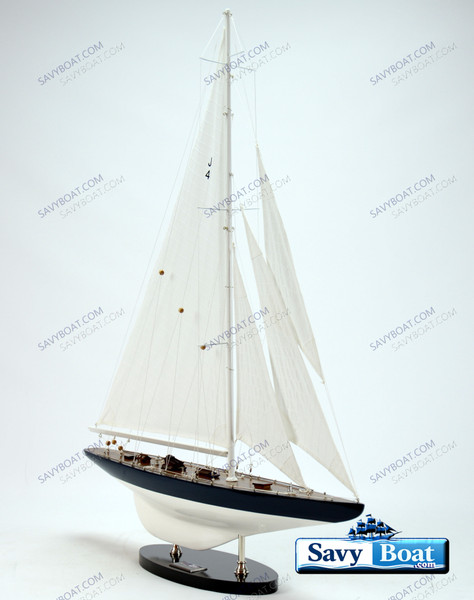

RAINBOW 1934 RACING SLOOP
SAVY DIRECT PRICE $449.96MSRP: $499.99RAINBOW RACING SAILBOAT FULLY BUILT AND READY TO DISPLAY MODEL Dimension approx.: 31.5L x 5.5W x 39.4H The model is already built. THIS IS NOT A MODEL SHIP KIT In the spring of 1934, as... -
 img:preorder-offer-upper-corner-rev.pngimg:preorder-offer-upper-corner-rev.png
LADY WASHINGTON SMALL SLOOP
SAVY DIRECT PRICE $100.00 - $599.96LAADY WASHINGTON SMALL SLOOP FULLY BUILT AND READY TO DISPLAY MUSEUM QUALITY SHIP MODEL Dimension approx.: 30L x 7W x 29H The model is already built. THIS IS NOT A MODEL SHIP KIT Cloth... -


AUSTRALIA II RACING SLOOP
SAVY DIRECT PRICE $699.96MSRP: $799.99AUSTRALIA II RACING SLOOP FULLY BUILT AND READY TO DISPLAY, QUALITY SHIP MODEL Dimension approx.: 31″ (long) x 7″ (wide) x 6″ (high) The model is already built. THIS IS NOT A MODEL...
Description

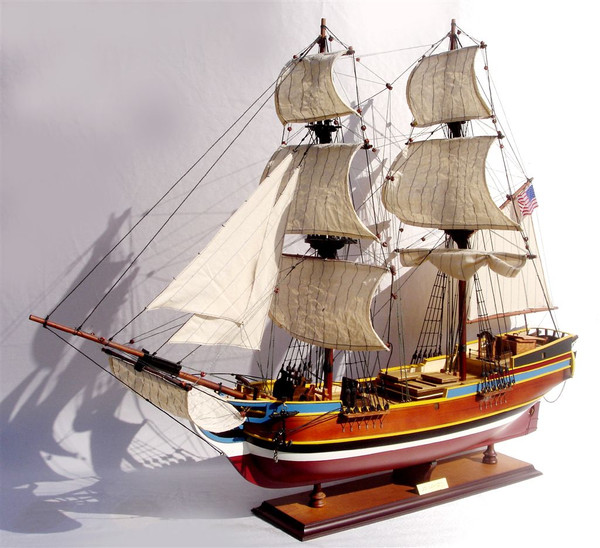
GJOA SAILING EXPLORATION SHIP
FULLY BUILT AND READY TO DISPLAY MUSEUM QUALITY SHIP MODEL
- Dimension approx.: 29″ (long) x 9.5″ (wide) x 24.5″ (high)
- The model is already built. THIS IS NOT A MODEL SHIP KIT
She began her life far from the ice‑choked channels that would one day make her immortal. In 1872, in the quiet Norwegian village of Rosendal, the sloop Gjøa slid down the ways—oak‑framed, square‑sterned, and built for the hard work of the herring fisheries. For nearly thirty years she lived that life, beating across the windswept Hardangerfjord, her hull creaking under the weight of nets and the rhythm of the sea. She was dependable, sturdy, and unremarkable—until a young man with polar dreams saw something more in her lines.
Roald Amundsen bought Gjøa in 1901, paying 10,000 kroner for a vessel many considered past her prime. But Amundsen was not looking for grandeur. He wanted a ship small enough to slip through the Arctic’s narrow, uncharted channels, strong enough to survive the ice, and simple enough for a tight‑knit crew to manage without the crushing logistics that had doomed earlier expeditions. In her weathered timbers, he saw possibility.
He tested her first in the Barents Sea, learning the moods of the Arctic winds and the quiet menace of drifting ice. Then he refitted her—adding a modest motor, reinforcing her hull, and preparing her for a journey no ship had ever completed. When Gjøa left Oslo on June 16, 1903, she carried seven men and a mission that bordered on the impossible: to navigate the Northwest Passage from end to end.
The voyage was slow, methodical, and deeply human. Through Baffin Bay and Lancaster Sound, Gjøa pressed on, her sails snapping in the cold air. When the ice closed in, she settled into winter quarters at a sheltered inlet on King William Island—now known as Gjøa Haven. There, for two long Arctic winters, the crew lived among the local Inuit, learning survival skills that would prove essential. They conducted scientific work as well, including pinpointing the location of the North Magnetic Pole in 1904.
When the ice finally loosened its grip, Gjøa crept onward. On August 17, 1905, she slipped past Cape Colborne and into history—the first vessel to traverse the Northwest Passage in a single, continuous voyage. A year later, she reached Nome, Alaska, weather‑beaten but triumphant.
Her later life was quieter but no less storied. Sailed to San Francisco, she became a symbol of Norwegian pride in Golden Gate Park, though decades of exposure left her battered. Restorations in the mid‑20th century kept her alive until, in 1972, she was finally returned to Norway. A major restoration in 2017 restored her dignity, and today she rests at the Fram Museum in Oslo—preserved, honored, and still carrying the aura of the little ship that conquered the Arctic.
Gjøa remains a testament to the idea that greatness does not always come from size or power. Sometimes it comes from resilience, preparation, and the quiet determination of a small vessel and the people who believed in her.