








-


EVITA CRUDE OIL TANKER (IMO 9408530)
SAVY DIRECT PRICE $869.96MSRP: $899.99EVITA CRUDE OIL TANKER (IMO 9408530) FULLY BUILT AND READY TO DISPLAY HIGH QUALITY SHIP MODEL Dimension approx.: 44″ L x 8″ W x 11″ H The model is already built. THIS IS NOT A MODEL... -
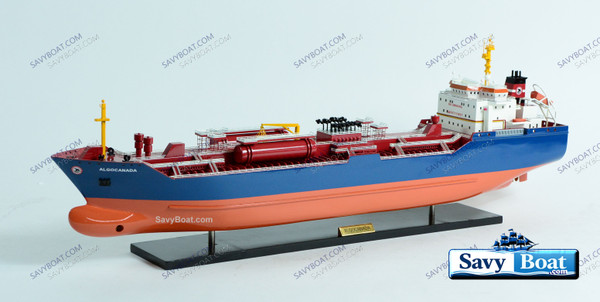
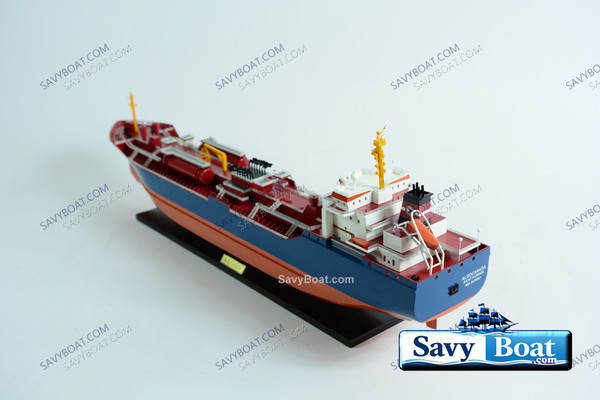
ALGOCANADA OIL TANKER
SAVY DIRECT PRICE $649.96MSRP: $749.99ALGOCANADA OIL TANKER FULLY BUILT AND READY TO DISPLAY MUSEUM QUALITY SHIP MODEL Dimension approx.: 34″ L x 5.5″ W x 12″ H The model is already built. THIS IS NOT A MODEL SHIP... -
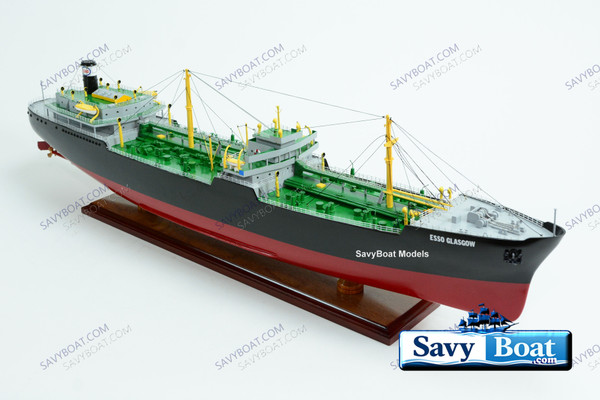

ESSO GLASGOW OIL TANKER
SAVY DIRECT PRICE $739.96MSRP: $779.99ESSO GLASGOW OIL TANKER FULLY BUILT AND READY TO DISPLAY MUSEUM QUALITY SHIP MODEL Dimension approx.: 37.5″ L x 6″ W x 10″ H. The model is already built. THIS IS NOT A MODEL SHIP...
Description

BRITISH PIONEER CRUDE OIL TANKER
FULLY BUILT AND READY TO DISPLAYQUALITY SHIP MODEL
- Dimension approx.: 40L x 8W x 10″ (high)
- The model is already built. THIS IS NOT A MODEL SHIP KIT
When the British Pioneer emerged from Samsung Heavy Industries’ massive Koje shipyard in late 1999, she represented the new face of global energy transport. The world’s appetite for crude oil was rising sharply, and the industry was shifting toward Very Large Crude Carriers (VLCCs)—steel giants capable of moving hundreds of thousands of tonnes of oil across oceans with unprecedented efficiency. At 334 meters long, with a beam of 58 meters and a deadweight of 306,397 tonnes, the British Pioneer was built to serve that demand.
Her construction moved at remarkable speed. The keel was laid in April 1999, she was launched in July, and by 2 December 1999 she was delivered—an impressive timeline for a vessel of her scale. Registered under the Isle of Man flag, she entered service for Abbey National December Leasing (2) Ltd., joining the global crude‑oil routes that connected the Middle East, West Africa, and the Americas to refineries around the world.
The British Pioneer was a product of the post‑Exxon Valdez era, when safety and environmental protection had become central to tanker design. She was built with a double hull, a feature that dramatically reduced the risk of catastrophic spills. Her propulsion came from a single MAN‑B&W diesel engine producing over 25,000 kW, driving her to service speeds of 15–16 knots—steady, economical, and ideal for long‑haul crude transport.
For the first decade of her life, she operated under her original name, carrying millions of barrels of oil across the world’s major shipping lanes. In 2007, she was renamed British Pioneer again under Buckingham Petro Ltd., and in 2011 her name was shortened simply to Pioneer. Like many VLCCs, her identity shifted with ownership changes, but her role remained constant: a workhorse of the global energy supply chain.
By 2015, she was sold to Ridgebury Lima LLC, continuing her service as the world’s tanker fleet modernized around her. Newer VLCCs with more efficient engines and advanced emissions systems were entering the market, and older vessels like the Pioneer increasingly found themselves laid up or operating in secondary trades.
In 2018, after nearly two decades at sea, her fate was sealed. She was sold for disposal and sailed on her final voyage to Alang, India, one of the world’s largest ship‑breaking yards. On 18 June 2018, the British Pioneer was beached and dismantled—her steel, machinery, and fittings recycled into new industrial life.
Though she never made headlines, the British Pioneer played a vital role in the invisible machinery of global commerce. She was part of the vast, quiet fleet that keeps the world’s refineries supplied and economies running. Her size, double‑hull construction, and reliable service reflected the tanker industry’s shift toward safer, more environmentally conscious design at the turn of the millennium.
Today, the British Pioneer is remembered as a representative of a pivotal era in crude‑oil transport—one of the many steel leviathans that bridged the gap between the early VLCCs of the 1970s and the highly efficient, eco‑optimized tankers of the 21st century.