






-

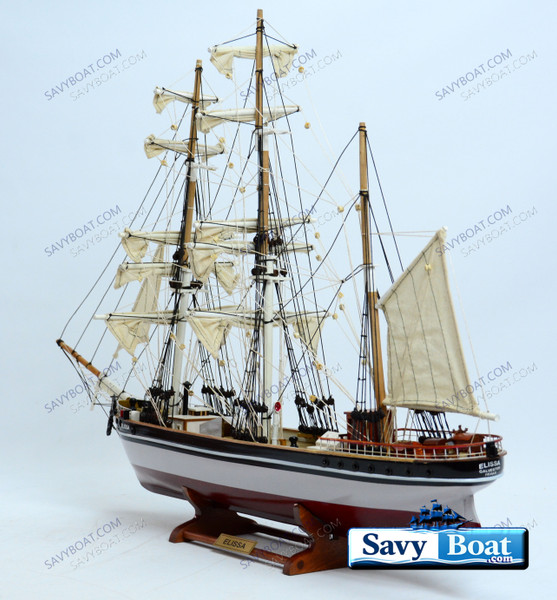
ELISSA TALL SHIP
SAVY DIRECT PRICE $739.96MSRP: $789.99ELISSA TALL SHIP FULLY BUILT AND READY TO DISPLAY QUALITY SHIP MODEL Dimension approx.: 31″ (long) x 9″ (wide) x 19″ (high) The model is already built. THIS IS NOT A MODEL SHIP... -
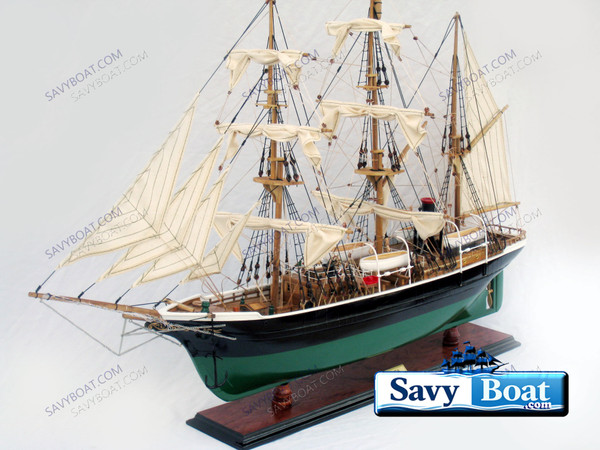
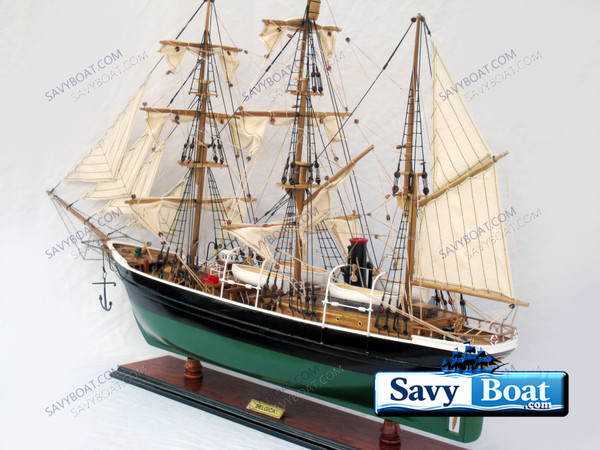
BELGICA TALL SHIP
SAVY DIRECT PRICE $799.96MSRP: $849.99BELGICA TALL SHIP FULLY BUILT AND READY TO DISPLAY, QUALITY SHIP MODEL Dimension approx.: 28.74L x 5.51W x 25.59H (inches) The model is already built. THIS IS NOT A MODEL SHIP KIT When... -


FRAM (FORWARD) TALL SHIP
SAVY DIRECT PRICE $499.96MSRP: $549.99FRAM (FORWARD)TALL SHIP FULLY BUILT AND READY TO DISPLAY HIGH QUALITY SHIP MODEL Dimension approx.: 28 inch L x 8 inch W x 23 inch H The model is already built. THIS IS NOT A...
Description

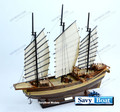
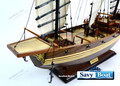
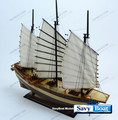
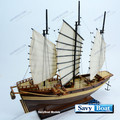
CHINESE JUNK TALL SHIP
FULLY BUILT AND READY TO DISPLAY QUALITY SHIP MODEL
- Dimension approx.: 27.5L x 7W x 24.5H (inch)
- The model is already built. THIS IS NOT A MODEL SHIP KIT
Few traditional vessels are as instantly recognizable—or as deeply woven into the history of world seafaring—as the Chinese junk. Emerging as early as the Han Dynasty (206 BCE–220 CE), junks began as sturdy river and coastal craft, built for the inland waterways that connected China’s vast interior. Over centuries, they evolved into remarkably sophisticated ships, capable of crossing open oceans and carrying China’s commerce, culture, and influence far beyond its shores.
By the Song Dynasty (960–1279 CE), the junk had taken on the form that would define it for nearly a millennium. Shipwrights incorporated innovations from Southeast Asian maritime traditions, including the battended sail—a flexible, ribbed sail that could be reefed or adjusted with ease—and the stern‑mounted rudder, one of the largest and most advanced of its time. These features gave junks exceptional maneuverability and control, even in shifting winds or heavy seas. Their flat-bottomed hulls, often divided into watertight compartments, provided both stability and safety, allowing them to survive storms that would have overwhelmed many contemporary vessels.
The junk reached its zenith during the Ming Dynasty, when Admiral Zheng He commanded vast fleets on diplomatic and trading voyages between 1405 and 1433. His so‑called “treasure ships”—some accounts describe them as towering over 400 feet long—carried goods, envoys, and sailors across the Indian Ocean to Southeast Asia, India, Arabia, and East Africa. These expeditions showcased the height of Chinese naval engineering and marked one of the most ambitious maritime enterprises of the pre‑modern world.
The word “junk” itself traces back not to China but to the Javanese term djong, used by early Portuguese explorers to describe the large, multi‑masted ships they encountered in Asian waters. Over time, the term became associated specifically with Chinese vessels, whose distinctive silhouettes—raked masts, high sterns, and fan‑like sails—became icons of East Asian seafaring.
For centuries, junks formed the backbone of China’s maritime economy. They carried silk, porcelain, spices, and tea across the South China Sea, ferried fishermen along the coast, and served as floating homes for families who lived their entire lives aboard. Their influence spread across Asia, shaping shipbuilding traditions from Vietnam to Japan.
Though their prominence declined with the rise of steamships and modern steel‑hulled vessels, junks never disappeared. Today, they survive as fishing craft, tourist vessels, and cultural symbols, especially in places like Hong Kong and Southeast Asia. Restored and replica junks continue to sail, their distinctive sails and graceful lines reminding modern observers of a maritime tradition that endured for nearly two thousand years.
From river deltas to open oceans, the Chinese junk stands as one of history’s most enduring and influential ship types—an elegant fusion of innovation, practicality, and cultural identity that helped shape the maritime world.