








-

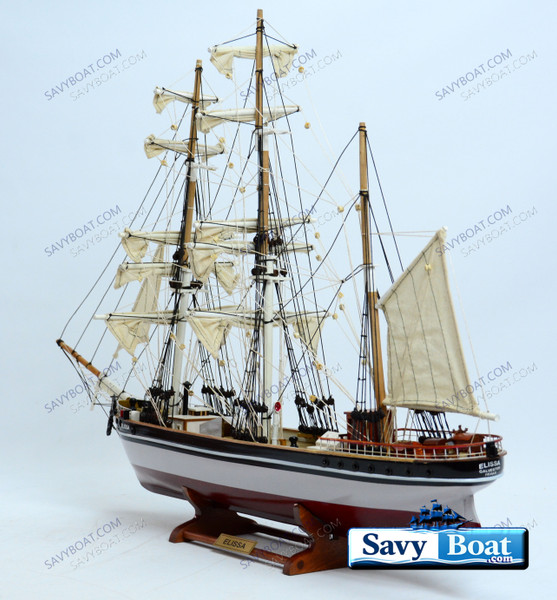
ELISSA TALL SHIP
SAVY DIRECT PRICE $739.96MSRP: $789.99ELISSA TALL SHIP FULLY BUILT AND READY TO DISPLAY QUALITY SHIP MODEL Dimension approx.: 31″ (long) x 9″ (wide) x 19″ (high) The model is already built. THIS IS NOT A MODEL SHIP... -
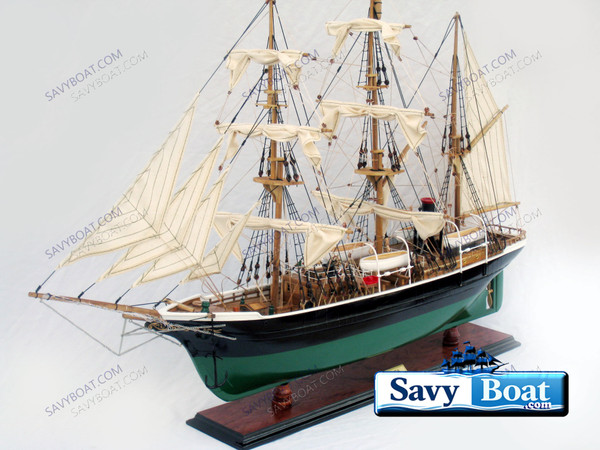
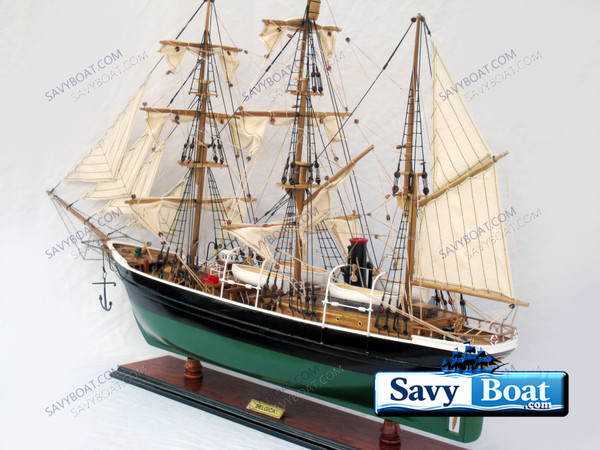
BELGICA TALL SHIP
SAVY DIRECT PRICE $799.96MSRP: $849.99BELGICA TALL SHIP FULLY BUILT AND READY TO DISPLAY, QUALITY SHIP MODEL Dimension approx.: 28.74L x 5.51W x 25.59H (inches) The model is already built. THIS IS NOT A MODEL SHIP KIT When... -
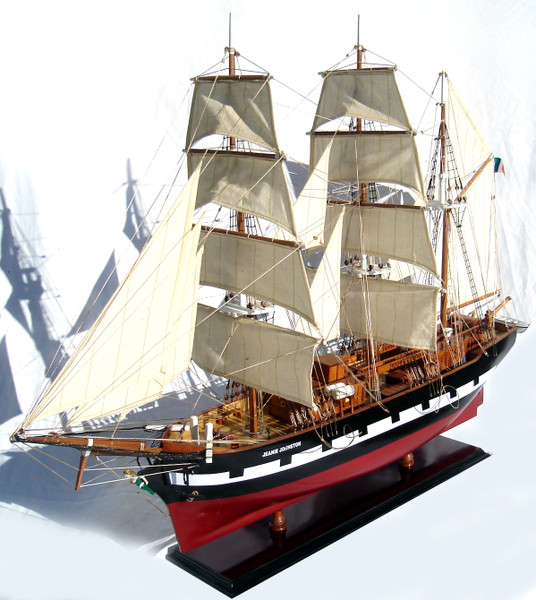

JEANIE JOHNSTON TALL SHIP
SAVY DIRECT PRICE $1,099.99JEANIE JOHNSTON TALL SHIP FULLY BUILT AND READY TO DISPLAY, QUALITY SHIP MODEL Dimension approx.: 31″ (long) x 7″ (wide) x 30″ (high) The model is already built. THIS IS NOT...
Description

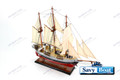
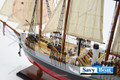
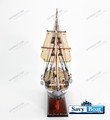
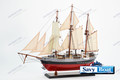
FRAM (FORWARD)TALL SHIP
FULLY BUILT AND READY TO DISPLAY HIGH QUALITY SHIP MODEL
- Dimension approx.: 28 inch L x 8 inch W x 23 inch H
- The model is already built. THIS IS NOT A MODEL SHIP KIT
Few ships in history were built with a purpose as singular—or as daring—as the Fram. Conceived by Norwegian explorer Fridtjof Nansen and launched in 1892, Fram (“Forward”) was designed to do what no wooden vessel had ever done: survive the crushing, shifting pressure of the polar ice. To achieve this, Nansen turned to master shipwright Colin Archer, whose yard in Larvik produced a vessel unlike any other of its age.
At 39 meters long and 11 meters wide, Fram was compact but immensely strong. Her hull was formed from three layers of timber—thick planking capped with an outer shell of dense greenheart wood—creating a structure that could flex and resist the grinding force of pack ice. Her keel was tucked high within the hull, allowing the ship to ride up onto the ice rather than be crushed by it. With a triple‑expansion steam engine (later replaced by diesel) and a full schooner rig, Fram was built for endurance, not speed—a floating fortress for the polar frontier.
Her first great test came during Nansen’s Arctic drift expedition (1893–1896). The plan was audacious: freeze Fram into the Arctic ice sheet and allow the natural drift of the polar pack to carry her across the top of the world. For nearly three years, the ship endured the groaning, heaving pressure of the ice, rising and falling with each shift. While Nansen and Hjalmar Johansen made their bold dash toward the North Pole, Fram remained locked in the ice, proving the brilliance of her design. When she finally emerged, battered but intact, she had validated a revolutionary approach to polar exploration.
Fram’s career did not end there. Under Otto Sverdrup from 1898 to 1902, she explored the remote islands of the Canadian Arctic, charting vast stretches of previously unknown coastline. Then, in 1910, she embarked on her most famous voyage: carrying Roald Amundsen and his crew to Antarctica for the race to the South Pole. Anchored in the icy waters of the Ross Sea, Fram served as the expedition’s lifeline, supporting the team that would become the first in history to reach the Pole in December 1911.
After returning from Antarctica, Fram sailed to Buenos Aires and later to Colón, hoping to be the first ship through the new Panama Canal. When construction delays made that impossible, she returned to Norway in 1914, her days of exploration complete. Many of her materials were later used in the construction of Amundsen’s ship Maud, but Fram herself was spared the scrapyard.
In the 1920s, a national effort began to preserve her. By 1935, she was hauled ashore at Bygdøy in Oslo, and the Fram Museum opened the following year. Today, visitors can walk her decks exactly as Nansen, Sverdrup, and Amundsen once did, surrounded by the tools, cabins, and equipment that carried Norway’s explorers into the most forbidding regions on Earth.
From the drifting ice of the Arctic to the frozen seas of Antarctica, Fram remains one of the most iconic vessels in exploration history—a ship purpose‑built for the impossible, and a symbol of human endurance at the edge of the world.