






-

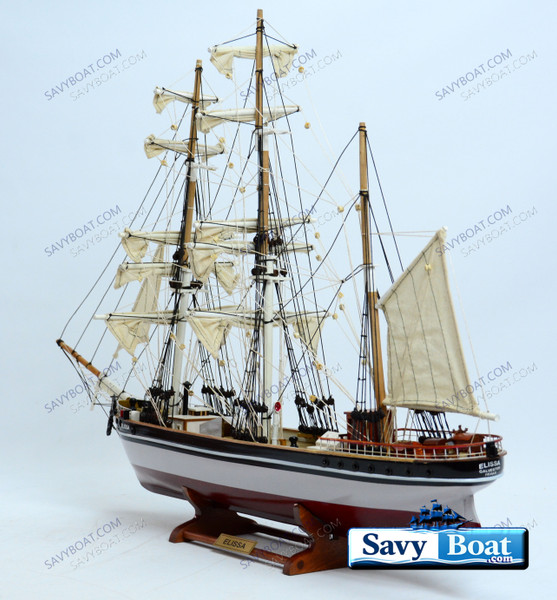
ELISSA TALL SHIP
SAVY DIRECT PRICE $739.96MSRP: $789.99ELISSA TALL SHIP FULLY BUILT AND READY TO DISPLAY QUALITY SHIP MODEL Dimension approx.: 31″ (long) x 9″ (wide) x 19″ (high) The model is already built. THIS IS NOT A MODEL SHIP... -
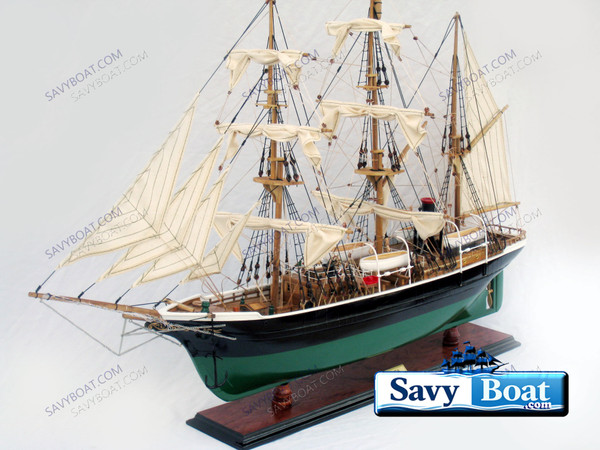
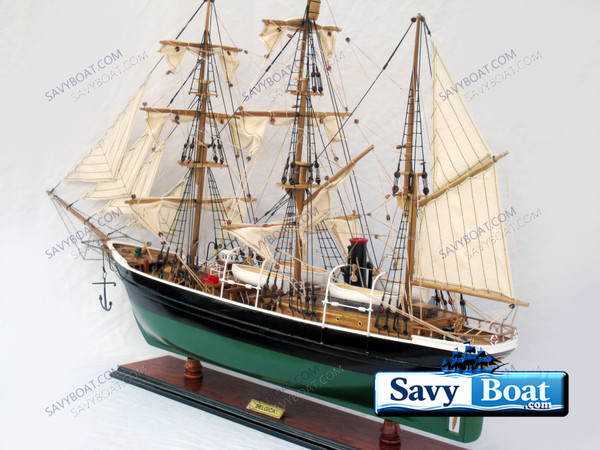
BELGICA TALL SHIP
SAVY DIRECT PRICE $799.96MSRP: $849.99BELGICA TALL SHIP FULLY BUILT AND READY TO DISPLAY, QUALITY SHIP MODEL Dimension approx.: 28.74L x 5.51W x 25.59H (inches) The model is already built. THIS IS NOT A MODEL SHIP KIT When... -


FRAM (FORWARD) TALL SHIP
SAVY DIRECT PRICE $499.96MSRP: $549.99FRAM (FORWARD)TALL SHIP FULLY BUILT AND READY TO DISPLAY HIGH QUALITY SHIP MODEL Dimension approx.: 28 inch L x 8 inch W x 23 inch H The model is already built. THIS IS NOT A...
Description

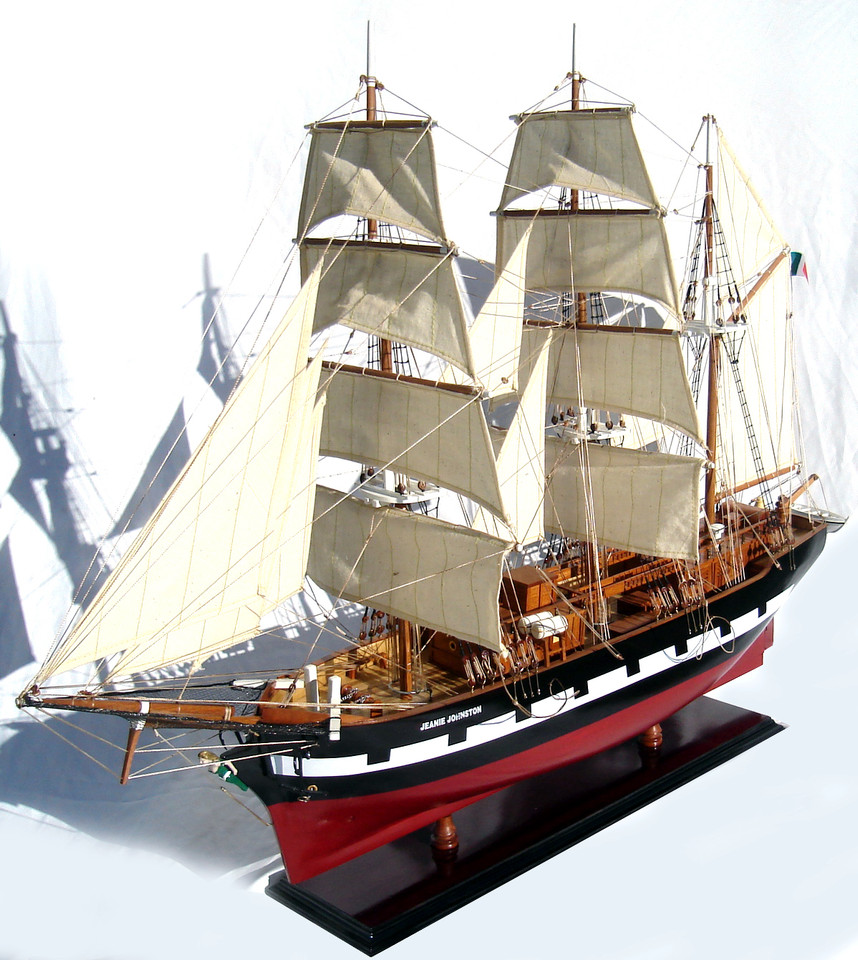
JEANIE JOHNSTON TALL SHIP
FULLY BUILT AND READY TO DISPLAY, QUALITY SHIP MODEL
- Dimension approx.: 31″ (long) x 7″ (wide) x 30″ (high)
- The model is already built. THIS IS NOT A MODEL SHIP KIT
In 1847, at the height of the Irish Great Famine, a wooden three‑masted barque took shape in the shipyards of Quebec. Built by Scottish shipwright John Munn, the vessel was intended as a cargo carrier — sturdy, practical, and unremarkable. But when she was purchased by John Donovan & Sons of Tralee, County Kerry, the ship found a new and urgent purpose. Ireland was starving, and thousands were fleeing. The Jeanie Johnston would become one of the few ships to carry them safely across the Atlantic.
Her first voyage began on April 24, 1848, when she left Tralee with 193 emigrants bound for Quebec. Over the next seven years, from 1848 to 1855, she completed 16 transatlantic crossings, carrying roughly 2,500 passengers to North America. In an era when “coffin ships” were notorious for disease, overcrowding, and death, the Jeanie Johnston earned a remarkable distinction: not a single life was lost aboard her.
This extraordinary record was due largely to Captain James Attridge and the ship’s doctor, Richard Blennerhassett, who insisted on humane treatment, adequate ventilation, and medical care — practices that were rare among famine‑era emigrant ships. While other vessels became floating graveyards, the Jeanie Johnston became a symbol of survival and dignity amid catastrophe.
Her career ended quietly. Sold in 1855, she continued trading until 1858, when she became waterlogged on a voyage from Quebec to Hull and was lost at sea. But her reputation endured, preserved in emigrant letters, local memory, and the contrast she offered to the horrors of the famine crossings.
More than a century later, Ireland chose to honor the ship’s legacy. A full‑scale replica of the Jeanie Johnston was constructed and now stands in Dublin’s Docklands, serving as both a museum and a sail‑training vessel. Visitors step into the dim, timber‑lined hold where emigrants once slept, learning about the famine, the Atlantic crossing, and the human stories behind the statistics.
The replica sails periodically and remains one of Ireland’s most evocative historical exhibits — a reminder of the courage of those who left, the compassion of those who carried them, and the resilience of a nation shaped by emigration.
The Jeanie Johnston’s story is not one of tragedy, but of mercy. In a time when desperation filled the Atlantic with death, she proved that safe passage was possible. Today, her replica keeps that memory alive — a floating testament to the endurance of the Irish people and the ship that carried them toward new beginnings.