




-

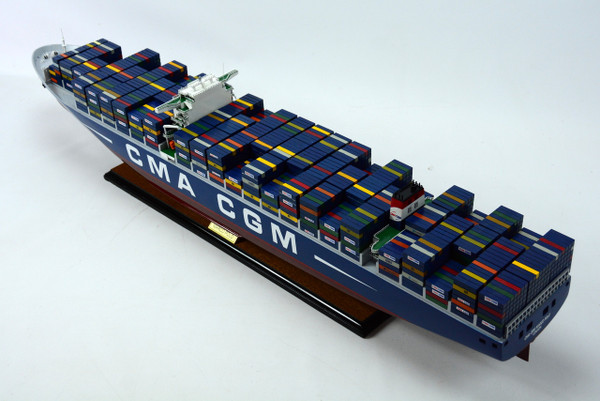
CMA CGM MARCO POLO CONTAINER SHIP
SAVY DIRECT PRICE $899.96MSRP: $999.99CMA CGM MARCO POLO CONTAINER SHIP FULLY BUILT AND READY TO DISPLAY MUSEUM, QUALITY SHIP MODEL Dimension approx.: 40L x 6.5W x 10H (inch) The model is already built. THIS IS NOT A MODEL... -

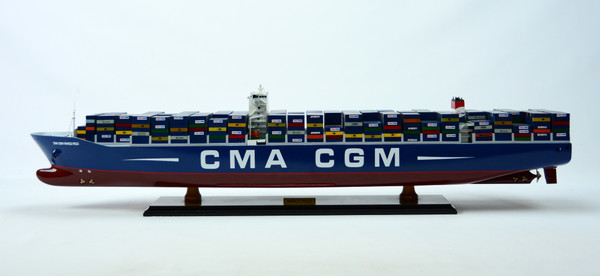
CMA CGM MARCO POLO CONTAINER SHIP 28
SAVY DIRECT PRICE $499.96MSRP: $549.99CMA CGM MARCO POLO CONTAINER SHIP 28 FULLY BUILT AND READY TO DISPLAY MUSEUM, QUALITY SHIP MODEL Dimension approx.: 28L x 4.5W x 8H (inch) The model is already built. THIS IS NOT A MODEL... -


COSCO CONTAINER SHIP
SAVY DIRECT PRICE $899.96MSRP: $999.99COSCO CONTAINER SHIP FULLY BUILT AND READY TO DISPLAY MUSEUM QUALITY SHIP MODEL Dimension approx.: 40″ (long) x 7″ (wide) x 11″ (high) The model is already built. THIS IS NOT A...
Description

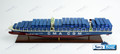
CMA CGM BENJAMIN FRANKLIN CONTAINER SHIP
FULLY BUILT AND READY TO DISPLAY HIGH QUALITY SHIP MODEL
- Dimension Approx. : 46″L x 6"W x 11.5″H
- The model is already built, NOT a model ship kit
When the CMA CGM Benjamin Franklin slid into the water at Shanghai Waigaoqiao Shipbuilding in July 2015, she represented a bold new chapter in the rise of ultra‑large container ships. At nearly 400 meters long and capable of carrying 18,000 TEU, she was one of the largest vessels ever built — a steel colossus named for an American statesman who had once crossed the Atlantic in wooden sailing ships. The contrast was almost poetic: a Founding Father’s name carried by a ship that embodied the scale and speed of modern global trade.
Her construction moved quickly. The keel was laid in December 2014, she was launched in July 2015, and by 4 December 2015 she was delivered to CMA CGM. Powered by a massive MAN B&W 11S90ME‑C9.2 low‑speed diesel engine generating nearly 64,000 kW, she could push her 185,000‑ton hull across the Pacific at almost 23 knots. With a beam of 54 meters and a height of 60 meters (70 with antennae), she was a floating skyline — a ship so large that only a handful of ports in the world could handle her.
Her maiden voyage made history. On 26 December 2015, the Benjamin Franklin became the largest container ship ever to call at a U.S. port, arriving in Los Angeles to global media attention. Crowds gathered along the waterfront to watch her ease into berth, her stacks of containers rising like a multicolored cliff above the harbor. She continued north to Oakland and later Seattle, marking the first time an 18,000‑TEU vessel had visited the American West Coast.
But the moment was also a preview of the challenges ahead. In May 2016, CMA CGM postponed her West Coast deployment — not because of the ship, but because the ports were not yet ready. Berths, cranes, and yard systems needed upgrades to handle vessels of her scale. The Benjamin Franklin had shown what was possible, but she had also revealed how much infrastructure had to evolve to meet the mega‑ship era.
In regular service, she joined the Pearl River Express, linking major Chinese ports — Xiamen, Nansha, Yantian — with the U.S. West Coast. Onboard, she carried not only cargo but also the amenities of a modern long‑haul vessel: a professional galley, waste‑recycling systems, a swimming pool for the crew, and advanced environmental features including UV ballast water treatment and a double hull compliant with MARPOL standards. She was built for efficiency as much as capacity.
Her career has not been without incident. In July 2024, while rounding the storm‑lashed waters off South Africa, she lost 44 containers in severe weather — a reminder that even the largest ships remain vulnerable to the power of the sea.
Today, the Benjamin Franklin continues to sail under the Maltese flag, carrying the IMO number 9706891, and remains a vital part of CMA CGM’s global network. She is no longer the newest or largest ship in the fleet, but she stands as a milestone — the vessel that first brought the ultra‑large container era to American shores, and a symbol of the engineering ambition that defines modern maritime logistics.