








-

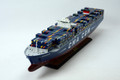
CMA CGM MARCO POLO CONTAINER SHIP 28
SAVY DIRECT PRICE $499.96MSRP: $549.99CMA CGM MARCO POLO CONTAINER SHIP 28 FULLY BUILT AND READY TO DISPLAY MUSEUM, QUALITY SHIP MODEL Dimension approx.: 28L x 4.5W x 8H (inch) The model is already built. THIS IS NOT A MODEL... -


CMA CGM BENJAMIN FRANKLIN CONTAINER SHIP
SAVY DIRECT PRICE $1,099.96MSRP: $1,199.99CMA CGM BENJAMIN FRANKLIN CONTAINER SHIP FULLY BUILT AND READY TO DISPLAY HIGH QUALITY SHIP MODEL Dimension Approx. : 46″L x 6"W x 11.5″H The model is already built, NOT a model ship kit -


COSCO CONTAINER SHIP
SAVY DIRECT PRICE $899.96MSRP: $999.99COSCO CONTAINER SHIP FULLY BUILT AND READY TO DISPLAY MUSEUM QUALITY SHIP MODEL Dimension approx.: 40″ (long) x 7″ (wide) x 11″ (high) The model is already built. THIS IS NOT A...
Description

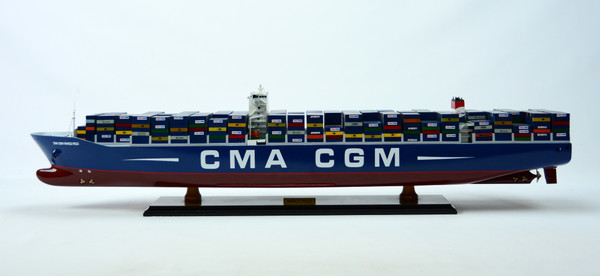
CMA CGM MARCO POLO CONTAINER SHIP
FULLY BUILT AND READY TO DISPLAY MUSEUM, QUALITY SHIP MODEL
- Dimension approx.: 40L x 6.5W x 10H (inch)
- The model is already built. THIS IS NOT A MODEL SHIP KIT
When the CMA CGM Marco Polo emerged from the immense drydocks of Daewoo Shipbuilding & Marine Engineering in South Korea in late 2012, she represented the newest frontier in container shipping. At 396 meters long and capable of carrying 16,020 TEU, she was, for a brief but brilliant moment, the largest container ship in the world — a floating symbol of the scale and ambition driving global trade into the 21st century.
Completed on 5 November 2012 and entering service the very next day, the Marco Polo was the first of CMA CGM’s Explorer‑class giants, a fleet named for legendary navigators. Her maiden voyage on 7 November 2012 drew international attention. Here was a ship longer than the Empire State Building is tall, with a beam of 53.6 meters, a deadweight of 187,625 tons, and a single massive Wärtsilä 14RT‑flex96C engine capable of pushing her to 25 knots. She was not just big — she was engineered for efficiency, carrying over 1,100 refrigerated containers and operated by a crew of only 27.
For CMA CGM, she was a statement: the company had entered the era of mega‑ships.
Her reign as the world’s largest container vessel was short — overtaken in early 2013 by Maersk’s Triple‑E class — but her significance endured. The Marco Polo became a familiar sight on long‑haul Asia–Europe and transoceanic routes, her immense capacity offering economies of scale that reshaped shipping economics. She was a workhorse, but also a flagship, often chosen for milestone port calls and high‑profile service expansions.
In 2021, she made headlines again when she arrived in Halifax, becoming the largest ship ever to call at a Canadian port. Her arrival drew crowds and underscored how ports worldwide were racing to accommodate vessels of her size — deepening channels, expanding terminals, and upgrading cranes to meet the demands of mega‑ship logistics.
Innovation continued to follow her. In 2023, the Marco Polo became the first CMA CGM vessel fitted with a bow windshield, an aerodynamic structure designed to reduce drag and improve fuel efficiency. The design, previously seen only on Japanese ships, marked her as a testbed for next‑generation energy‑saving technologies.
And still she pushed boundaries. In 2024, she sailed up the Delaware River to the Port of Philadelphia, becoming the largest vessel in the port’s 300‑year history. Fireboats greeted her with a water‑cannon salute as she eased into the Southport Marine Terminal — a moment that symbolized how far American East Coast ports had come in preparing for the mega‑ship era.
Today, the Marco Polo remains a key player in CMA CGM’s global network, operating on the NAMEX service, linking Yantian, Vietnam, Malaysia, Sri Lanka, Morocco, and the U.S. East Coast. She is no longer the largest ship afloat, but she is still a titan — a vessel that helped usher in the age of ultra‑large container ships and continues to demonstrate the scale, efficiency, and engineering sophistication that define modern maritime trade.