







-
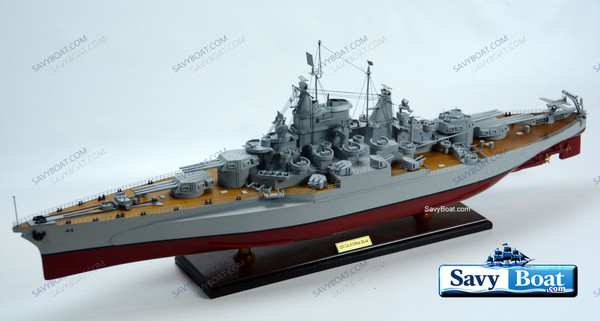

USS CALIFORNIA BATTLESHIP
SAVY DIRECT PRICE $849.96MSRP: $899.99USS CALIFORNIA BATTLESHIP FULLY BUILT AND READY TO DISPLAY QUALITY SHIP MODEL BEAUTIFUL MUSEUM QUALITY MODEL Dimension approx.: 37.5″ L x 7″ W x 14″ H USS California (BB‑44), the second of... -
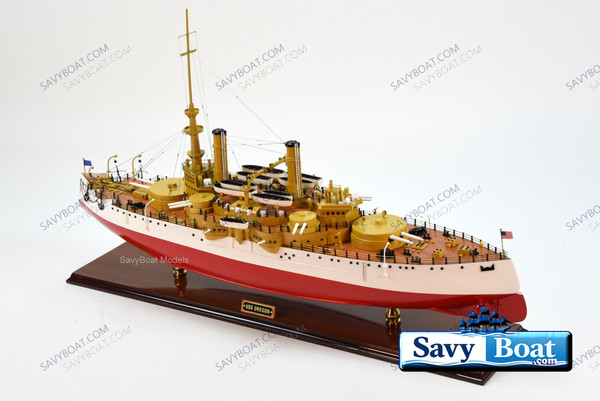
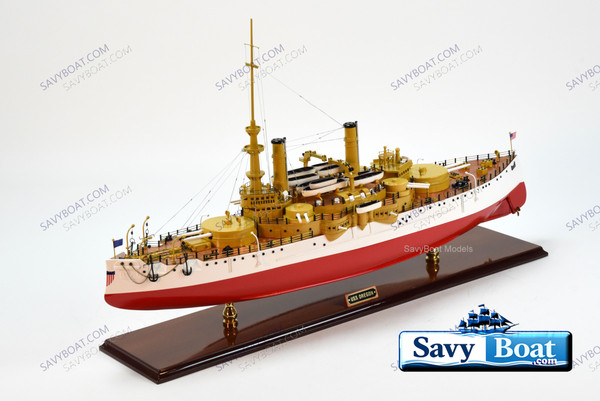
USS OREGON BATTLESHIP BB-3
SAVY DIRECT PRICE $924.96MSRP: $999.99USS OREGON BATTLE SHIP BB-3 (YELLOW) FULLY BUILT AND READY TO DISPLAY, QUALITY SHIP MODEL Dimension approx.: 34″ L x 8.5″ W x 20″ H -


USS OLYMPIA (C-6) BATTLESHIP
SAVY DIRECT PRICE $999.96MSRP: $1,099.99USS OLYMPIA BATTLESHIP FULLY BUILT AND READY TO DISPLAY, QUALITY SHIP MODEL Dimension Approx.: 36″ L x 5″ W x 18″ H
Description

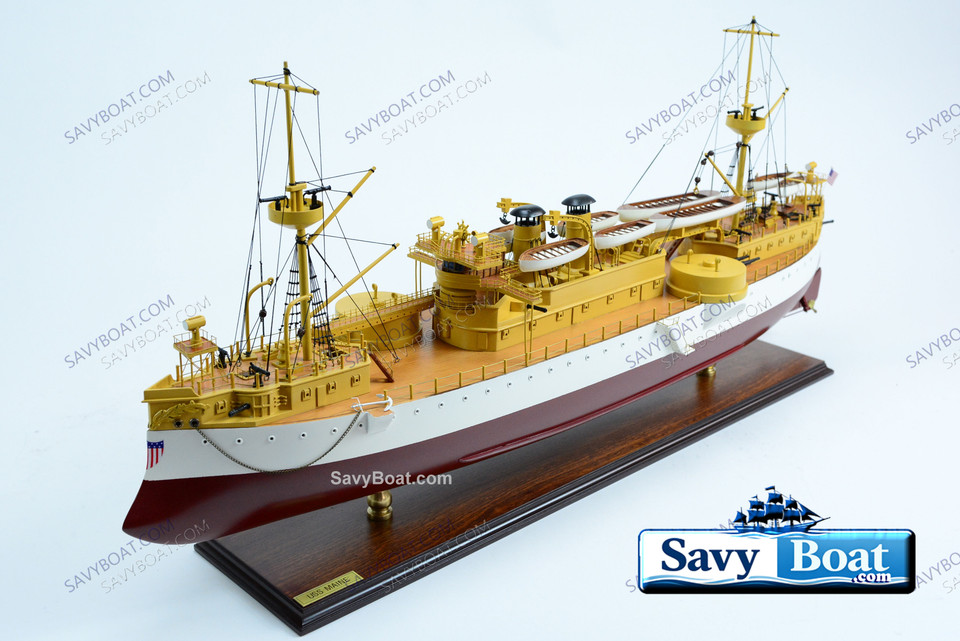
USS MAINE SECOND CLASS BATTLESHIP
FULLY BUILT AND READY TO DISPLAY, QUALITY SHIP MODEL
- Dimension Approx.: 32″L x 6.5″W x 14″H
- The model is already built, NOT a model ship kit
- Approximate scale 1/120th scale
When USS Maine steamed into Havana Harbor on 25 January 1898, she was already a ship burdened with expectations. Built in response to South American naval expansion and the fear that the United States Navy had fallen dangerously behind, Maine was meant to symbolize a new era of American sea power. Instead, she became a national tragedy — and the spark that helped ignite the Spanish–American War.
The story of Maine began in the 1880s, when the Brazilian battleship Riachuelo shocked American lawmakers into action. As your document notes, Congressman Hilary Herbert warned that if the U.S. fleet met Riachuelo in battle, “it is doubtful whether a single vessel bearing the American flag would get into port.” That fear drove Congress to authorize two modern warships: the battleship Texas and the armored cruiser Maine.
Designed by Theodore D. Wilson, Maine reflected the transitional thinking of her era. She carried:
-
Four 10‑inch guns in en échelon turrets
-
Six 6‑inch guns in casemates
-
A heavy nickel‑steel armor belt
-
A ram bow and a double bottom
-
Vertical triple‑expansion engines supervised by Arctic explorer George W. Melville
But her nine‑year construction period left her outdated before she ever touched the water. Naval technology had advanced rapidly, and by the time she was commissioned in 1895, Maine was already a compromise — neither a true battleship nor a true cruiser, but something in between.
Assigned to the North Atlantic Squadron, Maine spent her short career patrolling the East Coast and Caribbean. In January 1898, as tensions rose during the Cuban War of Independence, she was ordered to Havana to protect American citizens and interests.
She arrived peacefully, exchanged salutes with Spanish authorities, and settled into a quiet routine at anchor.
Three weeks later, everything changed.
At 9:40 p.m. on 15 February 1898, a massive explosion ripped through Maine’s forward magazines. As your document states, “more than 5 long tons of powder charges… detonated, obliterating the forward third of the ship.”
The blast killed 261 men, most of them sleeping in the forward berthing compartments. Captain Charles Sigsbee and most officers survived only because their quarters were aft.
The wreck settled quickly into the mud of Havana Harbor.
The cause of the explosion was unclear from the start. Some naval officers immediately suspected a coal bunker fire, noting that Maine carried bituminous coal prone to spontaneous combustion. Others believed a mine had detonated beneath the hull.
But the American public — inflamed by sensationalist reporting — demanded retribution. Newspapers like the New York Journal and New York World filled their pages with dramatic illustrations, accusations, and invented details. The rallying cry spread across the country:
“Remember the Maine! To hell with Spain!”
Though President McKinley did not cite the explosion as a direct cause for war, the emotional momentum was unstoppable. Two months later, the Spanish–American War began.
Over the next century, multiple inquiries attempted to determine what destroyed Maine:
-
1898 Sampson Board: external mine
-
Spanish inquiry: internal coal bunker fire
-
1911 Vreeland Board: external explosion, cause unknown
-
1976 Rickover investigation: internal coal fire
-
1998 National Geographic simulation: internal explosion most likely
All agreed that the forward magazines exploded. None could conclusively prove what triggered them.
The debate continues to this day.
For thirteen years, Maine lay in Havana Harbor. In 1911, engineers built a massive cofferdam around the wreck, pumped the water out, patched the hull, and refloated her. After a formal ceremony, the ship was towed to sea and given a final, solemn sinking in deep water.
Her main mast was brought home and installed at Arlington National Cemetery, where it stands as a memorial to the men who died aboard her.
USS Maine was not the most advanced warship of her time, nor the most successful. But her destruction changed the course of American history. She became A symbol of national grief, A rallying point for war, A case study in media influence, and a reminder of the dangers of early steel warship design
Today, she rests 3,600 feet below the Atlantic, but her mast, her memory, and her mystery endure.
USS Maine remains one of the most consequential ships ever to fly the American flag — not for what she did in life, but for what happened in a single, devastating moment.