






-
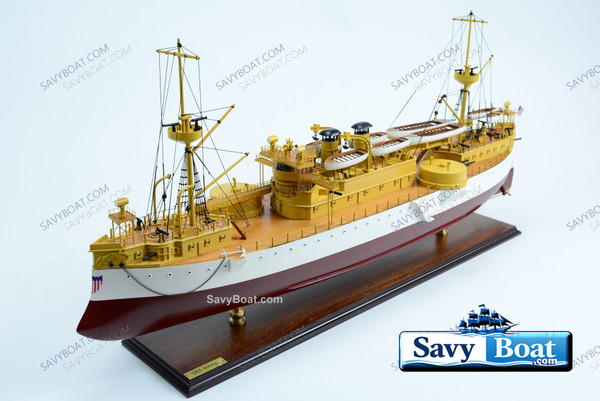
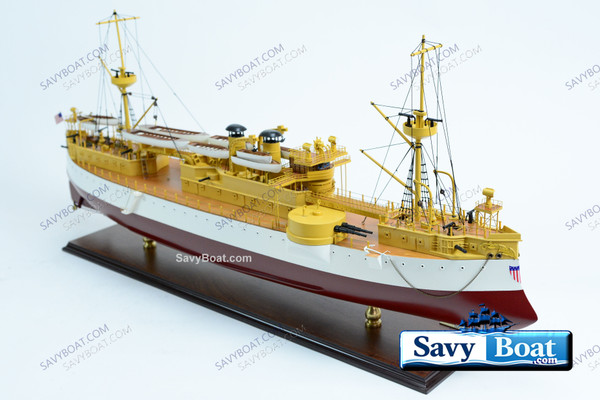
USS MAINE BATTLESHIP
SAVY DIRECT PRICE $849.96MSRP: $899.99USS MAINE SECOND CLASS BATTLESHIP FULLY BUILT AND READY TO DISPLAY, QUALITY SHIP MODEL Dimension Approx.: 32″L x 6.5″W x 14″H The model is already built, NOT a model ship kit Approximate scale... -
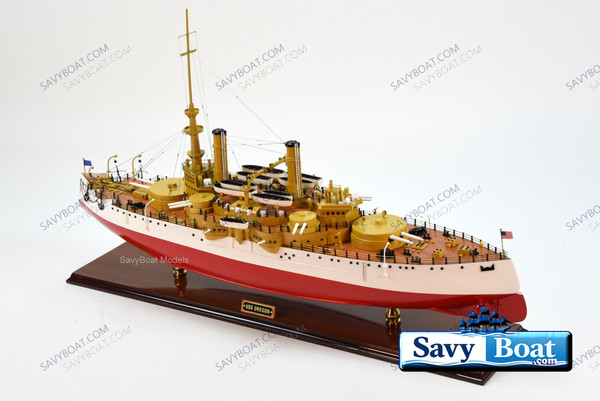
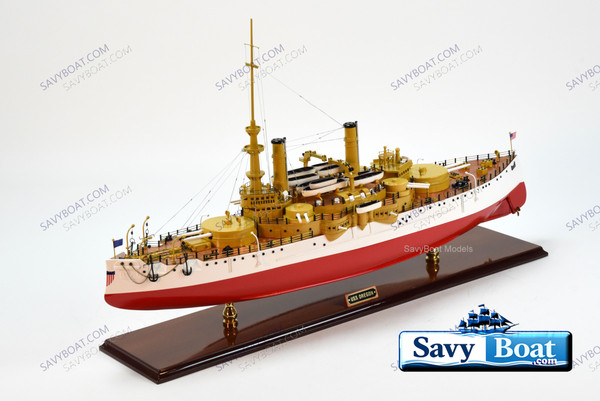
USS OREGON BATTLESHIP BB-3
SAVY DIRECT PRICE $924.96MSRP: $999.99USS OREGON BATTLE SHIP BB-3 (YELLOW) FULLY BUILT AND READY TO DISPLAY, QUALITY SHIP MODEL Dimension approx.: 34″ L x 8.5″ W x 20″ H -


USS OLYMPIA (C-6) BATTLESHIP
SAVY DIRECT PRICE $999.96MSRP: $1,099.99USS OLYMPIA BATTLESHIP FULLY BUILT AND READY TO DISPLAY, QUALITY SHIP MODEL Dimension Approx.: 36″ L x 5″ W x 18″ H
Description

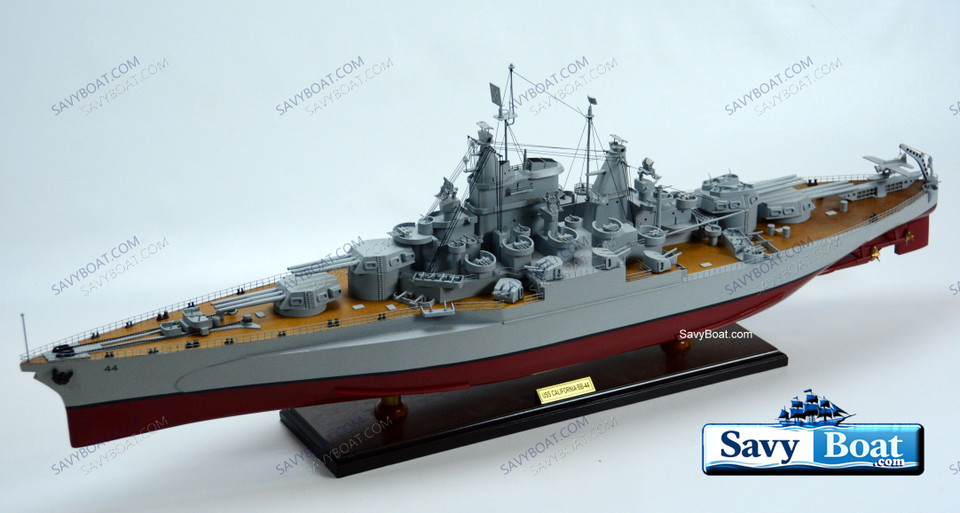
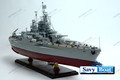
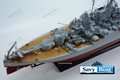
USS CALIFORNIA BATTLESHIP
FULLY BUILT AND READY TO DISPLAY QUALITY SHIP MODEL
- BEAUTIFUL MUSEUM QUALITY MODEL
- Dimension approx.: 37.5″ L x 7″ W x 14″ H
USS California (BB‑44), the second of the Tennessee‑class battleships, was born in the final years of the dreadnought era—a powerful expression of American naval engineering between the world wars. Ordered in 1915 and laid down at the Mare Island Naval Shipyard in 1916, she slid into the water on 20 November 1919 and joined the fleet in August 1921. From the outset, she served not merely as a battleship but as a symbol of Pacific strength, soon becoming the flagship of the Battle Fleet.
During the 1920s and 1930s, California’s peacetime career was defined by long cruises, annual Fleet Problems, and diplomatic voyages. Her 1925 goodwill tour to Australia and New Zealand showcased American naval reach across the Pacific. Modernization followed: new anti‑aircraft batteries, aircraft catapults, and structural improvements kept her competitive as naval aviation and gunnery rapidly evolved.
By 1940, as tensions with Japan escalated, California was stationed at Pearl Harbor, moored at Berth F‑3 along the now‑famous Battleship Row. On the morning of 7 December 1941, she became one of the first ships struck. Two torpedoes and a bomb tore into her port side, knocking out electrical power and triggering severe flooding. A magazine explosion ignited a deadly fire that killed roughly 50 men, and despite desperate damage‑control efforts, the ship slowly settled into the harbor mud. In total, 165 sailors were killed or wounded aboard California that day.
Yet her story did not end in the shallow waters of Pearl Harbor. Raised, patched, and towed to Puget Sound, California underwent an extensive reconstruction that transformed her into a modernized, heavily armed battleship. She returned to combat in June 1944, her rebuilt hull and updated fire‑control systems ready for the brutal island‑hopping campaign.
From the Marianas—Saipan, Guam, and Tinian—to the Philippines, California delivered the thunder of her 14‑inch guns in support of amphibious assaults. At the Battle of Surigao Strait on 25 October 1944, she took part in the last battleship‑against‑battleship engagement in naval history, helping to crush the Japanese Southern Force in a classic crossing‑the‑T maneuver. In early 1945, she survived a Kamikaze strike during the Lingayen Gulf operations, remaining in action for more than two weeks before repairs. She later supported the long, grinding campaign for Okinawa, firing until the war’s final months.
After victory, California returned home, decommissioned in February 1947, and entered the Reserve Fleet. She remained there quietly for more than a decade before being sold for scrap in 1959. Four of her crew received the Medal of Honor for extraordinary heroism during the Pearl Harbor attack, a testament to the courage that defined her service.
From flagship to near‑loss, from salvage hulk to frontline combatant, USS California embodied the resilience of the U.S. Navy’s battleship force. Her journey mirrors the arc of the Pacific War itself—devastation, recovery, and a determined return to the fight.