







-

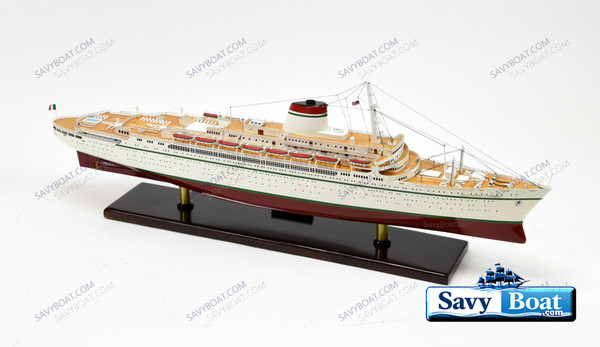
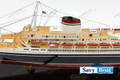
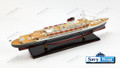
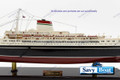
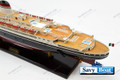
SS CRISTOFORO COLOMBO (WHITE) OCEAN LINER
SAVY DIRECT PRICE $799.96MSRP: $849.99SS CRISTOFORO COLOMBO (WHITE) FULLY BUILT AND READY TO DISPLAY, QUALITY SHIP MODEL Dimension approx.: 34″ (long) x 5″ (wide) x 12″ (high) The model is already built. THIS IS NOT A MODEL... -
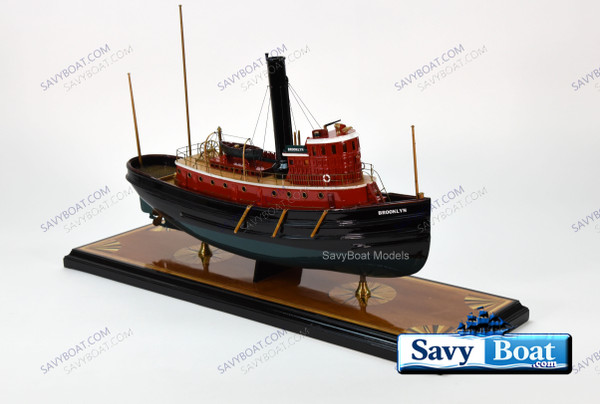

Brooklyn TB006P SAVY LOGO
SAVY DIRECT PRICE $1,199.96MSRP: $1,299.99Brooklyn Tugboat FULLY BUILT AND READY TO DISPLAY MUSEUM QUALITY SHIP MODEL Dimension approx.: 24″L x 6″W x 18″ H Base dimension: 30″L x 9″ W The model is already built. THIS IS NOT A... -


America Sailboat SAVY LOGO
SAVY DIRECT PRICE $699.96MSRP: $799.99SAILING YACHT AMERICA FULLY BUILT AND READY TO DISPLAY QUALITY SHIP MODEL Dimension approx.: 28″ (long) x 6″ (wide) x 26″ (high) The model is already built. THIS IS NOT A MODEL...
Description

SS CRISTOFORO COLOMBO (BLACK)
FULLY BUILT AND READY TO DISPLAY, QUALITY SHIP MODEL
- Dimension approx.: 34″ (long) x 5″ (wide) x 12″ (high)
- The model is already built. THIS IS NOT A MODEL SHIP KIT
When the SS Cristoforo Colombo was launched at the Ansaldo Shipyards in Genoa on 10 May 1953, she represented Italy’s determination to reclaim its place on the world’s oceans. The war had taken nearly everything from the Italian Line—its great prewar flagships Rex and Conte di Savoia lay destroyed, and the nation’s shipyards were rebuilding from rubble. The Cristoforo Colombo, slightly larger than her sister Andrea Doria, was conceived as a symbol of renewal: modern, elegant, and unmistakably Italian.
At 29,191 gross tons, she was the largest merchant ship in Italian service at the time. Her interiors were a celebration of Italian artistry—polished woods, sculptural staircases, murals, and lounges themed around the voyages of Christopher Columbus. She was designed not merely to transport passengers but to embody the refined glamour of postwar Italy, a floating showcase of design and craftsmanship.
Entering service in July 1954, the Cristoforo Colombo quickly became one of the Italian Line’s most admired ships. For more than a decade she sailed the Genoa–Naples–New York route, maintaining a steady rhythm of three round trips per month. Her schedule carried her through Gibraltar, Cannes, and back to Italy, linking continents with a blend of efficiency and Mediterranean charm. On board, passengers enjoyed multiple dining rooms, swimming pools, ballrooms, and lounges—distinct spaces for first class and cabin class, each designed with the same attention to detail.
Her most famous voyage came in 1964, when she carried Michelangelo’s Pietà from the Vatican to New York for the World’s Fair. The priceless sculpture was secured in a specially engineered foam‑lined crate, placed atop a rubber base in the first‑class pool. Ingeniously, the crate was designed to float free if the ship were lost—an extraordinary testament to the trust placed in the Cristoforo Colombo and her crew.
But even the most elegant liners could not escape the rise of jet travel. By the mid‑1960s, transatlantic passenger numbers were collapsing. The Italian Line repainted the Cristoforo Colombo in all‑white livery and shifted her to Adriatic cruises beginning in 1966. Later she was reassigned to South American routes, where traditional liners still found work into the 1970s.
By 1977, her time as a passenger ship had ended. Sold to Venezuelan interests and renamed Venezuela, she became a floating accommodation vessel—a quiet, stationary role far removed from her glamorous beginnings. After years of lay‑up, she was sold for scrap and broken up in Kaohsiung, Taiwan, in 1982.
Though overshadowed in popular memory by the tragic fate of her sister Andrea Doria, the Cristoforo Colombo enjoyed a long, successful career. She embodied the Italian Line’s postwar renaissance—stylish, reliable, and culturally significant. Her voyages carried not only passengers but also symbols of national pride, from Italian design to the Pietà itself.
Today, she is remembered as one of the last great Italian ocean liners of the classic era, a ship whose graceful profile and refined interiors captured the optimism of a nation rebuilding its identity at sea.