


-


SEVEN 7 VIKING OFFSHORE SUPPLY SHIP
SAVY DIRECT PRICE $1,499.95MSRP: $1,499.99Seven Subsea Viking Maintenance & Repair Vessel FULLY BUILT AND READY TO QUALITY MUSEUM DISPLAY MODEL -


COMMERCIAL LIBERTY CARGO SHIP
SAVY DIRECT PRICE $799.96MSRP: $899.99COMMERCIAL LIBERTY CARGO SHIP FULLY BUILT AND READY TO DISPLAY MUSEUM QUALITY SHIP MODEL Dimension approx.: 34″ (long) x 5″ (wide) x 10.5″ (high) The model is already built. THIS IS NOT... -
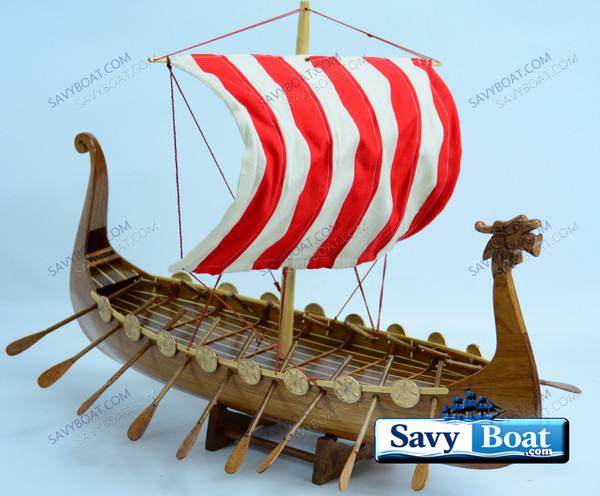
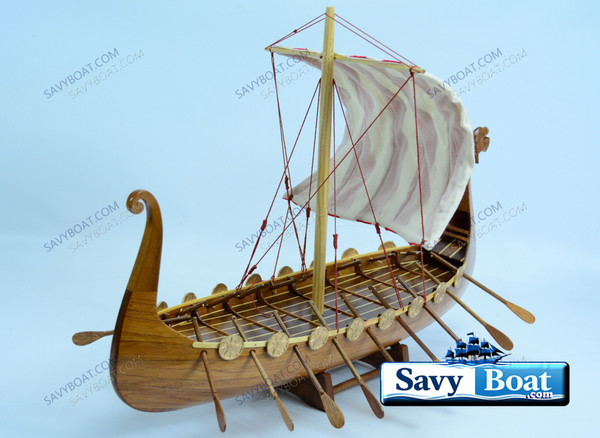
DRAKAR VIKING SHIP W/SAIL
SAVY DIRECT PRICE $289.96MSRP: $329.99DRAKAR VIKING SHIP WITH OARS FULLY BUILT AND READY TO DISPLAY, QUALITY SHIP MODEL Dimension approx.: 24″ (long) x 7″ (wide) x 17″ (high) The model is already built, NOT a model ship kit Long...
Description

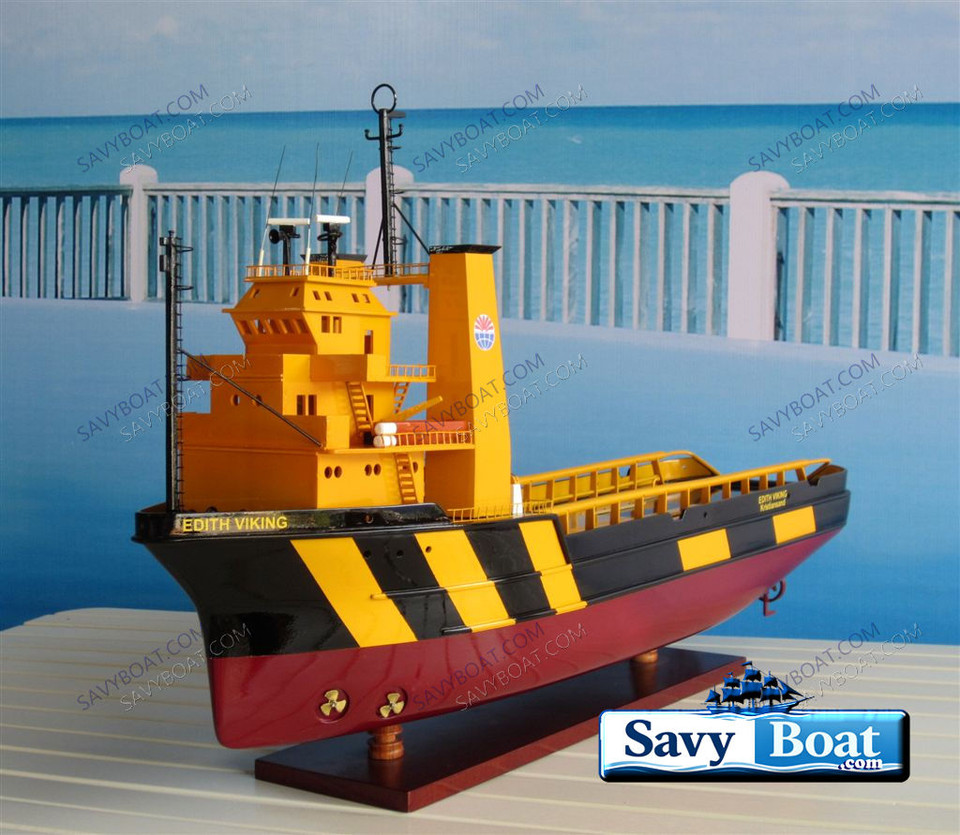
EDITH VIKING COMMERCIAL SUPPLY SHIP
FULLY BUILT AND READY TO DISPLAY MUSEUM QUALITY SHIP MODEL
- Dimension approx.: 28″ (long) x 7″ (wide) x 16″ (high)
- The model is already built. THIS IS NOT A MODEL SHIP KIT
When the Edith Viking slid down the ways at the Krögerwerft yard in Rendsburg, West Germany, on 6 June 1975, she was built for a very specific world — the rugged, fast‑growing offshore oil fields of the North Sea. Ordered by K/S Viking Supply Ships A/S of Kristiansand, Norway, she was designed as a tough, compact tug and supply vessel, capable of hauling anchors, towing rigs, and delivering cargo to offshore platforms in some of the harshest seas on Earth.
Her keel had been laid earlier that year, on 7 February 1975, and by September, she was delivered under the Norwegian flag. At 499 gross tons and with a deadweight of 1,325 tons, she was not a large ship, but she was powerful. Two MaK V‑12 diesel engines, producing a combined 7,000 bhp, gave her a top speed of around 14 knots — impressive for a vessel of her size. She burned fuel at a rate of 25 tons per day, a reminder of the raw muscle required for offshore towing and supply work.
For more than a decade, Edith Viking served the North Sea industry, performing the unglamorous but essential tasks that keep offshore operations running: towing barges, delivering equipment, supporting drilling rigs, and standing by in rough weather. She was part of the backbone of Norway’s offshore fleet during a period of rapid expansion in the petroleum sector.
But like many commercial workboats, her life would be defined by constant reinvention. In 1988, she was transferred to Skibs‑A/S Exelsior, still in Kristiansand. A year later, she left Norway entirely, sold to Care Offshore S.A. and reflagged to the Bahamas under a new name: Red Puffin. It was the first of many identities she would assume as she moved through the global offshore market.
Throughout the 1990s, the ship changed hands repeatedly — to owners in St. Vincent & the Grenadines, then to Big Support K/S in Oslo, and later to Seabulk Offshore. Her tonnage was reclassified in 1992, reducing her gross tonnage to 1,137 and deadweight to 722 tons, reflecting structural and operational modifications. Each transition marked a new chapter, a new region, and a new set of offshore tasks.
In 2002, she was renamed Seabulk Puffin, operating under the Liberian flag. By 2006, she was registered in the Marshall Islands, still working, still useful, still part of the sprawling network of offshore support vessels that circle the globe. Her final major change came in 2008, when she was sold to Reliance Four Star Marine Ltd. of Warri, Nigeria, and renamed Reliance Star 2.
In West Africa, she entered the final phase of her career — older, slower, but still serviceable in coastal and offshore support roles. Her last recorded AIS position in 2017 shows her anchored at Onne, Nigeria, a major hub for offshore logistics in the Gulf of Guinea. After more than 40 years of service, she had reached the quiet end typical of many offshore workboats: retired far from her birthplace, her long career complete.
The story of the Edith Viking is not one of glamour or fame, but of endurance. She was a ship built for labor — towing, hauling, supplying, supporting — and she performed those tasks across four decades, under multiple flags, names, and owners. Her journey from Norway to the Caribbean, the United States, Liberia, and finally Nigeria reflects the global nature of the offshore industry and the long, wandering lives of the vessels that serve it.
She may never have been a headline‑maker, but she was exactly what she needed to be: a reliable workhorse in an industry that depends on ships just like her.