








-

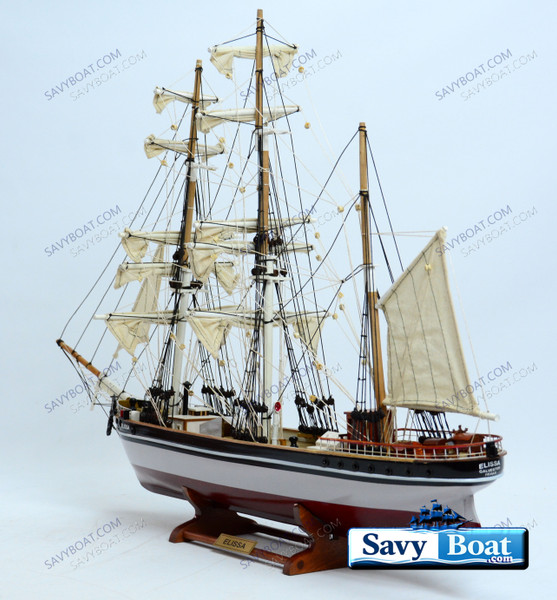
ELISSA TALL SHIP
SAVY DIRECT PRICE $739.96MSRP: $789.99ELISSA TALL SHIP FULLY BUILT AND READY TO DISPLAY QUALITY SHIP MODEL Dimension approx.: 31″ (long) x 9″ (wide) x 19″ (high) The model is already built. THIS IS NOT A MODEL SHIP... -
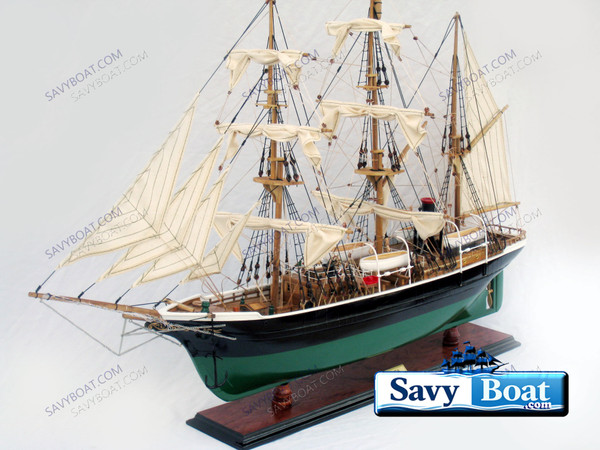
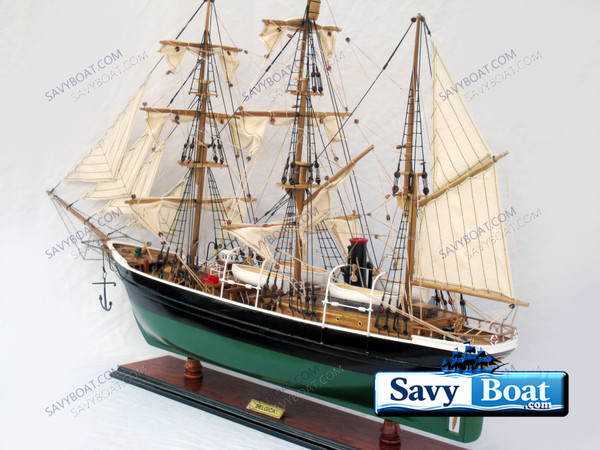
BELGICA TALL SHIP
SAVY DIRECT PRICE $799.96MSRP: $849.99BELGICA TALL SHIP FULLY BUILT AND READY TO DISPLAY, QUALITY SHIP MODEL Dimension approx.: 28.74L x 5.51W x 25.59H (inches) The model is already built. THIS IS NOT A MODEL SHIP KIT When... -


FRAM (FORWARD) TALL SHIP
SAVY DIRECT PRICE $499.96MSRP: $549.99FRAM (FORWARD)TALL SHIP FULLY BUILT AND READY TO DISPLAY HIGH QUALITY SHIP MODEL Dimension approx.: 28 inch L x 8 inch W x 23 inch H The model is already built. THIS IS NOT A...
Description

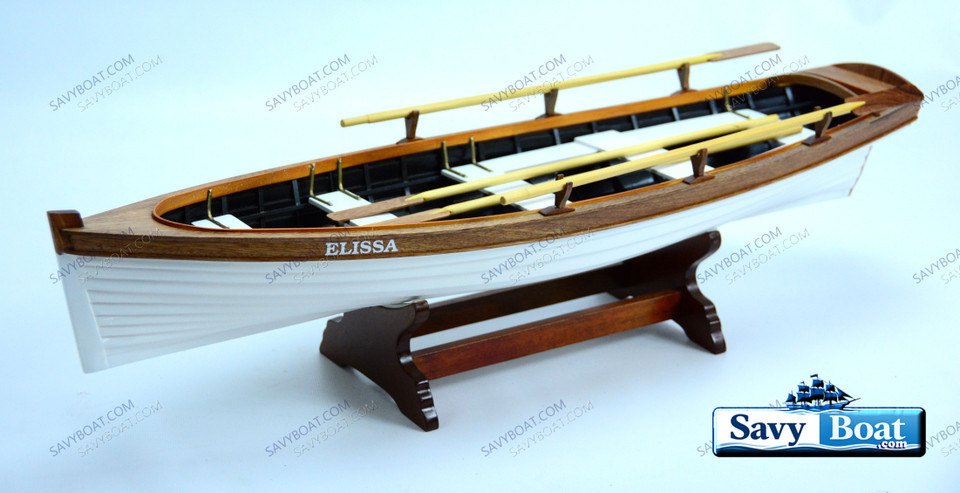
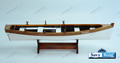
ELISSA TALL SHIP'S LIFEBOAT
FULLY BUILT AND READY TO DISPLAY MUSEUM QUALITY SHIP MODEL
- Dimension approx.: 24″ (long) x 7″ (wide) x 6″ (high)
- The model is already built. THIS IS NOT A MODEL SHIP KIT
Among the many artifacts preserved aboard the 1877 barque Elissa, few speak more quietly yet more powerfully than her traditional wooden lifeboat. While the ship herself has crossed oceans, changed flags, and survived near destruction, her lifeboat represents the most fundamental element of 19th‑century seamanship: the simple craft meant to save lives when all else failed.
Like most merchant vessels of her era, Elissa carried a small, open lifeboat built of lightweight planking over sturdy frames — a design intended to be quickly launched by a minimal crew. In the age before engines, radios, or modern rescue systems, such a boat was the crew’s final refuge, their only means of escape should the iron‑hulled barque be lost to storm, collision, or grounding. It would have been stored on deck, lashed securely near the main hatch or bulwarks, ready to be swung out on its davits at a moment’s notice.
Though the historical record focuses on Elissa’s long commercial career — from her early British voyages to her decades under Norwegian, Swedish, Finnish, and Greek ownership — her lifeboat remained a constant companion. Whether she sailed as Fjeld, Gustaf, Christophoros, or Achaeos, the lifeboat was part of her essential safety equipment, maintained alongside her rigging, sails, and anchors as she worked the trade routes of the North Atlantic, the Mediterranean, and the Gulf of Mexico.
When Elissa was rescued from a scrapyard in Piraeus in the 1970s and brought to Galveston for restoration, her lifeboat — like her masts, spars, and hull — was rebuilt with the same dedication to authenticity that defines the entire project. Today, it remains an integral part of her presentation as a fully operational, actively sailing museum ship. Visitors walking her decks can see the lifeboat much as her 19th‑century crew would have: a humble but vital craft, ready to serve in training exercises, demonstrations, and interpretive programs.
In many ways, the lifeboat mirrors Elissa’s own story. Both were built for utility, both endured decades of hard service, and both survived long enough to be restored and honored. As Elissa continues to sail the Gulf of Mexico as the Official Tall Ship of Texas, her lifeboat stands as a reminder of the human realities of life at sea — the risks sailors faced, the tools they relied upon, and the enduring craftsmanship that has carried this remarkable ship into the modern age.