









-

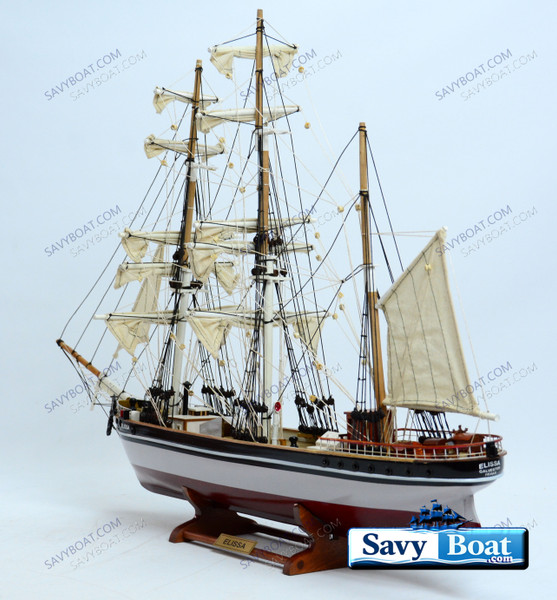
ELISSA TALL SHIP
SAVY DIRECT PRICE $739.96MSRP: $789.99ELISSA TALL SHIP FULLY BUILT AND READY TO DISPLAY QUALITY SHIP MODEL Dimension approx.: 31″ (long) x 9″ (wide) x 19″ (high) The model is already built. THIS IS NOT A MODEL SHIP... -
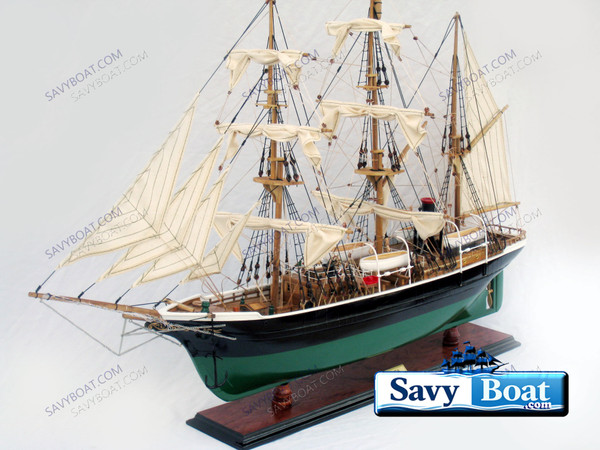
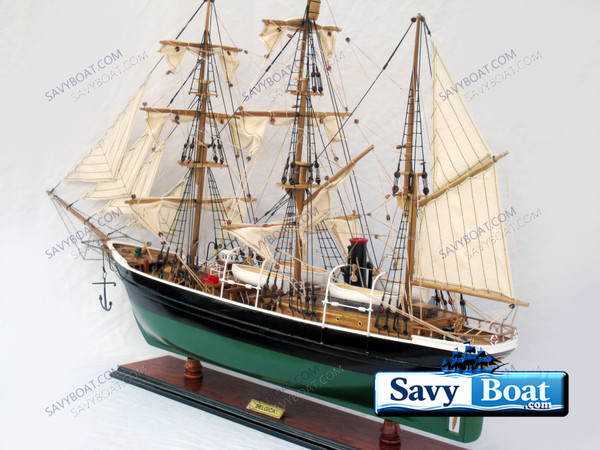
BELGICA TALL SHIP
SAVY DIRECT PRICE $799.96MSRP: $849.99BELGICA TALL SHIP FULLY BUILT AND READY TO DISPLAY, QUALITY SHIP MODEL Dimension approx.: 28.74L x 5.51W x 25.59H (inches) The model is already built. THIS IS NOT A MODEL SHIP KIT When... -


FRAM (FORWARD) TALL SHIP
SAVY DIRECT PRICE $499.96MSRP: $549.99FRAM (FORWARD)TALL SHIP FULLY BUILT AND READY TO DISPLAY HIGH QUALITY SHIP MODEL Dimension approx.: 28 inch L x 8 inch W x 23 inch H The model is already built. THIS IS NOT A...
Description

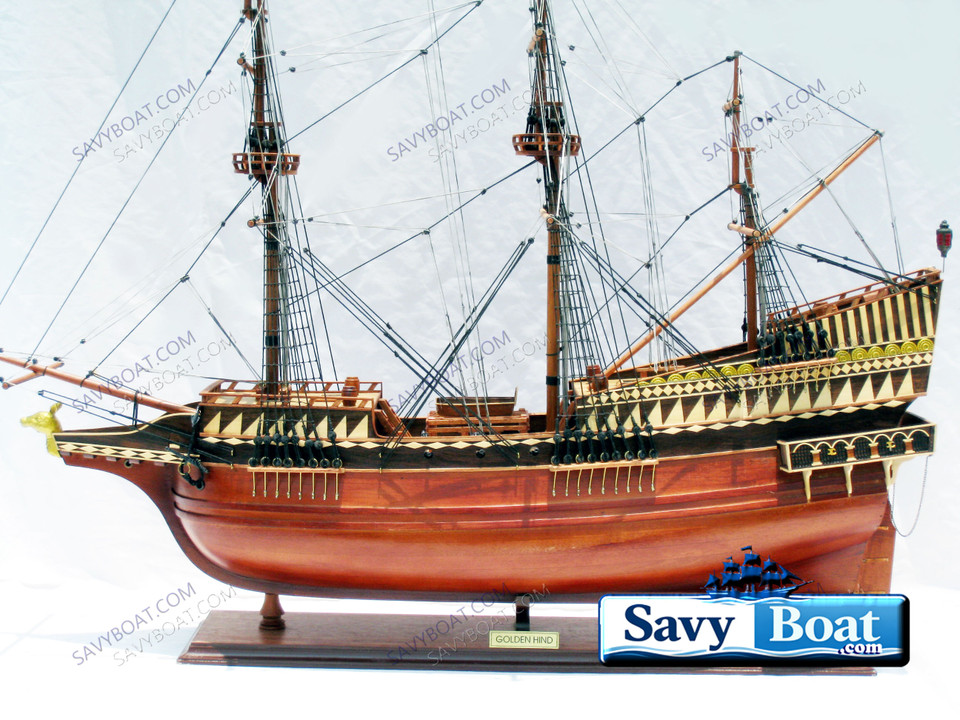
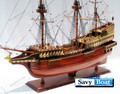
GALLEON GOLDEN HIND TALL SHIP
FULLY BUILT AND READY TO DISPLAY QUALITY SHIP MODEL
- Dimension approx.: 31.5L × 8W × 31H (in)
- The model is already built. THIS IS NOT A MODEL SHIP KIT
Few ships of the Age of Discovery have earned a place in popular memory as enduring as the Golden Hind, the galleon that carried Sir Francis Drake around the world between 1577 and 1580. Originally launched as the Pelican, she was a compact but capable mid‑16th‑century warship—part carrack, part emerging galleon—built for long voyages, heavy weather, and the occasional clash with Spain’s far‑flung empire. In August 1578, as Drake prepared to enter the treacherous Strait of Magellan, he renamed her Golden Hind in honor of his patron Sir Christopher Hatton, whose family crest bore the image of a golden female deer. The gesture cemented the ship’s identity as both a vessel of exploration and a symbol of political allegiance.
Backed by Queen Elizabeth I, Drake sailed from Plymouth in December 1577 with five small ships and roughly 164 men. His mission blended exploration with privateering: chart unknown coasts, disrupt Spanish power, and return with treasure if fortune allowed. After storms, mutiny, and the loss of several ships, the Golden Hind emerged as the expedition’s sole flagship. Modeled in part on the Spanish Victoria—the first ship to circumnavigate the globe—she proved agile and resilient, well suited to the long Pacific crossing that lay ahead.
Her most dramatic moment came in March 1579, off the coast of present‑day Ecuador. There, Drake intercepted the Spanish galleon Nuestra Señora de la Concepción, known as the “Cacafuego.” The capture yielded one of the richest prizes in maritime history: 26 tons of silver, half a ton of gold, chests of jewels, and thousands of coins—wealth so immense it took days to transfer. The haul transformed Drake’s voyage from daring expedition to legend.
Continuing north, Drake claimed a stretch of the Pacific coast as Nova Albion, then crossed the Pacific and Indian Oceans, rounding the Cape of Good Hope before steering homeward. When the Golden Hind entered Plymouth in September 1580, only 56 men remained aboard. Drake became the first Englishman to circumnavigate the globe, and the ship that carried him became a national treasure.
The original Golden Hind survived for decades as a celebrated relic, but by the late 17th century she had deteriorated beyond repair and was broken up. No part of her hull survives today.
Yet her legacy endures through two full‑scale, seaworthy replicas. One, berthed at St. Mary Overie Dock in London, serves as a floating museum and educational vessel. The other, in Brixham, Devon, honors Drake’s early life and offers visitors an immersive glimpse into 16th‑century seafaring. Built with traditional methods but equipped with discreet modern navigation aids, both ships keep the story of the Golden Hind alive for new generations.
From daring raids to global exploration, the Golden Hind remains one of the most iconic ships of the Elizabethan age—a symbol of ambition, audacity, and the expanding horizons of the early modern world.