





-


MV BARZAN CONTAINER cargo FREIGHTER LARGE 39" SCALE FULLY BUILT SHIP MUSEUM MODEL W/STAND
SAVY DIRECT PRICE $899.96MSRP: $949.99MV BARZAN CONTAINER SHIP FULLY BUILT AND READY TO DISPLAY QUALITY SHIP MODEL Dimension Approx.: 39.5″ L x 6″ W x 10″ H The model is already built, NOT a model ship kit When MV Barzan ent -


JAPANESE BATTLESHIP MIKASA Fully built large 40” ship museum quality model WWII war ship w/stand
SAVY DIRECT PRICE $849.96MSRP: $999.99IMPERIAL JAPANESE NAVY PRE-DREADNAUGHT MIKASA FULLY BUILT AND READY TO DISPLAY MUSEUM QUALITY SHIP MODEL Dimension Approx.: 40″L x 10″W x 20″H</ -
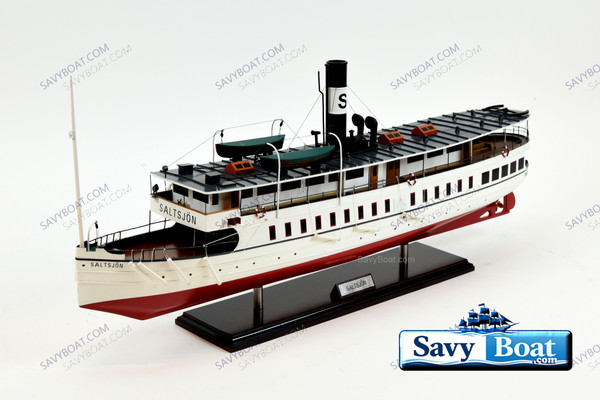
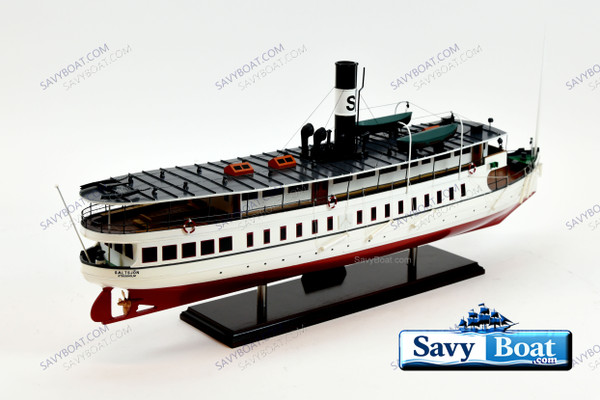
SALTJON ship 31" fully built wood model with stand
SAVY DIRECT PRICE $599.96MSRP: $649.99SALTSJÖN / BJÖRKFJÄRDEN MODEL STEAM SHIP FULLY BUILT AND READY TO DISPLAY, QUALITY SHIP MODEL Dimension approx.: 32″ L x 5.5″
Description

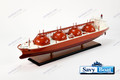
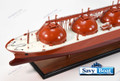
GAS LNG TANKER SHIP
FULLY BUILT AND READY TO DISPLAY MUSEUM QUALITY SHIP MODEL
ARGE MUSEUM QUALITY MODEL
- Dimension Approx.: 36″ (long) x 6″ (wide) x 9.5″ (high).
- The model is 100% hand built by artisans from scratch
- The model is already built, NOT a model ship kit
The story of LNG tankers begins not with confidence, but with a question: could methane, chilled to the temperature of distant planets, survive an ocean crossing? In the winter of 1959, the world received its answer. The Methane Pioneer, a humble WWII Liberty ship reborn with gleaming aluminum tanks, slipped down the Calcasieu River and out into the Gulf of Mexico. Inside her insulated holds, natural gas lay trapped at –162 °C, a fragile experiment in cryogenic engineering. When she arrived safely in the United Kingdom, she carried more than LNG — she carried proof that a new era of energy transport was possible. The success of that voyage sparked a quiet revolution.
The first LNG carrier carrying 5,500 cubic metres (190,000 cu ft), left the Calcasieu River on the Louisiana Gulf coast on 25 January 1959. Carrying the world's first ocean cargo of LNG, it sailed to the UK where the cargo was delivered. The success of the specially modified C1-M-AV1-type standard ship, caused the Gas Council and Conch International Methane Ltd. to order two purpose built LNG carriers to be constructed: Methane Princess and Methane Progress. The ships were fitted with Conch independent aluminum cargo tanks and entered the Algerian LNG trade in 1964. These ships had a capacity of 27,000 cubic metres (950,000 cu ft).By 1964, the first purpose‑built LNG carriers — Methane Princess and Methane Progress — were launched to serve the growing Algerian trade. Their 27,000‑cubic‑meter tanks seemed enormous at the time, and their reliability reassured a world hungry for new energy sources. LNG shipping was no longer an experiment; it was becoming an industry.
As the decade turned, the Pacific called. Japan, racing through its postwar economic boom, needed fuel that oil alone could not provide. In 1969, two Swedish‑built giants — Polar Alaska and Arctic Tokyo — began the long, cold run between Alaska’s Kenai terminal and Japanese ports. Their 71,500‑cubic‑meter capacity dwarfed earlier ships, and their dependable service proved that LNG could travel not just across oceans, but across hemispheres.
Meanwhile, the United States briefly attempted to build its own LNG fleet. Encouraged by government policy, American shipyards produced sixteen carriers between 1977 and 1979. Ships like Methane Alpha and Methane Beta reflected a moment when the U.S. imagined itself as a major LNG exporter — a dream that would not fully materialize until decades later.
But the true transformation of LNG shipping came not from geography, but from engineering. Designers experimented with new ways to contain the volatile, freezing cargo. The membrane systems of the 1960s offered thin, flexible metal skins supported by insulation, maximizing cargo volume. Then, in 1973, the Norman Lady introduced the world to the Moss spherical tank — great aluminum globes rising from the deck like futuristic domes. These spheres were strong, simple, and unmistakable, and they became icons of the industry.
By the 1980s and 1990s, LNG shipping was no longer a frontier technology. Global trade expanded fiftyfold from its early days. New containment systems — Gaztransport No. 96 and Technigaz Mark III — allowed ships to grow past 130,000 cubic meters. Australia joined the export world in 1989, and Korean shipyards, led by Hyundai Heavy Industries, began building LNG carriers that would soon dominate the market.
Then came Qatar. In the 2000s, its vast North Field gas reserves demanded ships of unprecedented scale. The result was the Q‑Flex and Q‑Max classes — floating cryogenic fortresses carrying up to 266,000 m³ of LNG. With onboard re‑liquefaction plants and efficient diesel engines capable of burning their own boil‑off gas, these vessels redefined what an LNG carrier could be.
By 2023, more than 700 LNG tankers roamed the world’s oceans. They connected the U.S. Gulf Coast to Europe, Australia to China, Qatar to everywhere. Their routes shifted with geopolitics, market shocks, and seasonal demand, but their purpose remained constant: to move the coldest cargo on Earth safely across thousands of miles.
From a single experimental voyage to a global fleet of engineering marvels, the history of LNG tankers is a story of persistence, innovation, and the quiet determination to move energy where it is needed most — even when that energy must be kept colder than Antarctica.