







-

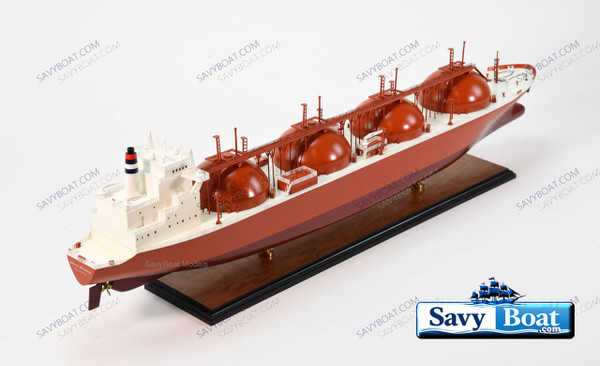
GAS LNG TANKER SHIP LARGE 36" SCALE FULLY BUILT SHIP MUSEUM MODEL W/STAND
SAVY DIRECT PRICE $899.96MSRP: $989.99GAS LNG TANKER SHIP FULLY BUILT AND READY TO DISPLAY MUSEUM QUALITY SHIP MODEL ARGE MUSEUM QUALITY MODEL Dimension Approx.: 36″ (long) x 6″ (wide) x 9.5″ (high). The model is 100% hand built... -


JAPANESE BATTLESHIP MIKASA Fully built large 40” ship museum quality model WWII war ship w/stand
SAVY DIRECT PRICE $849.96MSRP: $999.99IMPERIAL JAPANESE NAVY PRE-DREADNAUGHT MIKASA FULLY BUILT AND READY TO DISPLAY MUSEUM QUALITY SHIP MODEL Dimension Approx.: 40″L x 10″W x 20″H</ -
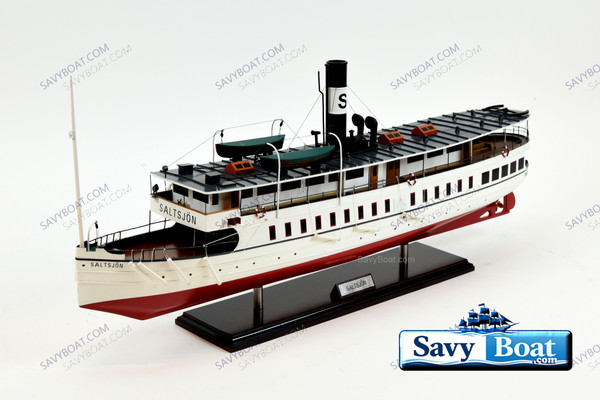
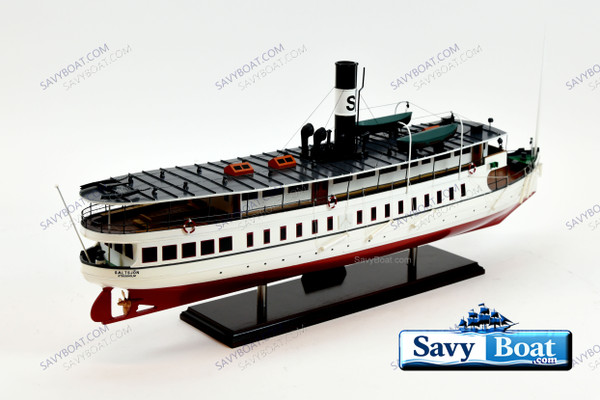
SALTJON ship 31" fully built wood model with stand
SAVY DIRECT PRICE $599.96MSRP: $649.99SALTSJÖN / BJÖRKFJÄRDEN MODEL STEAM SHIP FULLY BUILT AND READY TO DISPLAY, QUALITY SHIP MODEL Dimension approx.: 32″ L x 5.5″
Description

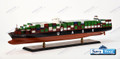
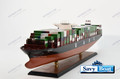
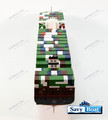
MV BARZAN CONTAINER SHIP
FULLY BUILT AND READY TO DISPLAY QUALITY SHIP MODEL
- Dimension Approx.: 39.5″ L x 6″ W x 10″ H
- The model is already built, NOT a model ship kit
When MV Barzan entered service in 2015, she represented a new threshold in the scale and environmental ambition of global container shipping. Built by Hyundai Samho Heavy Industries in Mokpo, South Korea, and launched the previous year, she was the first of UASC’s A18‑class giants—vessels designed to compete on the demanding Asia–Europe trade at a moment when ultra‑large container ships were reshaping maritime logistics. At 400 meters long, with a 58.6‑meter beam and capacity approaching 19,870 TEU, Barzan stood among the largest container ships afloat, a steel colossus engineered for efficiency as much as capacity.
Her significance extended beyond size. Barzan was the first containership to receive DNV GL’s “Gas Ready” notation, meaning her design allowed for future conversion to liquefied natural gas (LNG) propulsion. Her Energy Efficiency Design Index (EEDI) was roughly 50% below the IMO 2025 limit, and her CO₂ emissions per TEU were more than 60% lower than comparable ships only a few years older. Waste‑heat recovery systems, optimized hull lines, and integrated electrical propulsion made her one of the most eco‑efficient vessels of her generation—an early signal of the industry’s shift toward greener operations.
Originally delivered to the United Arab Shipping Company (UASC), Barzan was one of six sister ships intended to anchor the company’s long‑haul Asia–Europe service. She quickly settled into a rhythm of calling at major hubs—Yantian, Yangshan, Tanjung Pelepas, Rotterdam—moving the dense, high‑volume cargoes that define the world’s busiest trade lane. Following UASC’s merger with Hapag‑Lloyd in 2017, she joined the German carrier’s fleet, continuing her role under new colors while retaining her reputation as a technologically advanced workhorse.
Her early career was marked by one notable incident. In September 2015, only months after entering service, Barzan experienced a cargo‑hold fire roughly 60 nautical miles off Cabo Finisterre, Spain—likely caused by undeclared dangerous goods. The crew fought the blaze with boundary cooling and a partial CO₂ release, but leaks in the system limited its effectiveness. She diverted to Rotterdam, where the fire was fully extinguished without injury. The event underscored the growing challenges of fire safety aboard ultra‑large container ships and contributed to industry‑wide calls for improved protocols.
In the years since, Barzan has remained a steady presence on the Asia–Europe corridor, her AIS tracks tracing familiar arcs between China, Southeast Asia, and Northern Europe. As of 2026, she continues to operate under Hapag‑Lloyd, scheduled for regular calls at major ports including Rotterdam, where she remains a recognizable figure among the world’s largest and most efficient container vessels.
Named for the Barzan Towers of Qatar—historic watchtowers symbolizing vigilance and elevated perspective—MV Barzan lives up to her name. She stands as a milestone in the evolution of ultra‑large container ships: vast, environmentally forward‑leaning, and emblematic of the technological leaps that define modern maritime trade.