








-

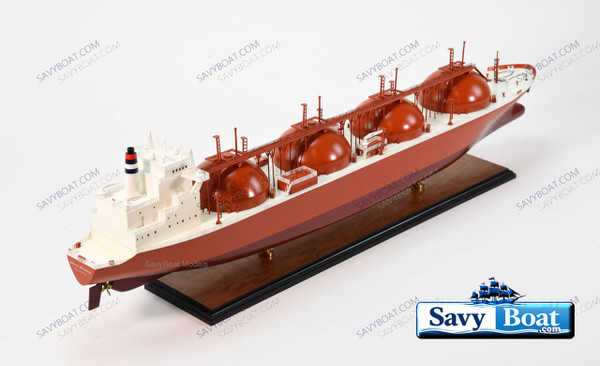
GAS LNG TANKER SHIP LARGE 36" SCALE FULLY BUILT SHIP MUSEUM MODEL W/STAND
SAVY DIRECT PRICE $899.96MSRP: $989.99GAS LNG TANKER SHIP FULLY BUILT AND READY TO DISPLAY MUSEUM QUALITY SHIP MODEL ARGE MUSEUM QUALITY MODEL Dimension Approx.: 36″ (long) x 6″ (wide) x 9.5″ (high). The model is 100% hand built... -


MV BARZAN CONTAINER cargo FREIGHTER LARGE 39" SCALE FULLY BUILT SHIP MUSEUM MODEL W/STAND
SAVY DIRECT PRICE $899.96MSRP: $949.99MV BARZAN CONTAINER SHIP FULLY BUILT AND READY TO DISPLAY QUALITY SHIP MODEL Dimension Approx.: 39.5″ L x 6″ W x 10″ H The model is already built, NOT a model ship kit When MV Barzan ent -


32" GEPARD-CLASS SCHNELLBOOT fast attack craft / vessel fully built museum quality ship model w/stand
SAVY DIRECT PRICE $899.96MSRP: $999.99GEPARD- CLASS, TYPE 143A SCHNELLBOOT FAST ATTACK CRAFT FULLY BUILT AND READY TO DISPLAY, QUALITY SHIP MODEL Dimension Approx.: 32″L x 4.5″W x 13″H The model is already built, N
Description

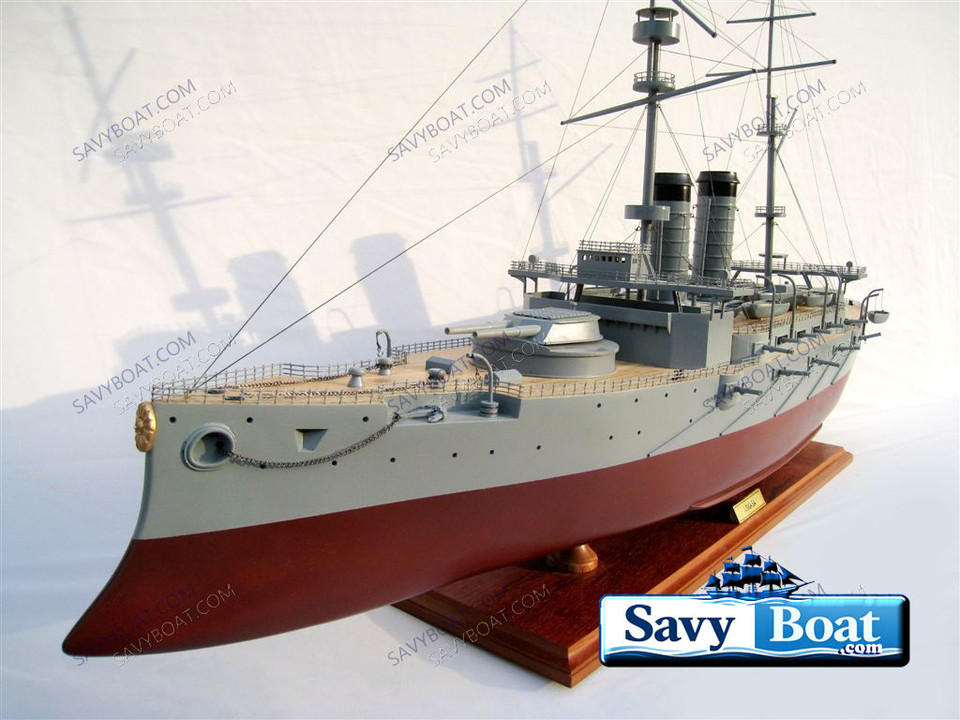
IMPERIAL JAPANESE NAVY PRE-DREADNAUGHT MIKASA
FULLY BUILT AND READY TO DISPLAY MUSEUM QUALITY SHIP MODEL
- Dimension Approx.: 40″L x 10″W x 20″H
- Approximate scale 1/130th scale
- The model is already built, NOT a model ship kit
- Real brass & metal fittings
Mikasa — The Iron Guardian of a Rising Empire
She was born not in Japan, but in the gray shipyards of Barrow‑in‑Furness, where British steelworkers hammered out the hull of a vessel destined to become a national symbol half a world away. When Mikasa slid into the water in 1900, she carried more than armor and guns — she carried the ambitions of a nation determined to stand among the world’s great powers.
By the time she reached Yokosuka and joined the Imperial Japanese Navy in 1902, Japan was transforming at a breathtaking pace. Railways, factories, and modern warships were rising everywhere. Mikasa, with her four 12‑inch guns and towering masts braced against thick funnels, became the embodiment of that transformation — the last and finest of Japan’s pre‑dreadnought battleships.
When war with Russia erupted in 1904, Mikasa took her place at the center of history. Vice Admiral Tōgō Heihachirō raised his flag aboard her, turning the ship into the nerve center of the Japanese fleet. From her bridge, Tōgō watched the opening bombardment at Port Arthur, felt the thunder of the Battle of the Yellow Sea, and prepared for the confrontation that would define an era.
That moment came on May 27, 1905, in the waters of Tsushima Strait. As the Russian Baltic Fleet steamed toward Vladivostok, Mikasa led the Japanese line in a sweeping arc across the enemy’s bows. Smoke curled from her funnels, signal flags snapped in the wind, and her great guns roared across the sea. The battle that followed — brutal, decisive, and world‑shaking — shattered the Russian fleet and announced Japan as a new naval power. Newspapers called it “the Trafalgar of the East,” and at the center of it all stood Mikasa, battered but unbowed.
Yet victory brought tragedy. Only days after the war ended, an accidental magazine explosion tore through the ship while she lay at anchor in Sasebo. She sank in shallow water, a national hero brought low. But Japan refused to let her story end there. Salvaged, repaired, and restored over two long years, Mikasa returned to service — slower now, older, but still proud.
Her later years were quieter. She guarded the coast during World War I, supported Japanese forces in Siberia, and then, with the Washington Naval Treaty reshaping the world’s fleets, she was finally retired. But unlike her contemporaries, she was not scrapped. Instead, she was preserved — a rare honor — and set into the earth at Yokosuka as a memorial to the men who fought aboard her and the nation she helped shape.
Today, Mikasa stands alone. The last surviving pre‑dreadnought battleship on Earth. The last British‑built battleship still in existence. A steel time capsule from the dawn of modern naval warfare. Visitors walk her decks, peer into her restored bridge, and imagine the thunder of Tsushima echoing across the sea.
More than a ship, Mikasa is a monument — to ambition, to sacrifice, and to the moment Japan stepped onto the world stage with iron and steam.