







-


BATTLESHIP YAMATO
SAVY DIRECT PRICE $999.96MSRP: $1,099.99JAPANESE BATTLE SHIP YAMATO FULLY BUILT AND READY TO DISPLAY MUSEUM QUALITY SHIP MODEL Dimension Approx.: 39.5″L x 6.5″W x 9.5″H The model is already built, NOT a model ship kit Approximate scale... -
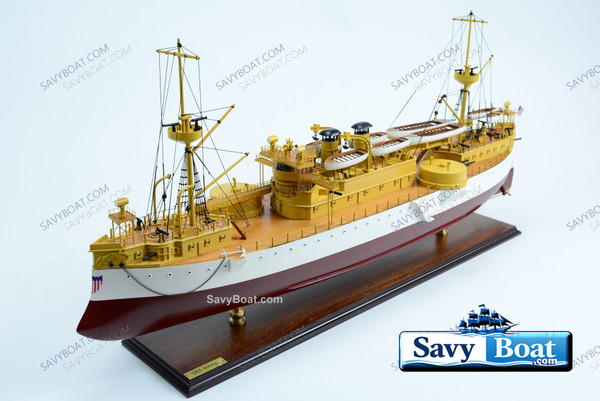
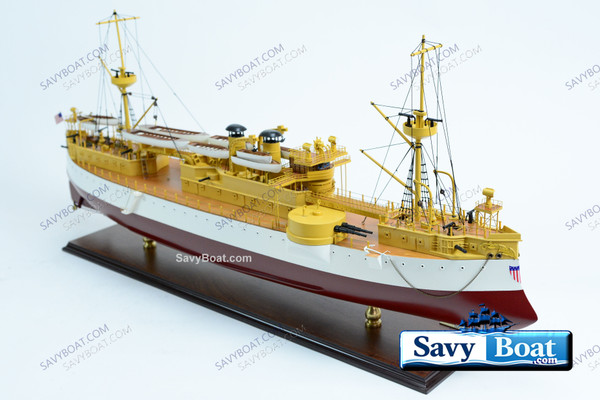
USS MAINE BATTLESHIP
SAVY DIRECT PRICE $849.96MSRP: $899.99USS MAINE SECOND CLASS BATTLESHIP FULLY BUILT AND READY TO DISPLAY, QUALITY SHIP MODEL Dimension Approx.: 32″L x 6.5″W x 14″H The model is already built, NOT a model ship kit Approximate scale... -

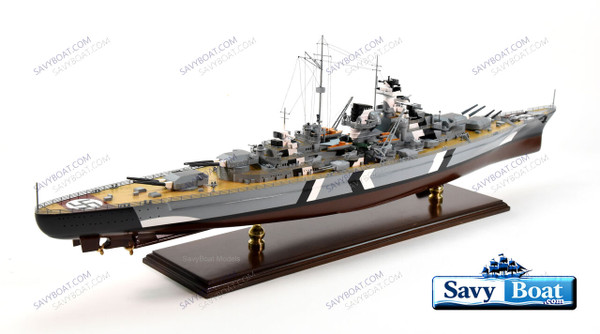
BISMARCK GERMAN BATTLESHIP
SAVY DIRECT PRICE $999.96MSRP: $1,099.99BISMARCK GERMAN BATTLESHIP FULLY BUILT AND READY TO DISPLAY MUSEUM QUALITY SHIP MODEL BEAUTIFUL MUSEUM QUALITY MODEL Dimension approx.: 40 (long) x 6″ (wide) x 12″ (high) APROX SCALE...
Description

GRAF SPEE BATTLESHIP
FULLY BUILT AND READY TO DISPLAY MUSEUM QUALITY SHIP MODEL
- Dimension approx.: 39.75″ (long) x 4.75″ (wide) x 12″ (high)
- The model is already built. THIS IS NOT A MODEL SHIP KIT
When the Admiral Graf Spee was launched at Wilhelmshaven on 30 June 1934, she embodied one of the most controversial naval ideas of the interwar years: the Panzerschiff, or “pocket battleship.” Officially limited by the Treaty of Versailles to 10,000 tons, the Germans built her far larger—over 16,000 tons at full load—and armed her with six 28‑cm (11‑inch) guns, weapons normally found on battleships. The result was a hybrid unlike anything else afloat: a cruiser that could outgun anything faster and outrun anything stronger.
Her sleek silhouette, diesel propulsion, and long range—over 16,000 nautical miles—made her ideal for commerce raiding. Named for Admiral Maximilian von Spee, the World War I commander who died with his squadron at the Falklands, the ship carried a legacy of both pride and tragedy from the moment she entered service in January 1936.
Before the war, Graf Spee conducted non‑intervention patrols during the Spanish Civil War and represented Germany at the 1937 Coronation Review in Britain. But her true purpose became clear in 1939, when she slipped into the South Atlantic just before the outbreak of World War II. Between September and December, she sank nine merchant ships totaling over 50,000 GRT—yet not a single sailor died. Captain Hans Langsdorff, a disciplined and humane officer, ensured crews were evacuated before their ships were destroyed.
Her luck changed on 13 December 1939.
That morning, off the Río de la Plata, she encountered a British hunting group: HMS Exeter, HMS Ajax, and HMNZS Achilles. Though outnumbered, Graf Spee opened fire with devastating accuracy. Exeter was battered into a burning wreck, and the two light cruisers were forced to withdraw. But the German ship had suffered damage of her own—her fuel-cleaning system was wrecked, limiting her ability to escape.
Langsdorff steered for Montevideo, Uruguay, hoping for repairs and diplomatic time. Instead, he found himself trapped by international law and British deception. Convinced that superior British forces were waiting outside the harbor—when in fact they were still days away—he made a fateful decision.
On 17 December 1939, Langsdorff ordered the scuttling of the Admiral Graf Spee. Explosive charges tore open her hull, and the once‑proud pocket battleship settled into the shallow waters of the estuary, burning as thousands watched from the shore. Three days later, Langsdorff took his own life in Buenos Aires, wrapped in the flag of the Imperial German Navy, unwilling to outlive his ship or allow his crew to suffer further.
The wreck of Graf Spee still lies partially visible beneath the waters of the Río de la Plata, a rusting monument to the first major naval drama of World War II. Her story became a propaganda tool for both sides—Germany celebrated her early successes, while Britain hailed the River Plate as a moral victory that removed a dangerous raider from the seas.
Today, the Admiral Graf Spee is remembered as a paradox: a ship built to exploit treaty loopholes, commanded by a chivalrous officer in a brutal war, and destroyed not by enemy fire but by strategy, psychology, and the weight of impossible choices.