










-

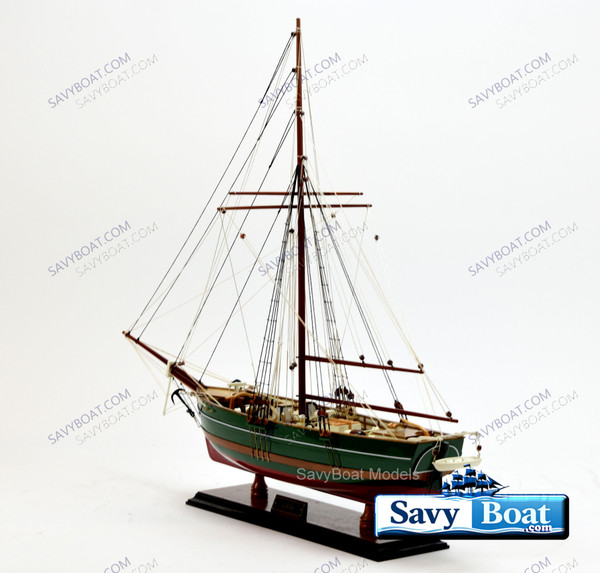
GJOA NORWEGIAN SLOOP
SAVY DIRECT PRICE $429.96MSRP: $449.99GJOA SAILING EXPLORATION SHIP FULLY BUILT AND READY TO DISPLAY MUSEUM QUALITY SHIP MODEL Dimension approx.: 29″ (long) x 9.5″ (wide) x 24.5″ (high) The model is already built. THIS... -
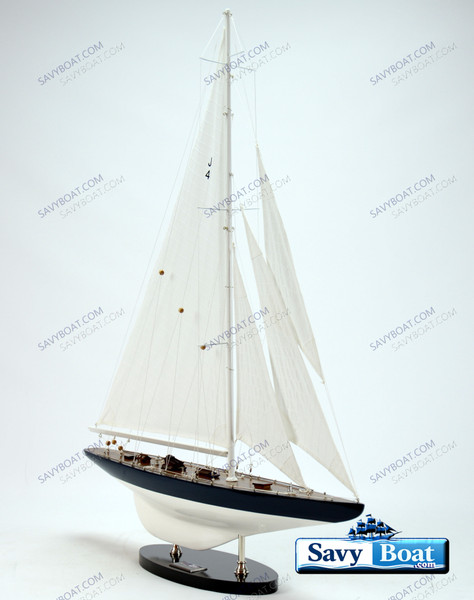

RAINBOW 1934 RACING SLOOP
SAVY DIRECT PRICE $449.96MSRP: $499.99RAINBOW RACING SAILBOAT FULLY BUILT AND READY TO DISPLAY MODEL Dimension approx.: 31.5L x 5.5W x 39.4H The model is already built. THIS IS NOT A MODEL SHIP KIT In the spring of 1934, as... -
 img:preorder-offer-upper-corner-rev.pngimg:preorder-offer-upper-corner-rev.png
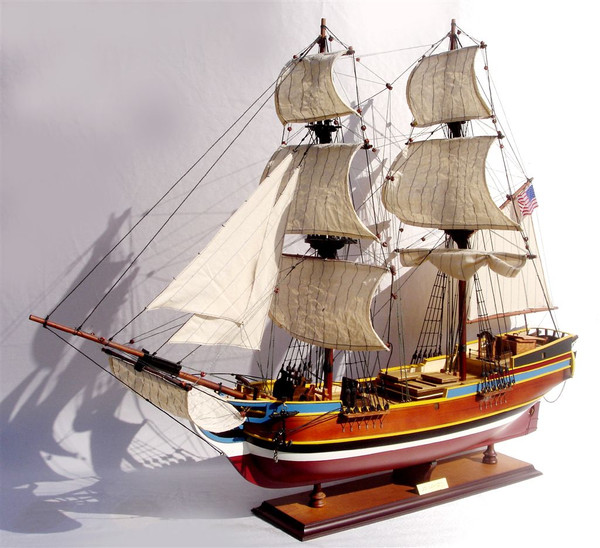
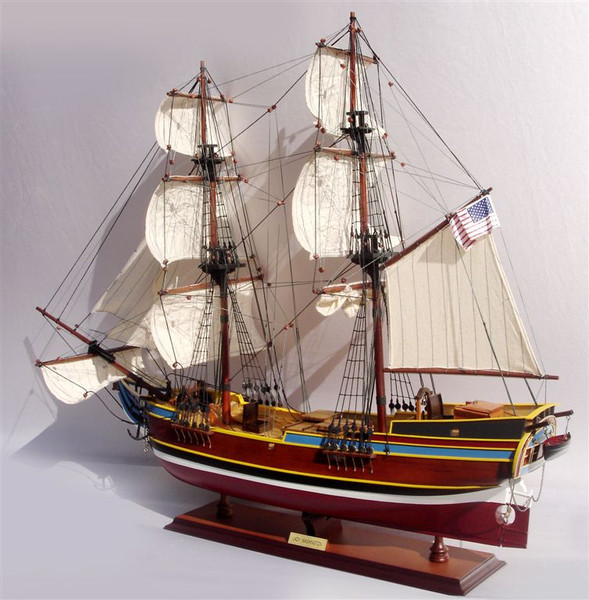
LADY WASHINGTON SMALL SLOOP
SAVY DIRECT PRICE $100.00 - $599.96LAADY WASHINGTON SMALL SLOOP FULLY BUILT AND READY TO DISPLAY MUSEUM QUALITY SHIP MODEL Dimension approx.: 30L x 7W x 29H The model is already built. THIS IS NOT A MODEL SHIP KIT Cloth...
Description

HMS DISCOVERY SURVEY SLOOP
FULLY BUILT AND READY TO DISPLAY MUSEUM QUALITY SHIP MODEL
- Dimension Approx.: 35″L x 12.75″W x 29″H
- The model is already built, NOT a model ship kit
On May 19, 1792, young Si’ahl stands beside his father, watching the HMS Discovery anchor off Bainbridge Island. The 10-gun British survey ship, led by Captain George Vancouver, has sailed into Puget Sound to claim the Northwest for Britain. Si’ahl- Chief Seattle-will grow up to lead the Duwamish and Suqamish tribes through changing times. His people will remember this moment.
When HMS Discovery slipped into the Thames at Rotherhithe in 1789, she was not yet destined for fame. Built by Randall, Gray & Brent as a sturdy 10‑gun full‑rigged sloop, she was originally intended for the Southern whale fisheries — a practical, workmanlike vessel with a strong hull and ample storage. Her name, however, carried a legacy: she was christened after earlier Royal Navy ships, including the Discovery on James Cook’s third voyage, where a young George Vancouver had served as a midshipman. That connection would soon shape her destiny.
In 1791, the Admiralty selected Discovery for a major surveying expedition to the Pacific Northwest, placing Vancouver — now a seasoned officer — in command. Paired with the smaller HMS Chatham, she sailed from England in April, rounding the Cape of Good Hope and stopping along the southern coast of Australia. There, naturalist Archibald Menzies collected the first recorded specimen of Banksia grandis, a reminder that this was as much a scientific voyage as a naval one.
From Australia, the ships crossed the Pacific to Hawaii, where Vancouver met Kamehameha I and forged a diplomatic relationship that would influence Hawaiian history for decades. Then Discovery turned northeast toward the rugged, unmapped shores of what is now British Columbia, Washington, and Alaska. For four years, from 1791 to 1795, Vancouver and his crew painstakingly charted the coastline — tracing fjords, islands, and inlets with extraordinary precision. Their work transformed Western understanding of the Pacific Northwest and remains foundational to modern charts.
When Discovery returned to England, her days of exploration were over, but her naval career continued. In 1798, she was converted into a bomb vessel, strengthened to carry heavy mortars. She fought at the Battle of Copenhagen in 1801, earning the battle honour “Copenhagen 1801” for her role in the fierce engagement against the Danish fleet.
As the decades passed, Discovery adapted to new roles. She served as a hospital ship, a convict transport, and later an army hospital ship, reflecting the Royal Navy’s habit of repurposing sturdy older vessels. By 1820, she had been reduced to a prison hulk, moored and immobile, housing convicts in the years before Britain’s penal reforms. After nearly half a century of service in war, exploration, science, and support roles, she was finally broken up in 1834.
Though the 1789 Discovery is gone, her legacy lives on. The Royal Navy reused the name for multiple vessels — from Arctic sloops to the famous 1901 Discovery of Robert Falcon Scott’s Antarctic expedition. Yet it is Vancouver’s Discovery that remains most closely tied to the mapping of the Pacific Northwest, her name etched into bays, channels, and landmarks from Puget Sound to Alaska.
From whaling ship to survey sloop, from bomb vessel to hospital hulk, Discovery lived many lives. But it was her years under Vancouver — charting thousands of miles of coastline with care and accuracy — that secured her place as one of the great exploration ships of the Age of Sail.