









-

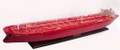
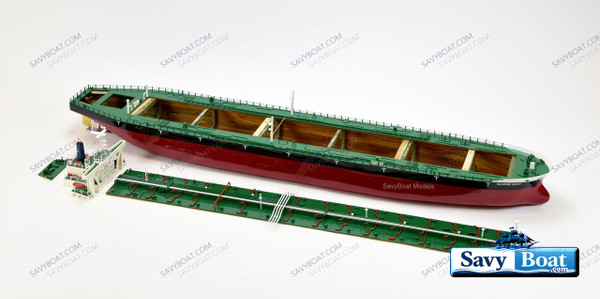
JAHRE VIKING OIL TANKER
SAVY DIRECT PRICE $699.96MSRP: $749.99JAHRE VIKING OIL TANKER FULLY BUILT AND READY TO DISPLAY MUSEUM QUALITY SHIP MODEL Dimension approx.: 45″ L x 7.5″ W x 10″ H The model is already built. THIS IS NOT A MODEL SHIP KIT In... -

SEAWISE GIANT RC READY SUPER TANKER 51"
SAVY DIRECT PRICE $1,399.96MSRP: $1,499.99SEAWISE GIANT RC READY SUPERTANKER Dimension Approx.: 51″ L x 9″ W x 14″ H – Approx sscale 1:350 This is a fully built model. it is NOT a kit RC READY - hatches open for easy installation of... -


ULCC GIANT RC READY SUPER TANKER 72"
SAVY DIRECT PRICE $2,995.96MSRP: $3,379.99ULCC, GIANT, RC READY, SUPER TANKER 72" Dimension Approx.: 72in This is a fully built model. it is NOT a kit LIGHTED - LED LIGHTS pre-installed (power supply not included) RC READY -...
Description

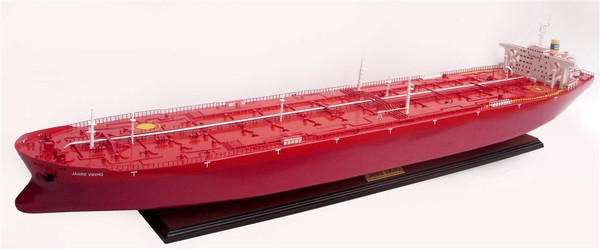
JAHRE VIKING OIL RC READY TANKER
FULLY BUILT AND READY TO DISPLAY MUSEUM QUALITY SHIP MODEL
- Dimension approx.: 45″ L x 7.5″ W x 10″ H
- The model is already built. THIS IS NOT A MODEL SHIP KIT
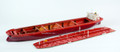
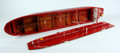
- RC READY - hatched open for easy installation of RC equipment, propeller(s) and motor (not included)
In the mid‑1970s, at the height of the global oil boom, shipbuilders began pushing the limits of what a tanker could be. At Sumitomo Heavy Industries’ Oppama yard in Yokosuka, Japan, a colossal hull took shape — a ship so vast that she would eventually become the largest self‑propelled vessel ever built. Ordered in 1974 by a Greek company and launched in 1979 as Oppama, the ship’s early life was troubled. Severe vibration issues during trials led her original owners to reject delivery, leaving the unfinished giant in limbo.
Her fate changed when Hong Kong shipping magnate C.Y. Tung purchased the vessel. Tung saw potential where others saw a problem. He lengthened the hull, expanded her cargo capacity by more than 140,000 tons, and relaunched her as Seawise Giant — a name that would soon become legendary. At 458.45 meters long and displacing over 657,000 tonnes when fully loaded, she was a floating continent, capable of carrying more than 4 million barrels of crude oil.
For nearly a decade, Seawise Giant plied the world’s oceans, too large for the Panama or Suez Canals, forced instead to round the Cape of Good Hope on her long voyages. Her immense size made her efficient but unwieldy, a ship built for the vastness of the open sea.
Then came 1988 and the final phase of the Iran–Iraq War. While anchored off Larak Island, the giant tanker was struck by Iraqi Exocet missiles. The explosions tore into her hull, igniting massive fires. Declared a constructive total loss, she sank in shallow waters — a casualty of one of the most dangerous maritime theaters of the era.
But the world’s largest ship was not finished. After the war, Norwegian firm Norman International salvaged the wreck, towed her to Singapore, and rebuilt her with more than 3,700 tons of new steel. In 1991 she returned to service as Happy Giant, and later that same year she was purchased by Norwegian owner Jørgen Jahre, who renamed her Jahre Viking.
Under Jahre’s ownership, the ship enjoyed a long second life. Despite her size — or perhaps because of it — she operated with a crew of only about 40, carrying crude oil on some of the longest routes in the world. Her scale limited her to deep‑water terminals, but she remained a marvel of engineering, a ship that dwarfed every other vessel afloat.
By the early 2000s, however, the age of the ultra‑large crude carrier was fading. In 2004, she was sold again and converted into a permanently moored floating storage and offloading unit (FSO) in Qatar’s Al Shaheen Oil Field, renamed Knock Nevis. No longer roaming the oceans, she spent her final years as a stationary giant, still useful but nearing the end of her remarkable journey.
In 2009, she was sold for scrap, renamed Mont, and towed to Alang, India, where she was dismantled in 2010. Her enormous 36‑ton anchor survives today at the Hong Kong Maritime Museum — one of the few physical reminders of a ship so large that she seemed almost unreal.
The Jahre Viking remains unmatched. No ship has ever exceeded her length, deadweight tonnage, or sheer displacement. She was a product of her time — an era of engineering ambition and global oil demand — yet her story transcends utility. From rejected hull to war casualty, from resurrection to stationary giant, she embodied resilience on a scale the world had never seen.
Even in pieces, she endures as a symbol of what human ingenuity can build — and of the limits we sometimes dare to test.