






-

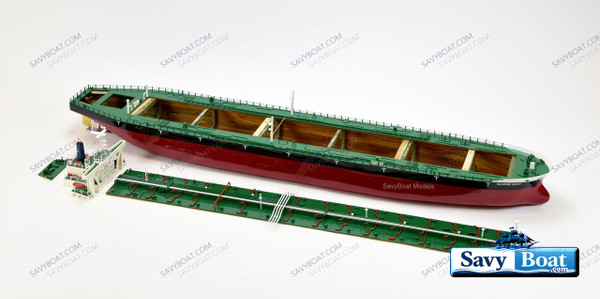
SEAWISE GIANT RC READY SUPER TANKER 51"
SAVY DIRECT PRICE $1,399.96MSRP: $1,499.99SEAWISE GIANT RC READY SUPERTANKER Dimension Approx.: 51″ L x 9″ W x 14″ H – Approx sscale 1:350 This is a fully built model. it is NOT a kit RC READY - hatches open for easy installation of... -


JAHRE VIKING OIL RC READY TANKER
SAVY DIRECT PRICE $749.96MSRP: $799.99JAHRE VIKING OIL RC READY TANKER FULLY BUILT AND READY TO DISPLAY MUSEUM QUALITY SHIP MODEL Dimension approx.: 45″ L x 7.5″ W x 10″ H The model is already built. THIS IS NOT A MODEL... -

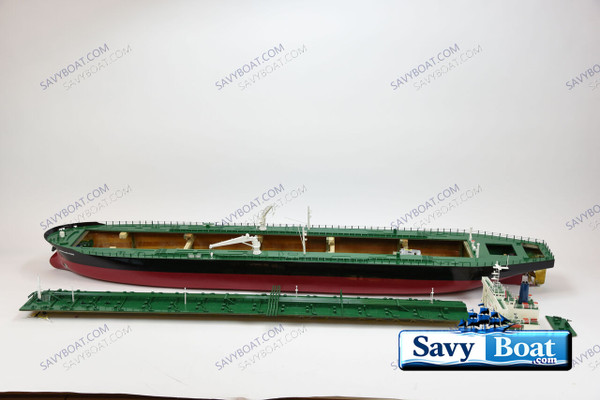
SEAWISE GIANT RC READY SUPERTANKER 45"
SAVY DIRECT PRICE $1,099.96MSRP: $1,189.99SEAWISE GIANT RC READY SUPER TANKER Dimension Approx.: 45L x 8.25W x 11.H (inch) This is a fully built model. it is NOT a kit RC READY - hatches open for easy installation of your RC...
Description

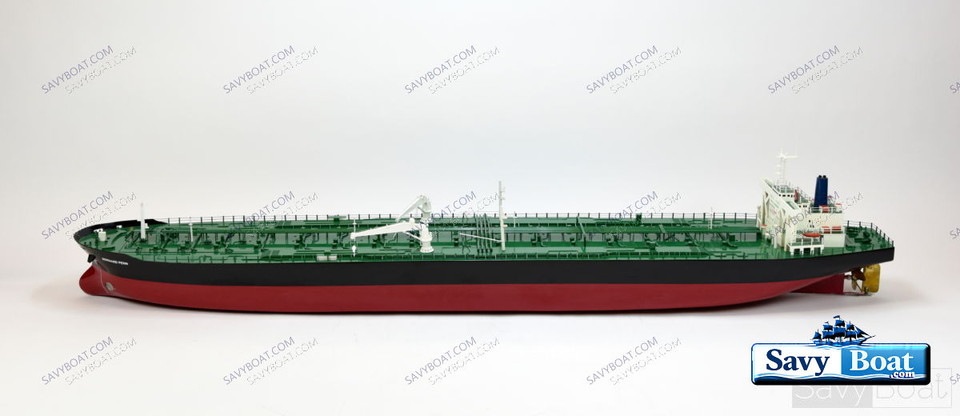
ULCC, GIANT, RC READY, SUPER TANKER 72"
- Dimension Approx.: 72in
- This is a fully built model. it is NOT a kit
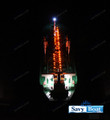
- LIGHTED - LED LIGHTS pre-installed (power supply not included)
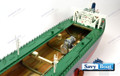
- RC READY - hatches open for easy installation of your RC equipment, propeller(s) and motor (not included)
They emerged in an era when the world’s appetite for crude oil seemed limitless, when shipyards stretched their ambitions beyond anything previously imagined. The Ultra Large Crude Carrier — the ULCC — was not simply a bigger tanker. It was a declaration that oceans could be crossed in single, monumental gulps of petroleum, and that engineering could bend scale to human will.
The story begins with a ship that would eclipse all others: Seawise Giant. Built in Japan during the late 1970s, she was a vessel of almost mythic proportions — longer than the height of the Empire State Building, heavier than any moving object ever constructed. Her hull seemed to defy the horizon, a steel continent pushed forward by a single turbine. She served through volatile decades, was struck and nearly lost during the Iran–Iraq War, then resurrected and renamed again and again, as if each identity were a chapter in her improbable life. In her final years, she rested as a floating storage unit, too large for most ports, too iconic to be forgotten. When she was finally scrapped in 2010, it felt less like dismantling a ship and more like closing the book on an era.
By the early 2000s, the mantle passed to a new generation: the TI‑class supertankers. Built in South Korea, these four giants — TI Africa, TI Asia, TI Europe, and TI Oceania — represented a more refined vision of the ULCC. They were still immense, still capable of carrying nearly three million barrels of crude, but their lines were cleaner, their systems more efficient, their purpose more attuned to modern trade. They were the first ULCCs built in a quarter century, a reminder that even in a world of shifting energy demands, there remained a place for ships of extraordinary scale. Today, they stand as the largest operational crude carriers on Earth, their silhouettes unmistakable against the sea.
Across the Atlantic, the United States produced its own pair of giants: U.S.T. Atlantic and U.S.T. Pacific. Built at Newport News, they were the largest ships ever constructed in the Western Hemisphere — broad‑shouldered, deep‑drafted vessels that pushed American shipbuilding to its limits. Their size restricted them from many ports, yet they served with quiet endurance. One was eventually scrapped; the other found new life as a floating production and storage vessel off Brazil, a transformation that extended its usefulness long after its trading days ended.
Yet for all their grandeur, ULCCs carried inherent challenges. Their drafts were so deep that only a handful of ports could accept them. Their turning circles were vast, their maneuvering slow, their environmental risks immense. They were ships that demanded respect — from their crews, from the ports that hosted them, and from the industry that relied on their cargoes.
Today, only a few ULCCs remain active, but their legacy endures. They represent the outer boundary of what shipbuilders dared to attempt, the moment when maritime engineering reached its maximum expression. In their steel, one can read the story of decades of global trade, ambition, and the relentless push toward scale. They were giants in every sense — and even now, long after some have vanished from the sea, their names still carry the weight of oceans.