













-
1595 DUYFKEN DUTCH TALL SHIP
SAVY DIRECT PRICE $749.96MSRP: $799.991595 DUYFKEN DUTCH TALL SHIP FULLY BUILT AND READY TO DISPLAY QUALITY SHIP MODEL Dimension Approx.: 32″ (long) x 8″ (wide) x 30″ (high) The model is already buil -

FAIRSEA PASSENGER CARGO SHIP
SAVY DIRECT PRICE $999.96MSRP: $1,099.99FAIRSEA LIGHTED PASSENGER CARGO SHIP FULLY BUILT AND READY TO DISPLAY, QUALITY SHIP MODEL Dimension approx.: 35″ L x 5″ W x 11″ H The model is already built, NOT a model ship kit Open... -


MS STOCKHOLM PASSENGER SHIP
SAVY DIRECT PRICE $999.96MSRP: $1,199.99MS STOCKHOLM PASSENGER SHIP FULLY BUILT AND READY TO DISPLAY MUSEUM QUALITY SHIP MODEL Open die cut side hull windows, NOT painted like those built by most other companies. Dimension...
Description

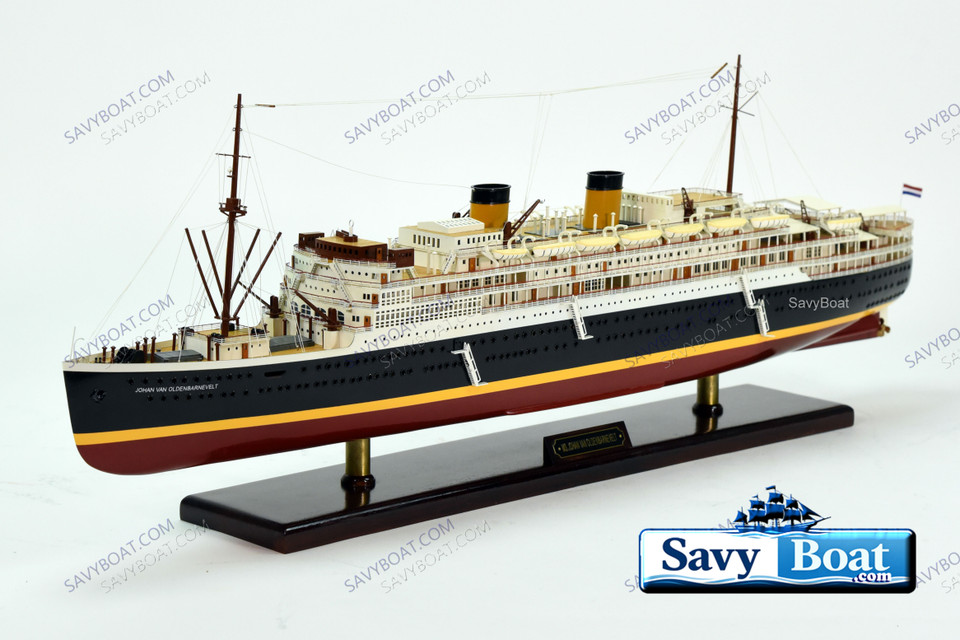
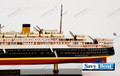
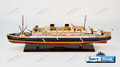
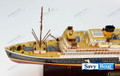
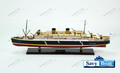
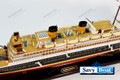
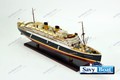
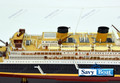
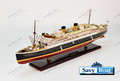
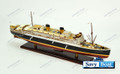
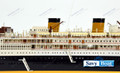
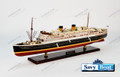
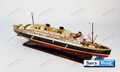
JOHAN VAN OLDENBARNEVELT DUTCH PASSENGER SHIP
FULLY BUILT AND READY TO DISPLAY, QUALITY SHIP MODEL
- Dimension approx.: 37″ L x 5.5″ W x 13″ H
- Approx Scale 1:200
- The model is already built. THIS IS NOT A MODEL SHIP KIT
She slipped into the water at Amsterdam in the summer of 1929, a proud symbol of Dutch shipbuilding at its peak. The Johan van Oldenbarnevelt—sleek, modern, and the largest vessel the Netherlands had ever produced—was built for long horizons. With her tall superstructure, seven decks, and powerful Sulzer diesels, she promised a new era of comfort on the long route between Europe and the Dutch East Indies. When she set out on her maiden voyage in May 1930, she carried with her the optimism of a world still discovering the possibilities of global travel.
Her early years were steady and dignified, though not without incident. Shortly after entering service, she brushed against the freighter Reggestroom in the North Sea Canal—an embarrassing scrape, quickly repaired. But the ship’s true purpose lay in distance, not docks. She became a familiar sight on the long, warm‑weather passages to Batavia, carrying colonial officials, families, and travelers who still relied on ocean liners in an age when aircraft were fragile curiosities.
Everything changed with the war.
Requisitioned by the Allies, the Johan van Oldenbarnevelt traded her peacetime elegance for the hard, utilitarian life of a troopship. From 1941 onward she ferried soldiers and supplies across dangerous waters, threading through submarine‑haunted seas between the East Indies and New York. She endured mechanical troubles in Liverpool, but survived the war—a fate many liners of her generation did not share. When peace returned, she helped bring Dutch citizens home from the shattered remnants of empire.
By 1950, she had found a new identity. The post‑war world was on the move, and Australia—hungry for workers and families—welcomed shiploads of immigrants from Europe. For more than a decade, the Johan van Oldenbarnevelt became a floating gateway to new lives. Children played on her decks, families celebrated St. Nicholas Day at sea, and thousands stepped onto Australian soil with her name stamped on their memories. The voyage took forty‑one days, long enough for friendships, romances, and hopes to take shape.
But time catches even the proudest liners. In 1958 she was modernized, streamlined, and converted into a single‑class cruise ship, her interiors refreshed for a new era of leisure travel. Five years later, she was sold to Greek Lines, repainted white, and given a new name—Lakonia. She was still graceful, still capable, but she was no longer young.
Her final voyage began on 19 December 1963, a holiday cruise from Southampton to the sunlit islands of Madeira and the Canaries. The passengers expected warmth, music, and Christmas at sea. Instead, three nights later, flames erupted in the ship’s salon. The fire spread with terrifying speed. Smoke filled corridors, alarms failed, and confusion rippled through the decks. Lifeboats were launched, some successfully, others disastrously. Rescue ships raced toward the burning liner, but by the time the last survivors were pulled from the Atlantic, 128 lives had been lost.
The Lakonia herself lingered for a few days more. A Norwegian tug, Herkules, managed to take her in tow, but the wounded ship could not hold on. On 29 December 1963, she rolled, capsized, and slipped beneath the waves west of Gibraltar—ending a career that had spanned peace, war, migration, and tragedy.
Today, the name Johan van Oldenbarnevelt evokes a full arc of the 20th century: the optimism of interwar travel, the hardships of global conflict, the hope of post‑war migration, and the sorrow of one of the era’s most haunting maritime disasters. Her story is not just the tale of a ship, but of the people and eras she carried across the world’s oceans.