

















-
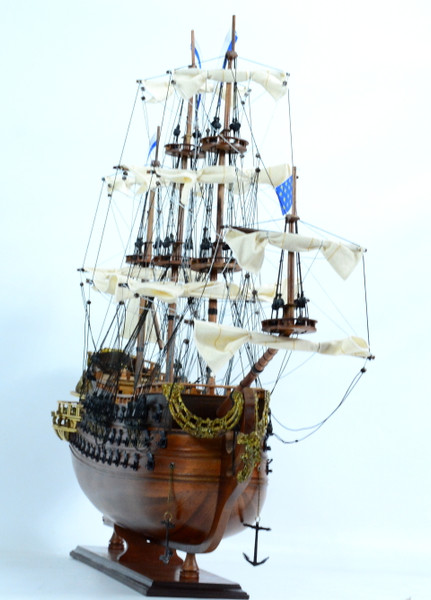
LE FURIEUX FRENCH TALL SHIP
SAVY DIRECT PRICE $1,199.96MSRP: $1,299.99LE FURIEUX FRENCH TALL SHIP FULLY BUILT AND READY TO DISPLAY MUSEUM QUALITY SHIP MODEL Dimension approx.: 32″ (long) x 11″ (wide) x 35″ (high) The model is already built. THIS IS NOT A... -

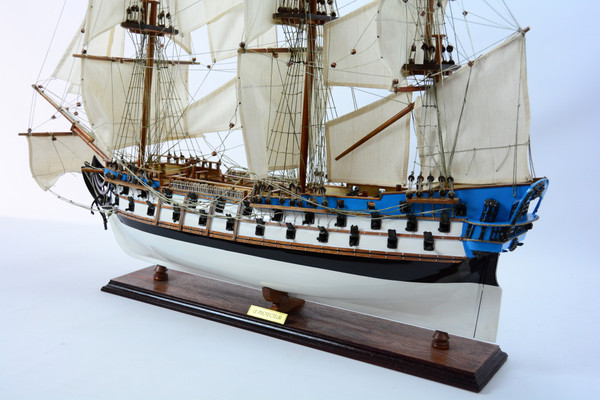
LE PROTECTEUR FRENCH TALL SHIP
SAVY DIRECT PRICE $1,199.96MSRP: $1,299.99LE PROTECTEUR FRENCH TALL SHIP FULLY BUILT AND READY TO DISPLAY MUSEUM QUALITY SHIP MODEL Dimension approx.: 30.7L x 7.4W x 30.7H (in) The model is already built. THIS IS NOT A MODEL... -


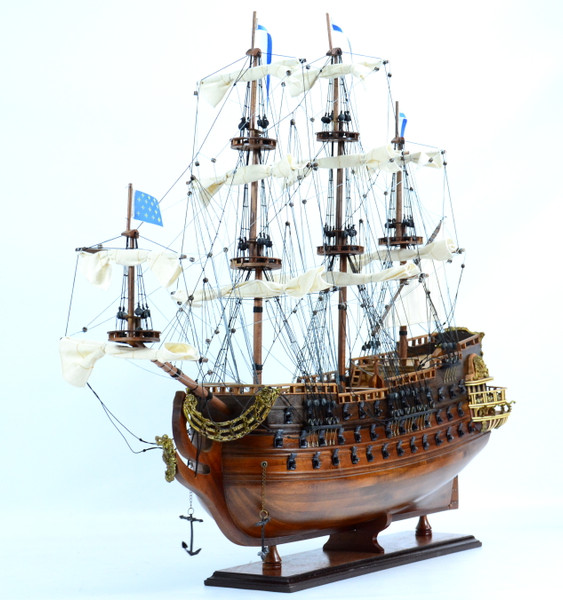
LE SOLEIL FRENCH TALL SHIP
SAVY DIRECT PRICE $599.96MSRP: $649.99LE SOLEIL FRENCH TALL SHIP FULLY BUILT AND READY TO DISPLAY SHIP MODEL Dimension approx.: 31″ L x 10″W x 26.5″H The model is already built. THIS IS NOT A MODEL SHIP KIT In the late...
Description

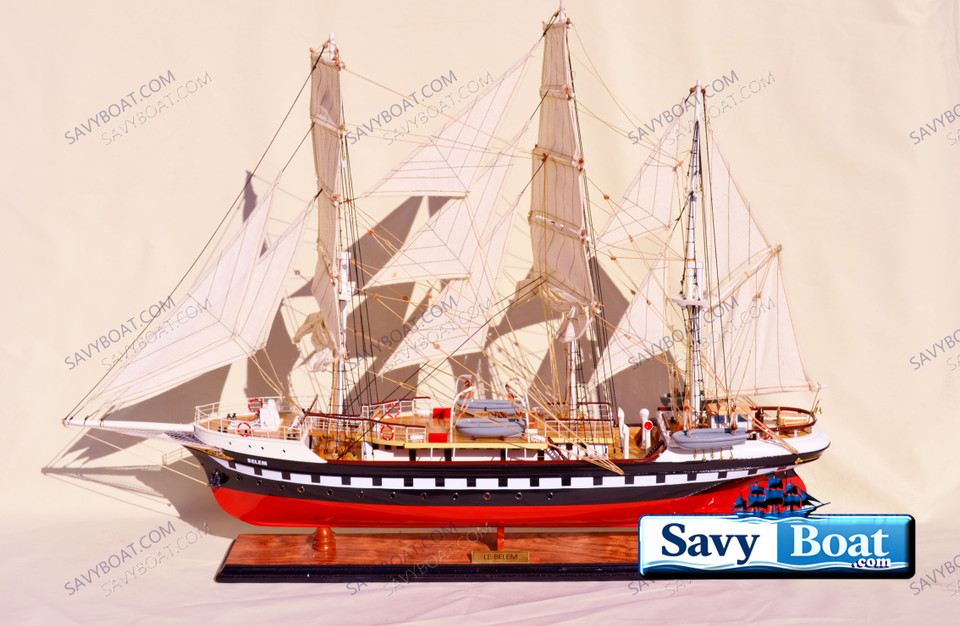
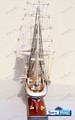
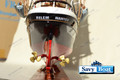
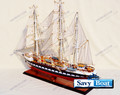
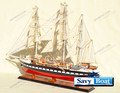
LE BELEM TALL SHIP
FULLY BUILT AND READY TO DISPLAY, SHIP MODEL
- Dimension approx.: 27.5L x 5.11W x 27.5H
- The model is already built. THIS IS NOT A MODEL SHIP KIT
When Le Belem first slipped into the Loire on 10 June 1896, she was one of dozens of French barques built to feed Europe’s appetite for colonial goods. Constructed at Chantiers Dubigeon near Nantes, she was a steel‑hulled, three‑masted cargo carrier—sturdy, elegant, and built for the long Atlantic hauls between France, the West Indies, and South America. Her holds filled with sugar, cocoa, and coffee, she made more than thirty transatlantic voyages, even supplying the notorious penal colony of French Guiana, the setting of Papillon.
Her early career was marked by both routine and luck. In May 1902, she narrowly escaped the eruption of Mount Pelée, which obliterated the city of Saint‑Pierre and killed nearly 30,000 people. Le Belem survived only because she had anchored offshore rather than joining the crowded roadstead—a twist of fate that preserved her for the remarkable life that followed.
By 1914, the age of sail was fading, but Le Belem was given a second life. Purchased by Hugh Grosvenor, the 2nd Duke of Westminster, she was transformed into a private luxury yacht, fitted with auxiliary diesel engines and refined accommodations. In 1921, she passed into the hands of Sir Arthur Ernest Guinness, who renamed her Fantôme II and modernized her rig. Under Guinness, she circled the globe in 1923–24, sailing through the Panama Canal, the Suez Canal, and even north to Spitsbergen—a far cry from her days hauling cocoa across the equator.
Her third life began in 1951, when Italian industrialist Vittorio Cini acquired her for use as a sail‑training vessel. Renamed Giorgio Cini, she became a floating classroom for naval cadets and orphans of the Italian merchant marine. Moored in Venice, she served for decades, though by the mid‑1960s she was considered too old for active training and risked slipping into obscurity.
Instead, she was reborn once more.
In 1979, the French bank Caisse d’Épargne purchased the aging vessel and returned her to France. What followed was a meticulous restoration to her original 1896 barque rig—a resurrection that honored her merchant‑ship origins while preparing her for a new role. Renamed Le Belem again, she was classified as a historical monument in 1984 and placed under the care of the Belem Foundation, which operates her as a civilian sail‑training ship.
Today, Le Belem sails the Atlantic, English Channel, North Sea, and Mediterranean, crewed by 16 professionals and up to 48 trainees. She appears at Tall Ships events, offers public voyages, and welcomes tens of thousands of visitors each year. More than a museum piece, she is a living vessel—her sails still drawing wind, her rigging still humming with life.
Across more than 120 years, Le Belem has survived volcanic disaster, two world wars, multiple owners, and radical transformations. She is the last of the great 19th‑century French merchant barques still afloat—a ship that has carried cargo, aristocrats, cadets, and now the public, all while preserving the craftsmanship and spirit of a vanished maritime age.
Le Belem endures not just as a relic, but as a testament to resilience, reinvention, and the enduring romance of sail.