







-
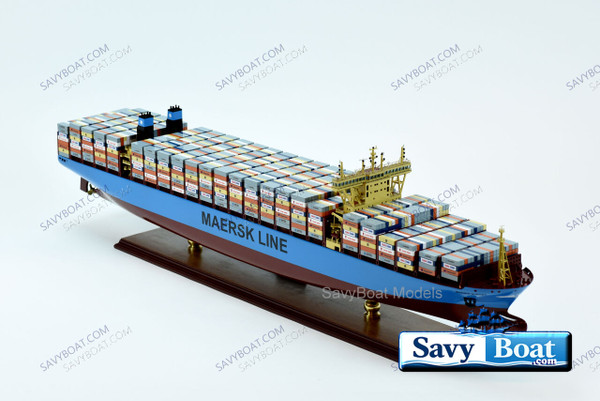

MAERSK MADRID CONTAINER SHIP
SAVY DIRECT PRICE $949.96MSRP: $999.99MAERSK MADRID CONTAINER SHIP FULLY BUILT AND READY TO DISPLAY MUSEUM QUALITY SHIP MODEL Dimension approx.: 39.3L x 6W x 9.8H(inch) The model is already built. THIS IS NOT A MODEL SHIP... -
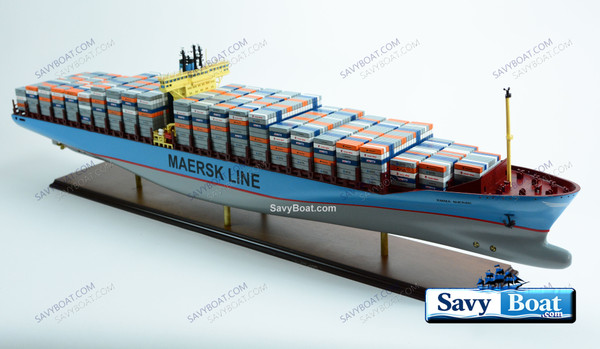
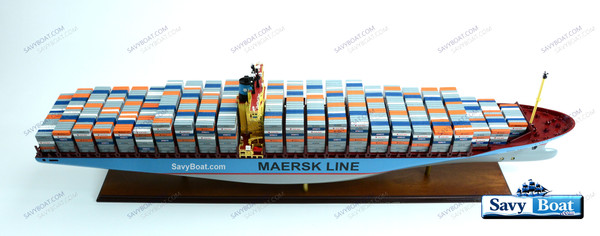
MAERSK EMMA CONTAINER 48” SHIP
SAVY DIRECT PRICE $1,099.96MSRP: $1,299.99Mærsk EMMA CONTAINER CARGO SHIP READY TO DISPLAY MUSEUM QUALITY SHIP MODEL Dimension Approx.: 48″L x 6.5"W x 13″H The model is already built, NOT a model ship kit -
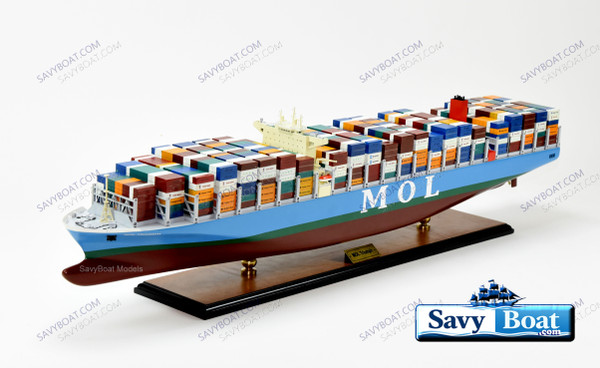

MAERSK MOL TRIUMPH CONTAINER SHIP
SAVY DIRECT PRICE $1,099.96MSRP: $1,199.99MAERSK MOL TRIUMPH CONTAINER SHIP FULLY BUILT AND READY TO DISPLAY, QUALITY SHIP MODEL Dimension Approx.: 39.5″ L x 6″ W x 10″ H SCALE 1:400 The model is already built, NOT a model ship kit
Description

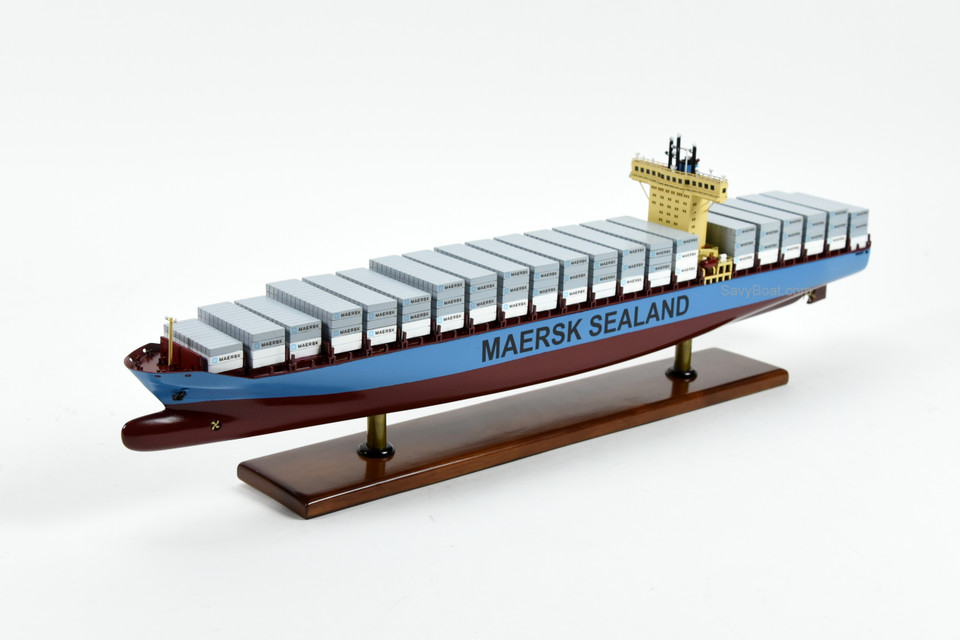
MAERSK SEALAND CONTAINER SHIP
FULLY BUILT AND READY TO DISPLAY, QUALITY SHIP MODEL
- Dimension approx.: 39.3L x 6W x 9.8H(inch)
- The model is already built. THIS IS NOT A MODEL SHIP KIT
In the spring of 1956, a quiet revolution left the docks of Newark, New Jersey. The ship was the SS Ideal‑X, a converted T‑2 tanker carrying 58 aluminum trailers strapped to its deck. The man behind it was Malcolm McLean, a former trucker with an audacious idea: instead of loading cargo piece by piece, why not lift entire truck bodies onto a ship? When the Ideal‑X sailed for Houston on 26 April 1956, it marked the birth of containerization — a transformation that would reshape global trade more profoundly than any invention since the steam engine.
McLean’s company, originally the Pan‑Atlantic Steamship Corporation, embraced the new system so completely that by 1960 it adopted a new name: Sea‑Land. The name captured the essence of McLean’s vision — a seamless intermodal network where goods flowed effortlessly from truck to ship to rail. Sea‑Land quickly expanded across the Americas, becoming a dominant force in trade between North America, South America, Central America, and the Caribbean.
The company’s breakthrough came not only in commerce but in conflict. During the Vietnam War, from 1967 to 1973, Sea‑Land supplied the U.S. military with 1,200 containers a month, earning $450 million in defense revenue. Its standardized containers and rapid loading systems proved invaluable, demonstrating the logistical power of McLean’s invention on a global stage.
Ownership of Sea‑Land shifted over the decades — from RJ Reynolds in 1969 to CSX in the 1980s — but the brand remained synonymous with innovation. In 1985, the Sea‑Land vessel Endurance made headlines at the Port of Tacoma when it unloaded 481 containers in just six hours, a feat that showcased the speed and efficiency of containerized transport.
By the late 1990s, the shipping world was consolidating, and in 1999, CSX split Sea‑Land into separate divisions. The international container business — the heart of McLean’s legacy — was acquired by Maersk, which rebranded its global fleet as Maersk SeaLand in 2000. The Sea‑Land name faded from the deep‑sea trade, but its influence lived on in every standardized container stacked on every modern ship.
Then, in 2014, the brand returned. Maersk revived Sea‑Land as a specialized carrier for the Americas, honoring its roots as a regional powerhouse. For nearly a decade, Sea‑Land once again served the hemisphere that had shaped its identity. But in January 2023, Maersk retired the name for the final time, folding its operations into a unified global brand.
Today, Sea‑Land exists not as a fleet, but as a legacy — the company that proved containers could shrink the world. Malcolm McLean’s simple idea became the backbone of modern logistics, enabling the globalized economy and transforming how nations trade. Every container ship sailing today carries a piece of Sea‑Land’s story.