





-

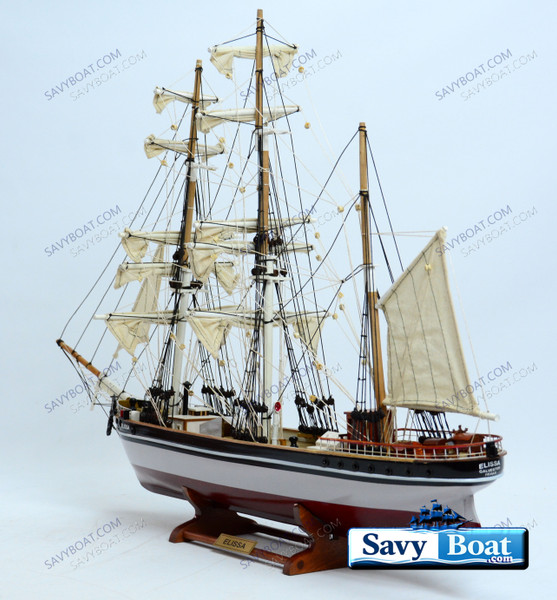
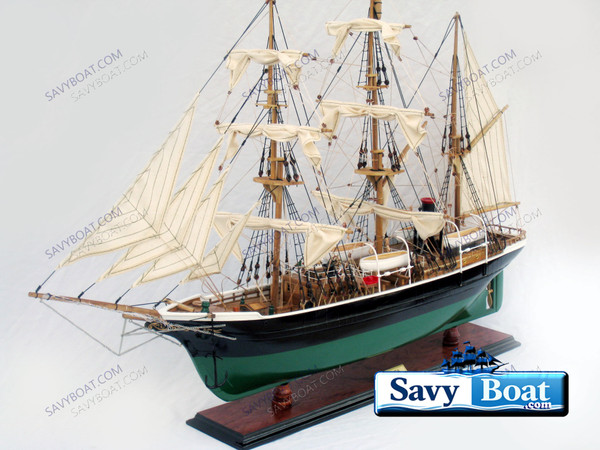
ELISSA TALL SHIP
SAVY DIRECT PRICE $739.96MSRP: $789.99ELISSA TALL SHIP FULLY BUILT AND READY TO DISPLAY QUALITY SHIP MODEL Dimension approx.: 31″ (long) x 9″ (wide) x 19″ (high) The model is already built. THIS IS NOT A MODEL SHIP... -
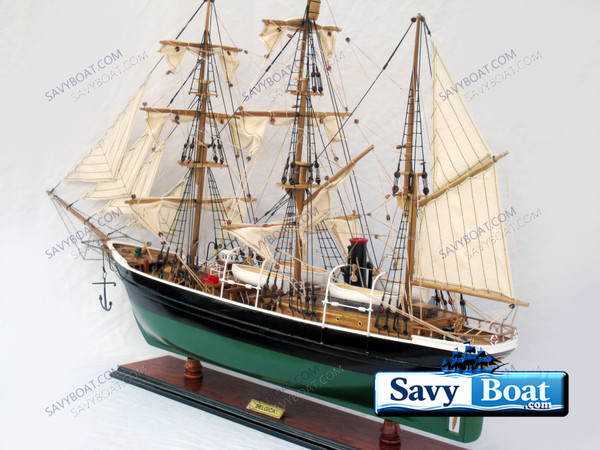
BELGICA TALL SHIP
SAVY DIRECT PRICE $799.96MSRP: $849.99BELGICA TALL SHIP FULLY BUILT AND READY TO DISPLAY, QUALITY SHIP MODEL Dimension approx.: 28.74L x 5.51W x 25.59H (inches) The model is already built. THIS IS NOT A MODEL SHIP KIT When... -


HMS AGAMEMNON TALL SHIP
SAVY DIRECT PRICE $989.96MSRP: $1,049.99HMS AGAMEMNON TALL SHIP FULLY BUILT AND READY TO DISPLAY MUSEUM QUALITY SHIP MODEL Dimension approx.: 35L x 11W x 31H (inch) The model is already built. THIS IS NOT A MODEL...
Description

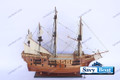
MARY ROSE 16th CENTURY ENGLISH TALL SHIP
FULLY BUILT AND READY TO DISPLAY, QUALITY SHIP MODEL
- Dimension approx.: 31.5L x 8W x 29H (inch)
- The model is already built. THIS IS NOT A MODEL SHIP KIT
She began her life in the cold winter of 1510, when English shipwrights laid her keel at Portsmouth. England was still shaking off the long shadows of civil war, and the young Henry VIII—ambitious, eager for glory, and newly crowned—was determined to rebuild the navy his father had allowed to dwindle. Out of this renewed vision came a great carrack of oak and iron, a warship that would serve England for more than three decades: the Mary Rose.
Launched in 1511, she was a marvel of Tudor engineering, built from “around 600 mostly large oaks” and fitted with the newest weapons of the age. She was among the first English ships designed to carry heavy guns that fired through gunports—an innovation barely a decade old. As the document notes, she became “one of the earliest examples of a purpose-built sailing warship” and later one of the first capable of firing a true broadside.
In her youth she sailed swiftly and proudly. In 1513 she even won a race off the Kentish coast, prompting Admiral Edward Howard to call her “the noblest ship of sayle… in Cristendom.” She fought in the wars against France and Scotland, serving as flagship, raider, and guardian of the Channel. She was present at the fiery Battle of St. Mathieu, where the Breton Cordelière and the English Regent exploded together in a catastrophic duel.
But time and war changed her. In 1536 she was rebuilt—enlarged, strengthened, and armed with a second tier of long guns. The refit made her more powerful, but also heavier and perhaps less stable. Still, she remained a symbol of English naval might as Henry VIII’s political world grew more turbulent.
Her final day came on 19 July 1545, during the Battle of the Solent. The French invasion fleet had entered the strait, and the English—initially becalmed—finally caught enough wind to move. The Mary Rose and the Henry Grace à Dieu led the counterattack. Then, in a moment still debated centuries later, disaster struck.
According to the only confirmed eyewitness, a surviving Flemish sailor, the ship “fired all of her guns on one side” and, while turning, was caught by a sudden gust. She heeled sharply, and water poured through the open gunports. Within moments she was doomed. Heavy guns tore loose, crushing men and blocking escape routes. The great brick oven in the galley collapsed; supplies and ammunition cascaded across the decks. Most tragic of all, the anti‑boarding netting stretched across the upper deck trapped the crew beneath it as the ship rolled.
Out of more than 400 souls, fewer than 35 survived.
For centuries she lay buried in silt, her timbers slowly settling into the seabed. Fishermen rediscovered her in 1836 when their nets snagged on ancient wood. Divers recovered guns, longbows, and timbers, but the wreck soon vanished again beneath the shifting Solent sands.
Then, in 1971, after years of searching, archaeologists located her once more. What followed was one of the most ambitious maritime excavations in history. As your document states, the raising of the Mary Rose in 1982 was “one of the most complex and expensive maritime salvage projects in history,” rivaling the recovery of Sweden’s Vasa.
When her surviving hull finally broke the surface on 11 October 1982, watched by Prince Charles and millions on television, it was as if a Tudor time capsule had risen from the deep. Inside were more than 26,000 artifacts: longbows and arrows, carpenters’ chests, musical instruments, navigation tools, medical equipment, and even the skeleton of a small terrier—Hatch, the ship’s ratter.
Today the Mary Rose rests in Portsmouth Historic Dockyard, preserved and displayed in a purpose‑built museum. Her timbers, once waterlogged and fragile, have been strengthened through decades of conservation. Visitors walk through galleries that mirror the ship’s decks, seeing the objects exactly where the crew once used them.
More than 500 years after she first touched the water, the Mary Rose endures—not just as a wreck, but as a vivid, human window into Tudor life, war, and tragedy.