










-
 img:low-2-bottom-with-special-offer.pngimg:low-2-bottom-with-special-offer.png
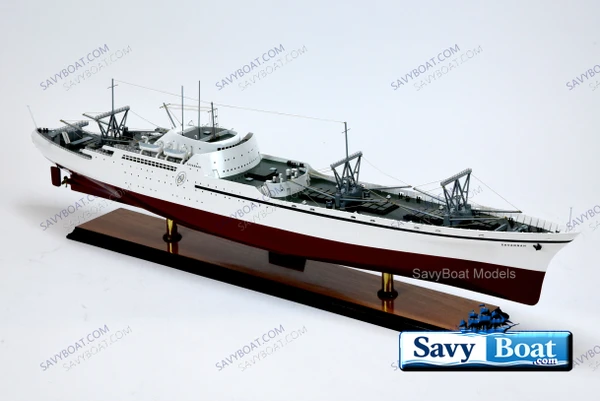
NV SAVANNAH ATOMIC MERCHANT SHIP
SAVY DIRECT PRICE $100.00 - $989.96NS SAVANNAH - WORLD'S FIRST ATOMIC MERCHANT SHIP FULLY BUILT AND READY TO DISPLAY, QUALITY SHIP MODEL Dimension approx.: 38″ L x 5″ W x 11″ H The model is already built. THIS IS NOT A... -


BATAVIA MERCHANT TALL SHIP NO SAILS
SAVY DIRECT PRICE $1,099.96MSRP: $1,199.99BATAVIA MERCHANT TALL SHIP (NO SAILS) FULLY BUILT AND READY TO DISPLAY MUSEUM QUALITY SHIP MODEL Dimension approx.: 32.6L x 7.4W x 29.5H The model is already built. THIS IS... -

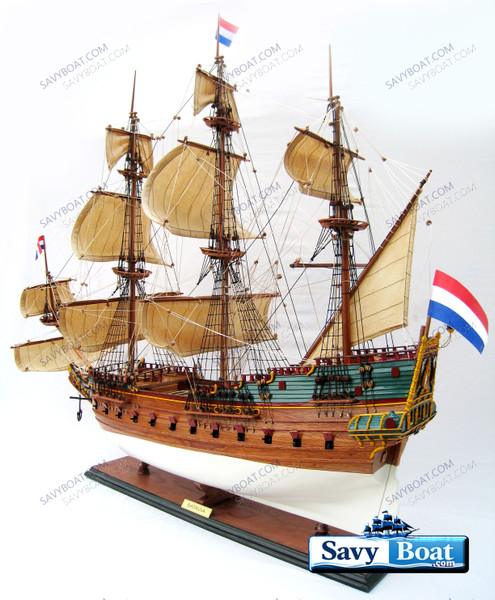
BATAVIA MERCHANT TALL SHIP W/ SAILS
SAVY DIRECT PRICE $1,099.96MSRP: $1,199.99BATAVIA MERCHANT TALL SHIP (WITH SAILS) FULLY BUILT AND READY TO DISPLAY MUSEUM QUALITY SHIP MODEL Dimension approx.: 32.6L x 7.4W x 29.5H The model is already built. THIS IS...
Description

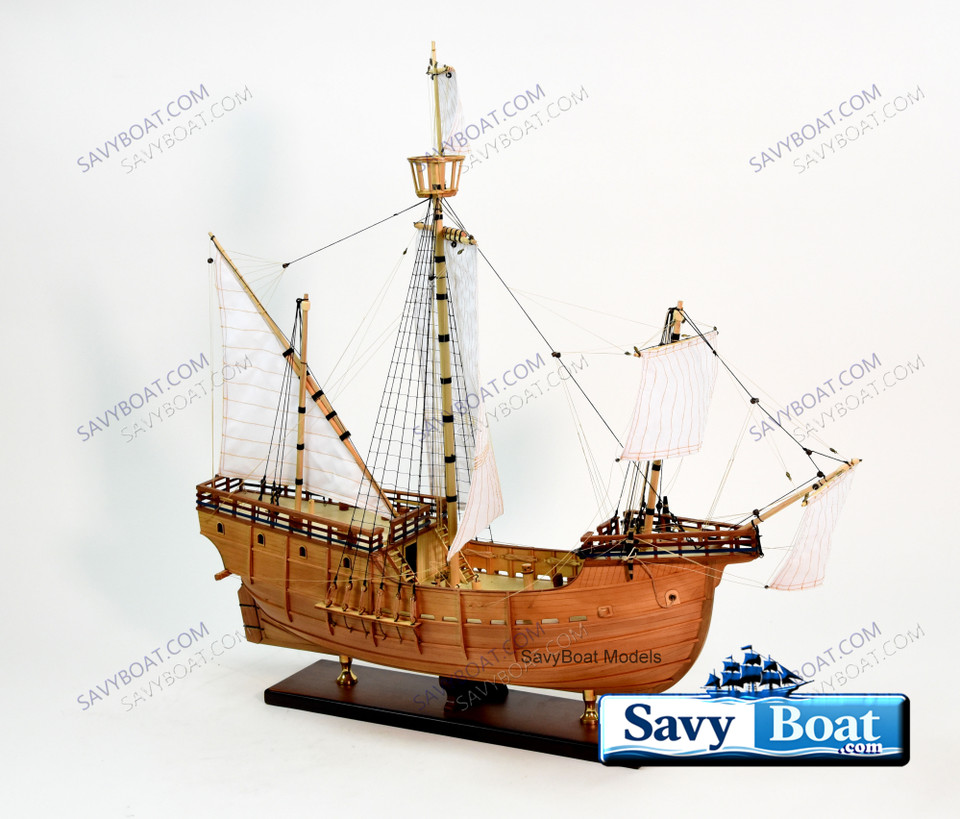
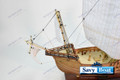
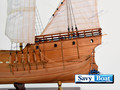
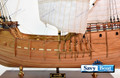
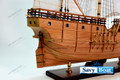
THE MATHEW (1497) MERCHANT SHIP
FULLY BUILT AND READY TO DISPLAY, QUALITY SHIP MODEL
- LARGE MUSEUM QUALITY MODEL
- Dimension Approx.: 32″ (long) x 13″ (wide) x 30″ (high)
- The model is already built, NOT a model ship kit
- Handcrafted from scratch using finest woods & metal fittings
- Freight shipping. Please contact us with any questions.
In the spring of 1497, a small 50‑ton caravel slipped out of Bristol harbor under the command of a Venetian navigator known in England as John Cabot. The ship was called Matthew — though even her name is debated — and she carried a crew of just 18 men. She was no grand flagship of empire, but a modest merchant vessel hired for a bold experiment: to sail west across the North Atlantic in search of a shorter route to Asia.
Cabot had attempted the voyage once before in 1496, but turned back. This time, departing 2 May 1497, he steered Matthew north and west into waters few Europeans had crossed. After weeks at sea, on 24 June 1497, land rose on the horizon. Cabot had reached North America, likely at Cape Bonavista or St. John’s, Newfoundland — the exact site still debated. He went ashore, claimed the land for England, and spent several weeks exploring the coast before turning homeward. His crew, fearing they had drifted too far north, urged a more southerly return, and Matthew eventually made landfall in Brittany before reaching Bristol on 6 August.
The ship’s history is clouded by sparse records. Even her age and origins are uncertain; she does not appear in Bristol customs accounts before 1493, suggesting she was either new, renamed, or foreign‑built. A letter from Bristol merchant John Day, written in 1497, confirms her size — “one ship of fifty toneles and twenty men and food for seven or eight months” — but after the early 1500s, references to a “new Matthew” imply Cabot’s vessel no longer existed.
The Bristol Replica
To mark the 500th anniversary of Cabot’s voyage, a full‑size replica of Matthew was built in Bristol from 1994 to 1996, designed by naval architect Colin Mudie. Constructed of oak and Douglas fir, the replica measures 78 feet long, carries 2,360 square feet of sail, and includes modern necessities like a diesel engine and radio. She retraced Cabot’s route in 1997, arriving at Bonavista on 24 June to a royal welcome from Queen Elizabeth II. Today she is operated by The Matthew of Bristol Trust, berthed beside the city’s M Shed museum, and continues to sail for public events — including the 2012 Thames Diamond Jubilee Pageant.
The Bonavista Replica
Newfoundland built its own replica in 1997–1998, constructed by seven shipwrights and four local carpenters as part of the province’s Cabot 500 celebrations. Moored in Bonavista, the ship serves as an interpretive center, offering tours and educational programs. She is currently undergoing repairs so she can sail again.
Though tiny by the standards of the Age of Discovery, the Matthew carried Cabot on one of the most consequential voyages in North Atlantic history — the first documented European landfall in North America since the Norse. Her replicas in Bristol and Bonavista keep that story alive, honoring a ship whose modest size belied the scale of the world it helped reveal.