











-
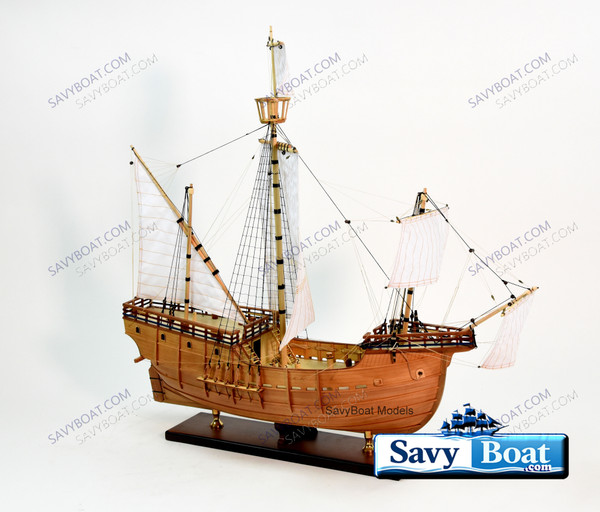
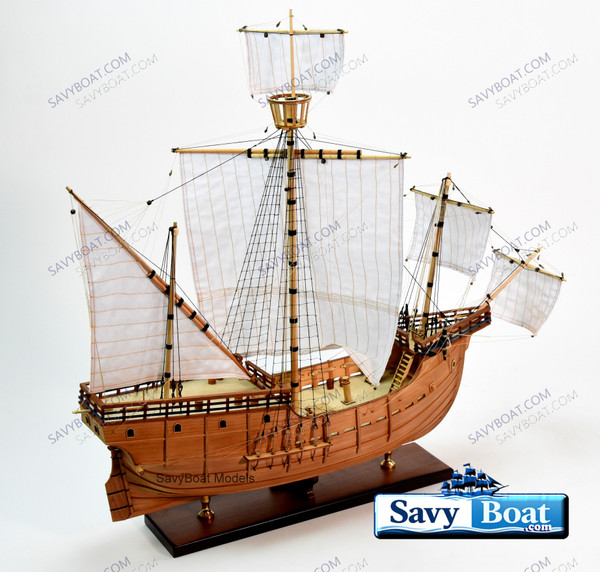
THE MATHEW (1497) MERCHANT SHIP
SAVY DIRECT PRICE $1,099.96MSRP: $1,199.99THE MATHEW (1497) MERCHANT SHIP FULLY BUILT AND READY TO DISPLAY, QUALITY SHIP MODEL LARGE MUSEUM QUALITY MODEL Dimension Approx.: 32″ (long) x 13″ (wide) x 30″ (high) The mo -


BATAVIA MERCHANT TALL SHIP NO SAILS
SAVY DIRECT PRICE $1,099.96MSRP: $1,199.99BATAVIA MERCHANT TALL SHIP (NO SAILS) FULLY BUILT AND READY TO DISPLAY MUSEUM QUALITY SHIP MODEL Dimension approx.: 32.6L x 7.4W x 29.5H The model is already built. THIS IS... -

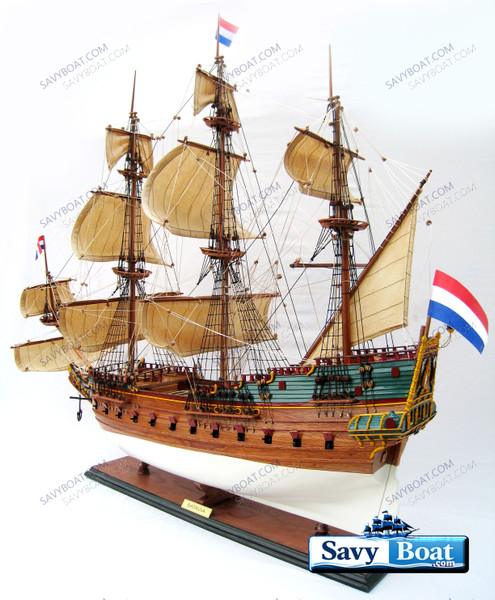
BATAVIA MERCHANT TALL SHIP W/ SAILS
SAVY DIRECT PRICE $1,099.96MSRP: $1,199.99BATAVIA MERCHANT TALL SHIP (WITH SAILS) FULLY BUILT AND READY TO DISPLAY MUSEUM QUALITY SHIP MODEL Dimension approx.: 32.6L x 7.4W x 29.5H The model is already built. THIS IS...
Description

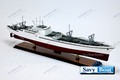
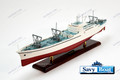
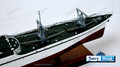
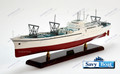
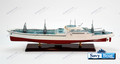
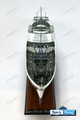
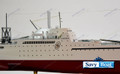
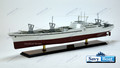
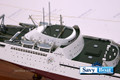
NS SAVANNAH - WORLD'S FIRST ATOMIC MERCHANT SHIP
FULLY BUILT AND READY TO DISPLAY, QUALITY SHIP MODEL
- Dimension approx.: 38″ L x 5″ W x 11″ H
- The model is already built. THIS IS NOT A MODEL SHIP KIT
NS Savannah: America’s Atomic Ambassador to the World
When the NS Savannah slid down the ways at Camden, New Jersey, on July 21, 1959, she represented something far larger than a new ship. She was the gleaming embodiment of President Dwight D. Eisenhower’s “Atoms for Peace” vision — a promise that nuclear power could serve humanity not only in weapons and submarines, but in commerce, diplomacy, and everyday life.
She was the world’s first nuclear‑powered merchant ship, a futuristic hybrid of cargo vessel and luxury liner, built not to make money but to make a point: that the atomic age could be elegant, safe, and profoundly modern.
Authorized in 1956 as a joint project of the Atomic Energy Commission, the Maritime Administration, and the Department of Commerce, Savannah was designed by George G. Sharp, Inc., and built by New York Shipbuilding Corporation. Her reactor came from Babcock & Wilcox. Even her silhouette was symbolic — a long, clean hull topped by a teardrop‑shaped superstructure decorated with stylized atomic symbols.
Inside, she looked more like a mid‑century ocean liner than a freighter. She carried 30 air‑conditioned staterooms, A 100‑seat dining room with a sculpture called Fission, A veranda lounge, dance floor, and illuminated glass‑topped tables, and A swimming pool, library, and modernist lounges.
Her cargo capacity was modest, but that was never the point. She was a floating exhibit, a traveling ambassador for peaceful nuclear technology.
Her 74‑MW pressurized‑water reactor was built to civilian standards — safe, accessible, and designed for reliability rather than military compactness. It powered a steam turbine plant capable of pushing the ship to 24 knots, faster than many conventional freighters.
In April 1962, she reached full power. Four months later, she began her maiden voyage, visiting her namesake city of Savannah before heading through the Panama Canal and up the West Coast. Everywhere she went, crowds lined up to tour the world’s first nuclear merchant ship.
A Traveling Symbol of the Atomic Age
From 1962 to 1971, Savannah visited 45 foreign ports and 32 domestic ports, hosting more than 1.4 million visitors. She became a centerpiece of “Nuclear Week in New York” in 1969, docking in Manhattan as thousands toured her decks and exhibits.
Her presence helped normalize nuclear propulsion in foreign harbors, paving the way for U.S. Navy nuclear vessels to visit ports that might otherwise have been hesitant.
For all her beauty and engineering achievement, Savannah struggled as a working ship: Her cargo capacity was small, Her forward holds were difficult to load, Her crew was larger and required specialized nuclear training, Labor disputes erupted over pay differences between deck and nuclear officers, and She cost $2 million more per year to operate than a conventional ship.
She was never intended to be profitable, but the Maritime Administration eventually concluded that the demonstration had run its course. In 1971, Savannah was deactivated.
Ironically, just three years later — when oil prices quadrupled — her operating costs would have matched those of oil‑fired ships.
After deactivation, Savannah drifted through a series of temporary berths being Displayed briefly in Savannah, Georgia, Stored in Galveston, Texas, Exhibited at Patriots Point Naval & Maritime Museum from 1981 to 1994, and Moved to Baltimore and the James River Reserve Fleet.
She was designated a National Historic Landmark in 1991, recognized as one of the most intact artifacts of the Atoms for Peace era.
Her reactor was defueled in 1975, but the containment system remained aboard for decades. In the 2010s and 2020s, MARAD began the long‑planned process of full decommissioning. This included Removal of nuclear support systems, Drydocking in Philadelphia in 2019, Reactor removal completed in November 2022, and then Final decommissioning steps underway through the 2020s. In December 2023, MARAD formally announced that Savannah would soon be available for preservation or conveyance, inviting potential stewards to tour the ship.
NS Savannah was never meant to be a commercial triumph. She was a symbol, a technological ambassador, and a bold experiment in the peaceful use of atomic power. She proved that nuclear propulsion could be safe, reliable, and elegant — even if the economics of merchant shipping were not yet ready for it.
Today, she remains one of the most distinctive ships ever built: a sleek white vessel of the Atomic Age, a museum‑ready artifact of Cold War optimism, and a reminder of a moment when the world believed nuclear energy could power not just submarines, but the future itself.