







-
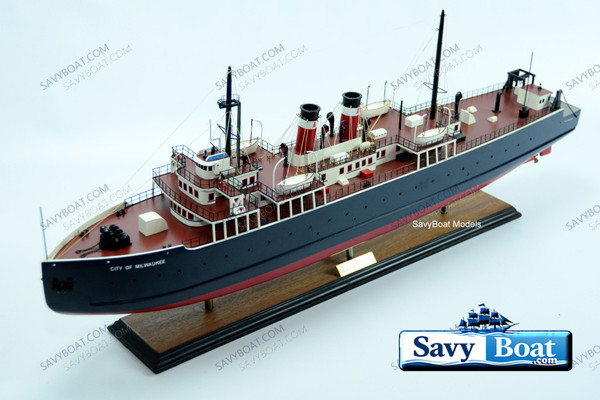

SS CITY of MILWAUKEE FERRY
SAVY DIRECT PRICE $749.96MSRP: $799.99SS CITY OF MILWAUKEE GREAT LAKES FERRY FULLY BUILT AND READY TO DISPLAY MUSEUM QUALITY SHIP MODEL BEAUTIFUL MUSEUM QUALITY MODEL Dimension approx.: 33″ L x 5″ W x 13″ H This beautiful model is... -

 img:low-bottom-with-special-offer.pngimg:low-bottom-with-special-offer.png
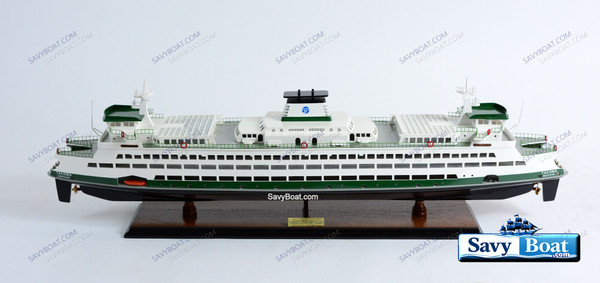
WASHINGTON STATE FERRY , TACOMA
SAVY DIRECT PRICE $100.00 - $699.96WASHINGTON STATE SUPER FERRY, TACOMA LARGE SCALE HIGH QUALITY DISPLAY HULL MODEL Dimension Approx.: 35″ L x 6.5″ W x 10″ H The model is already built, NOT a model ship kit Handcrafted from... -


NYC STATEN ISLAND FERRY
SAVY DIRECT PRICE $649.96MSRP: $699.99THE STATEN ISLAND FERRY - WORLD'S BUSIEST PASSENGER FERRY FULLY BUILT AND READY TO DISPLAY, QUALITY SHIP MODEL Dimension approx.: 32″ (long) x 7″ (wide) x 11″ (high) The model is already built...
Description

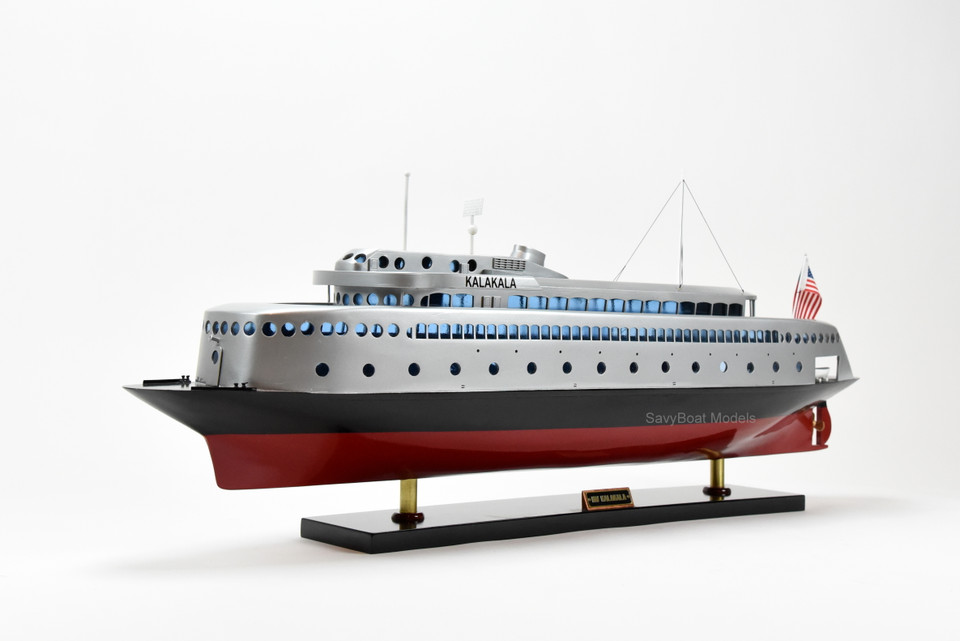
MV KALAKALA FROM THE FAMOUS BLACKBALL FERRY LINE
FULLY BUILT AND READY TO DISPLAY, QUALITY SHIP MODEL
- Dimension approx.: 36″ L x 6.5″ W x 12″ H
- The model is already built. THIS IS NOT A MODEL SHIP KIT
When the MV Kalakala first appeared on Puget Sound in 1935, she looked like nothing else afloat. With her smooth, rounded superstructure, copper‑clad wheelhouse, and sweeping art‑deco lines, she seemed less like a ferry and more like a vision of the future — a silver, streamlined machine inspired by the age of aviation. Newspapers called her the world’s first “streamlined vessel,” and during the 1962 Seattle World’s Fair, she was voted second only to the Space Needle in popularity among visitors. As the document notes, she was “notable for her unique streamlined superstructure, art deco styling, and luxurious amenities.”
But the Kalakala’s story began long before her glamorous debut. She was launched in 1926 on San Francisco Bay as the Peralta, a double‑ended commuter ferry. After a tragic ballast‑related accident in 1928 and a devastating 1933 arson fire that destroyed her superstructure, only her steel hull survived. That hull caught the eye of Alexander Peabody, head of the Puget Sound Navigation Company. He bought it, towed it north, and began an ambitious rebuild that would transform a burned‑out ferry into a futuristic icon. As the document recounts, “the remains of the superstructure and machinery were removed… and she was rebuilt” into a single‑ended, high‑speed ferry for the Seattle–Bremerton run.
Peabody’s wife suggested the new ferry should look modern, and Boeing engineer Louis Proctor sketched a design inspired by aircraft — a setback wheelhouse like a cockpit, a wing‑like flying bridge, and smooth welded seams instead of rivets. The Kalakala became the first vessel ever built using full electro‑welding, giving her the seamless metallic skin that made her famous. Inside, she offered a ladies’ lounge, men’s bar, full galley, and even showers for shipyard workers returning from Bremerton.
She entered service on July 4, 1935, instantly becoming a sensation. She hosted moonlight cruises with live orchestras, carried thousands of workers during World War II, and earned the nickname “The Workhorse of Puget Sound.” Yet her beauty came with flaws. The streamlined wheelhouse made it nearly impossible to see the bow, her narrowed car deck reduced vehicle capacity by 40%, and her engine alignment caused a notorious vibration that shook the entire ship. As the document notes, “Kalakala had a heavy shaking vibration… probably due to poor alignment of the engine.”
By the late 1950s, newer ferries outperformed her, and in 1967, she was retired. What followed was one of the strangest second lives in maritime history. Sold to a seafood company, she was towed to Alaska, beached in Kodiak, and converted into a shrimp cannery — her art‑deco interior replaced with cement floors and drywall.
In 1998, artist Peter Bevis rescued the rusting hulk and towed her back to Puget Sound, hoping to restore her. Instead, she became a floating controversy — too fragile to move, too expensive to save, and too iconic to ignore. The Coast Guard eventually declared her a hazard to navigation, noting that “her mooring arrangements were inadequate” and that she might not survive another tow.
After lawsuits, failed fundraising campaigns, and years of decay, the end finally came. In January 2015, the Kalakala was towed to a Tacoma dry dock and dismantled. By early February, only fragments remained — a wheelhouse here, a rudder there — saved for museums and public art. As the document states, “scrapping was completed with only a few pieces… saved and sold as souvenirs.”
A Legacy of Beauty, Innovation, and Imperfection
The Kalakala was never just a ferry. She was a symbol of the Northwest’s imagination — a silver dream gliding across Puget Sound, a fusion of maritime tradition and futuristic design. Her life was uneven, sometimes troubled, but always unforgettable. Even in pieces, she continues to inspire artists, historians, and anyone who remembers the day a streamlined “Silver Swan” first appeared on the water and made the world look twice.